Submission Deadline: 31 January 2027 View: 3928 Submit to Special Issue
Prof. Dr. Xiaodan Ren
Email: rxdtj@tongji.edu.cn
Affiliation: Department of Structural Engineering, College of Civil Engineering, Tongji University, Shanghai 200092, China
Research Interests: intelligent computational methods for materials and structures, stochastic damage theory and fracture mechanics, nonlinear analysis of complex structures, global reliability analysis methods of engineering structures
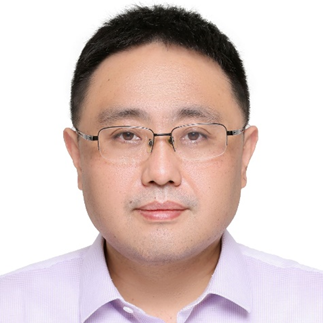
Dr. Shixue Liang
Email: liangsx@zstu.edu.cn
Affiliation: School of Civil Engineering and Architecture, Zhejiang Sci-Tech University, Hangzhou 310018, China
Research Interests: multiscale analysis of concrete, artificial intelligence methods in structural engineering

Dr. Qizhi He
Email: qzhe@umn.edu
Affiliation: Department of Civil, Environmental, and Geo-Engineering, University of Minnesota, Minneapolis 55455, USA
Research Interests: machine learning enhanced computational mechanics, data-driven mechanics, scientific machine learning for geo-mechanics & geo-sciences, physics-informed deep learning for inverse problems

The rapid advancement of artificial intelligence (AI) technologies has profoundly transformed traditional numerical and computational methods, giving rise to cutting-edge paradigms for tackling complex scientific and engineering problems. These technologies offer powerful tools for advancing our understanding of intricate systems and exhibit exceptional potential in addressing challenges such as multiscale modeling, inverse problem solving, and high-dimensional optimization.
This special issue aims to highlight recent advances in AI-enhanced numerical and computational methods with a focus on their applications in engineering and the physical sciences. We particularly welcome original contributions that demonstrate the use of AI-augmented approaches to address real-world problems, especially in emerging and frontier domains. The goal is to showcase innovative methodologies that bridge artificial intelligence with traditional computational paradigms, thereby advancing the capabilities of modeling, simulation, and optimization in complex systems.
Potential topics include, but are not limited to the following:
• Machine learning to FEM, BEM, DEM and meshfree methods (theory and applications)
• Physics-informed machine learning
• Generative Model in Engineering Design
• Multiscale modeling
• Uncertainty quantification and propagation
• Inverse problem
• Topology optimization
• Other related topics


 Login
Login Register
 Submit a Paper
 Propose a Special lssue