Submission Deadline: 31 December 2025 (closed) View: 911 Submit to Journal
Prof. Cheng-Yu Ku
Email: chkst26@mail.ntou.edu.tw
Affiliation: Department of Harbor and River Engineering, National Taiwan Ocean University, Keelung 202301, Taiwan
Homepage: http://gsclab.ntou.edu.tw
Research Interests: machine learning methods in geotechnical engineering
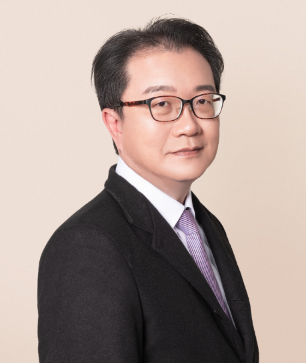
Prof. Chih-Chieh Young
Email: youngjay@ntou.edu.tw
Affiliation: Department of Marine Environmental Informatics, National Taiwan Ocean University, Keelung 202301, Taiwan
Research Interests: physically-informed artificial intelligence approaches (AI) for hydrological and oceanic sciences

Assist. Prof. Chih-Yu Liu
Email: cyliu20452003@mail.ntou.edu.tw
Affiliation: Department of Harbor and River Engineering, National Taiwan Ocean University, Keelung 202301, Taiwan
Homepage: https://orcid.org/0000-0002-2018-3401
Research Interests: artificial intelligence and machine learning in geotechnical engineering

The integration of Artificial Intelligence (AI) with advanced numerical methods is reshaping the landscape of geotechnical engineering. Traditional computational approaches such as the Finite Element Method (FEM), Finite Difference Method (FDM), and Boundary Element Method (BEM) are increasingly being augmented by AI techniques—including machine learning (ML), deep learning, and neural networks—to improve modeling accuracy, efficiency, and adaptability in simulating complex geotechnical problems.
This Special Issue aims to showcase recent developments at the intersection of AI and numerical modeling, with a focused emphasis on geotechnical applications. We invite original research and review papers that demonstrate novel AI-assisted frameworks, hybrid modeling techniques, or data-driven solutions addressing challenges in soil mechanics, groundwater, hybrid AI and analytical/numerical methods, slope stability, tunneling, liquefaction assessment, and related areas.
Potential topics include, but are not limited to the following:
·Hybrid AI-numerical modeling approaches
·Physics-informed neural networks (PINNs) applied to geotechnical problems
·AI modeling for PDEs in geotechnics
·Data-driven material and geotechnical behavior modeling
·AI in uncertainty quantification and inverse problems in subsurface characterization
·Applications in geotechnics, mechanics, hydrology, and materials


 Login
Login Register
 Submit a Paper
 Propose a Special lssue