Submission Deadline: 31 May 2026 (closed) View: 737 Submit to Special Issue
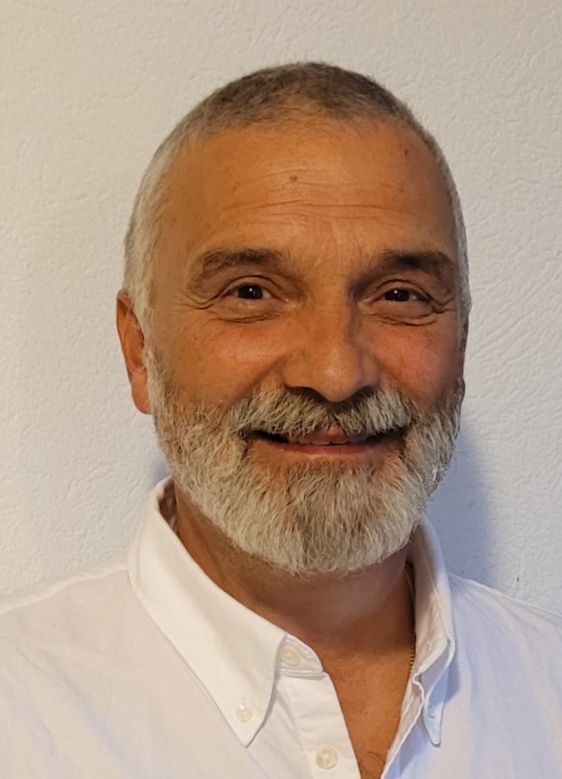
Prof. Giuseppe Lacidogna
Email: giuseppe.lacidogna@polito.it
Affiliation: Department of Structural Engineering, Construction and Soil Mechanics, Polytechnic University of Turin, Turin, 10129, Italy
Homepage: https://www.scopus.com/authid/detail.uri?authorId=12646395900 https://scholar.google.com/citations?user=4zPumD8AAAAJ&hl=it
Research Interests: acoustic, electromagnetic and particle emission energy, acoustic emission methods for damage identification, concrete, masonry and rocks, cracking evolution in masonry arch bridges, creep behavior of concrete structures, critical phenomena from structural mechanics to geophysics, damage diagnosis in structures and construction materials, mechanics of proteins and macro-molecular structures, microcracking fracture propagation, static and dynamic analysis of high-rise buildings
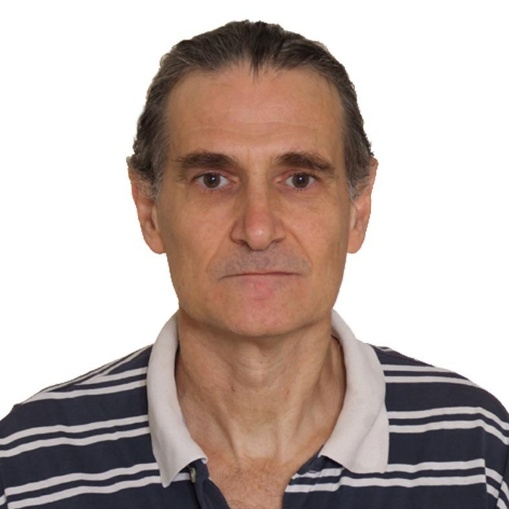
Prof. Ignacio Iturrioz
Email: ignacio@mecanica.ufrgs.br
Affiliation: Mechanical Department, Federal University of Rio Grande do Sul, Sarmento Leite 425, 90050-170, Porto Alegre, Brazil.
Research Interests: discrete and finite element methods for modeling fracture and damage in materials and structures, numerical strategies for the interpretation of acoustic emission signals, multiscale simulation of fracture processes in metallic and composite materials, structural health monitoring and prediction of failure using computational approaches, coupling of experimental data and numerical models for acoustic emission analysis
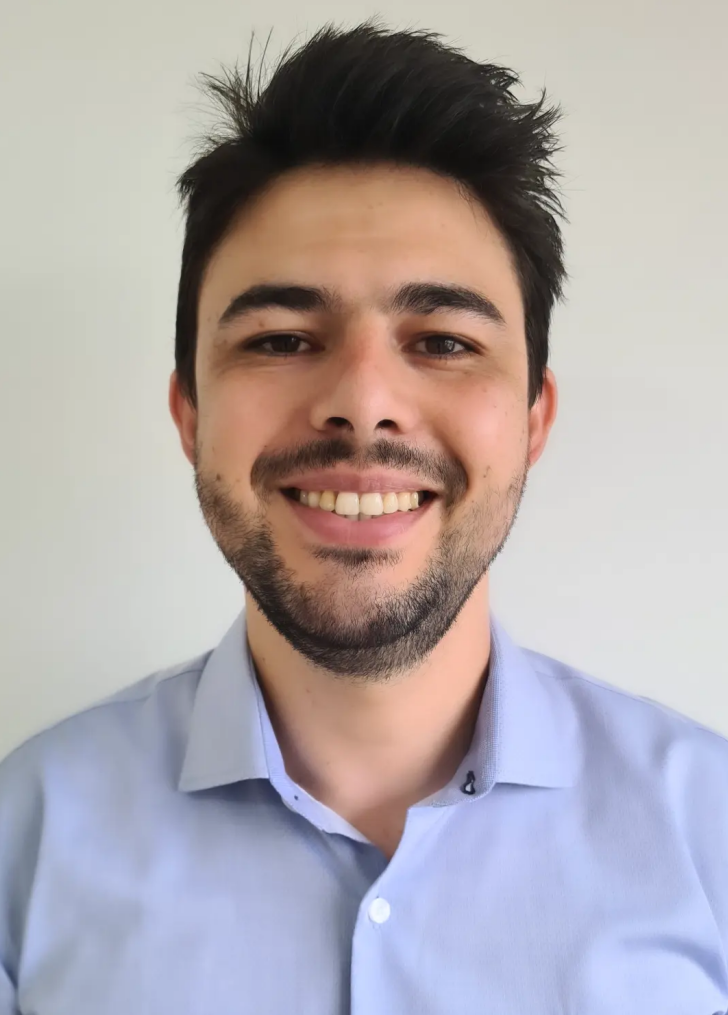
Prof. Leandro Ferreira Friedrich
Email: leandrofriedrich@unipampa.edu.br
Affiliation: Department of Mechanical Engineering, Federal University of Pampa, Av. Tiaraju 810, 97546-550, Alegrete, Brazil.
Homepage: https://orcid.org/0000-0001-5278-9638
Research Interests: numerical modeling of material failure using discrete approaches such as peridynamics and the discrete element method, multiscale simulation of damage processes and fracture mechanisms, development of computational strategies for the analysis and interpretation of acoustic emission signals, structural health monitoring and failure prediction based on acoustic emission, integration of experimental and numerical methods for the assessment of damage evolution in materials and structures
Acoustic Emission (AE) monitoring provides a window into the rapid energy release accompanying damage processes in structural materials. The field has evolved from qualitative diagnostics to quantitative, physics-based interpretation, yet progress is often hindered by the gap between microstructural mechanisms and the measured AE signals. Discrete numerical methods offer a natural framework to model fracture, crack interactions, and progressive damage at meso- and micro-scales, and to relate simulated events to observed AE waveforms. By linking discrete processes to recorded signals, these approaches enhance predictive capability, improve nondestructive evaluation, and support safer design across engineering applications.
This Special Issue, under the title Discrete Numerical Methods for Modeling and Interpretation of Acoustic Emission, aims to advance the role of discrete numerical approaches in both modeling mechanical systems and interpreting AE data. It seeks to foster methodological developments, experimental–numerical integration, and cross-disciplinary applications that bridge theory and practice. Submissions from computational mechanics, materials science, structural health monitoring, and geomechanics are encouraged to advance the state of the art.
· Development and application of discrete methods (e.g., DEM, lattice models, peridynamics) for AE signal interpretation
· Correlation between numerical simulations and the physical mechanisms of fracture, shear, and progressive damage
· Identification of precursors and characteristic patterns in AE data through numerical modeling
· Integration of experimental AE measurements with discrete-based simulations
· Applications to advanced materials, geosciences, and civil and mechanical structures


 Login
Login Register
 Submit a Paper
 Propose a Special lssue