Submission Deadline: 30 November 2026 View: 1515 Submit to Special Issue
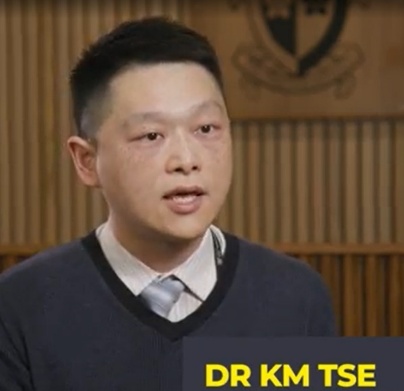
Assoc. Prof. Kwong Ming Tse
Email: ktse@swin.edu.au
Affiliation: Department of Mechanical Engineering and Product Design Engineering, Swinburne University of Technology, Hawthorn, Australia
Research Interests: biomechanics, protective equipment, impact mechanics, injury prevention, finite element modelling, mechanics in medicine (orthopaedic biomechanics, re-engineering and design of prostheses, surgical procedures, cardiovascular biomechanics)
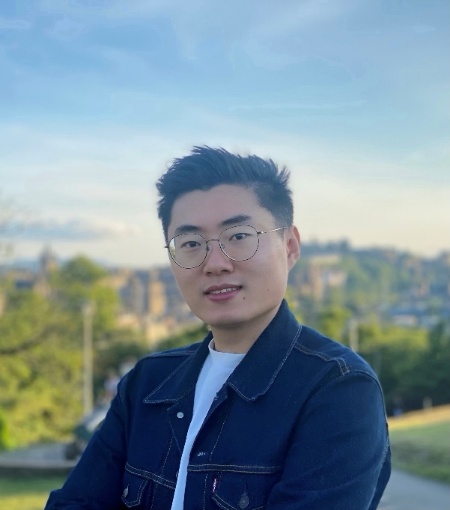
Dr. Chi Wu
Email: chi.wu@newcastle.edu.au
Affiliation: School of Engineering, University of Newcastle, Callaghan, Australia
Research Interests: computation mechanics/biomechanics, implantable devices, tissue engineering, structural optimisation
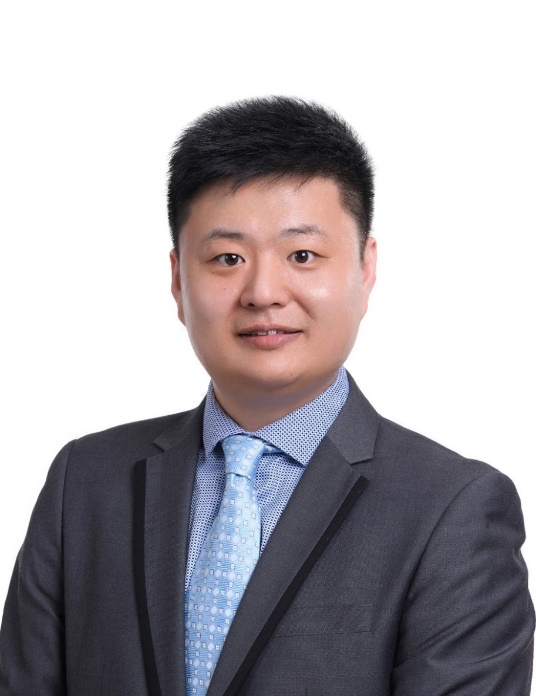
Dr. Zhongpu Zhang
Email: leo.zhang@westernsydney.edu.au
Affiliation: School of Engineering, Western Sydney University, Australia
Research Interests: computational mechanics, design optimisation, biomechanics, advanced manufacturing, fracture mechanics
Computational biomechanics uses advanced numerical methods, such as finite element, finite volume, finite difference, lattice Boltzmann, and boundary element techniques, to study the mechanical behaviour of biological tissues and the musculoskeletal system across multiple scales. These approaches enable quantitative insight into tissue mechanics, internal loading, and structure-function relationships that are challenging to measure experimentally.
Recent advances have accelerated model-driven design and optimisation of prosthetic and orthotic devices, alongside patient-specific computer-assisted surgical planning and simulation. Musculoskeletal and finite element models of human motion further elucidate internal forces, tissue deformation, and damage mechanisms, and can be extended to dynamic loading to investigate injury causation, tolerance, and mitigation.
This Special Issue focuses on recent developments in mathematical and computational modelling of biological tissues and engineered biomaterials, highlighting state-of-the-art research with strong translational potential at the interface of engineering, medicine, and health.
Topics of interest include (but are not limited to):
· Cell, cardiovascular, joint, orthopaedic, and injury biomechanics
· Computational and constitutive modelling of biological tissues
· Computer-assisted surgery and simulation
· Computer-aided design and assessment of prostheses, implants, and medical devices
· Damage, rupture, growth, and remodelling modelling
· Multimodal and multiscale modelling of biological tissues and biomaterials


 Login
Login Register
 Submit a Paper
 Propose a Special lssue