Guest Editor(s)
Prof. Hyeonjoon Moon
Email: hmoon@sejong.ac.kr
Affiliation: Department of Computer Science and Engineering, Sejong University, Seoul, Republic of Korea
Homepage:
Research Interests: image processing, biometrics, artificial intelligence and machine learning

Dr. Lien Minh Dang
Email: minhdl@sejong.ac.kr
Affiliation: Department of Information and Communication Engineering and Convergence Engineering for Intelligent Drone, Sejong University, Seoul, Republic of Korea
Homepage:
Research Interests: Image processing, Computer vision, Pattern recognition, deep learning
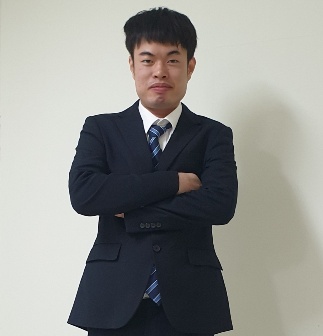
Dr. Tri-Hai Nguyen
Email: hai.nguyentri@vlu.edu.vn
Affiliation: Faculty of Information Technology, Van Lang University, Ho Chi Minh City, Vietnam
Homepage:
Research Interests: intelligent systems, IoT, and UAV-based applications

Summary
In recent years, the landscape of image and video processing has undergone a transformative shift, driven by advancements in methodologies and technologies across several domains, including computer vision, 3D modeling, computer graphics, and multimedia. The rapid evolution of these fields has spurred the development of innovative applications and techniques, enhancing our ability to interpret and interact with visual data in unprecedented ways. Particularly, the rise of machine learning, and more specifically deep learning, has revolutionized image processing by enabling the efficient analysis of massive datasets, leading to the discovery of new patterns and the creation of sophisticated analytical procedures.
This Special Issue seeks to highlight the latest breakthroughs and applications in image and video processing, with a dual focus. Firstly, it explores novel uses of cutting-edge devices for data acquisition and visualization, such as CCTV cameras, 3D scanners, virtual reality (VR) glasses, and robotics, demonstrating how these technologies are reshaping the field. Secondly, it delves into new methodologies for processing large-scale datasets, leveraging modern pattern recognition and machine learning techniques, including deep learning and hypergraph learning, to advance the state of the art in image analysis.
Keywords
3d models processing, augmented and virtual reality applications, robotic applications, rgbd analysis, advanced image enhancement, de-noising and low-light enhancement, advanced image classification and retrieval, semantic segmentation, image processing

 Login
Login Register
 Submit a Paper
 Propose a Special lssue