Guest Editor(s)
Prof. Murali Mohan Cheepu
Email: muralicheepu@pukyong.ac.kr
Affiliation: Department of Materials System Engineering, Pukyong National University, Busan, 48513, Republic of Korea
Homepage:
Research Interests: additive manufacturing, modelling, welding, materials science, advanced manufacturing
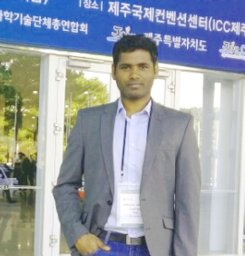
Dr. Monsuru Olalekan Ramoni
Email: monsuru.ramoni@utrgv.edu
Affiliation: College of Engineering and Computer Science, University of Texas Rio Grande Valley, Edinburg, Texas 78539, USA
Homepage:
Research Interests: metal additive manufacturing, functional materials
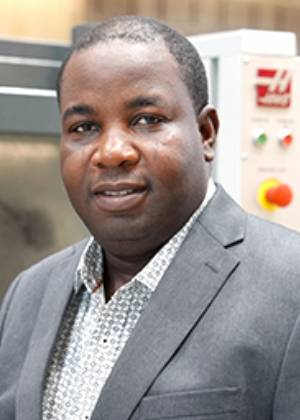
Prof. Ragavanantham Shanmugam
Email: Ragavanantham.Shanmugam@fairmontstate.edu
Affiliation: Department of Engineering Technology, Fairmont State University, Fairmont, WV 26554-2470, USA
Homepage:
Research Interests: additive manufacturing, modeling, computational simulations

Summary
Large-scale additive Manufacturing (LSAM) enables the production of large, high-performance components but faces challenges such as dimensional inaccuracies, warping, and residual stresses. Enhancing computational modeling with hybrid physics-based and data-driven approaches is key to improving simulation accuracy, optimizing process parameters, and ensuring scalability for industrial applications.
The issue will also focus on the integration of modeling with smart manufacturing technologies such as digital twins, real-time sensing, and cloud-based computation to power next-generation additive manufacturing applications. Contributions will concentrate on creative methodologies for model-based qualification, certification, and defect-free manufacturing, eventually influencing the future of additive manufacturing.
Key subjects include multiscale modeling, hybrid simulation frameworks, computational acceleration approaches, and the role of digital technologies in improving additive manufacturing precision and scalability. The Special Issue will also welcome publications that investigate novel design concepts and light-weighting methodologies to improve both design efficiency and part functioning.
Topics of interest include, but are not limited to:
· Experimental-based works for validating and optimizing additive manufacturing models.
· Advanced computational techniques for more efficient and faster simulations.
· Hybrid modeling frameworks combining physics-based and data-driven methods.
· Seamless integration of simulation with smart manufacturing, digital twins, and sensing.
· Innovative multiscale modeling approaches for additive manufacturing.
· Innovative physical insights gained through advanced simulations.
· Scalable additive manufacturing process modeling for large-scale component production.
· Model-driven approaches for additive manufacturing qualification.
· Integration of experimental data with simulation results for enhanced accuracy.
We invite researchers to contribute full papers, communications, and reviews that push the boundaries of additive manufacturing through experimental and computational advancements.
Keywords
additive manufacturing, multiscale modeling, hybrid modeling frameworksphysics-based simulations, data-driven approaches, digital twin technology,advanced computational techniques, experimental validation in A, smartmanufacturing, microstructure evolution, process optimization in AM, 3D printing, 4Dprinting, numerical analysis, statistical analysis, AI; machine learning.
Published Papers

 Login
Login Register
 Submit a Paper
 Propose a Special lssue