Guest Editor(s)
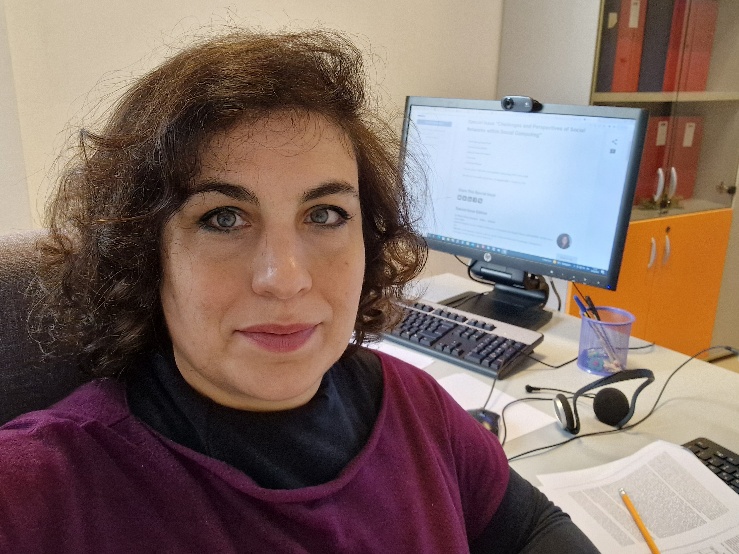
Dr. Maria Chiara Caschera
Email: mariachiara.caschera@cnr.it
Affiliation: Institute for Research on Population and Social Policies (IRPPS), National Research Council (CNR), Rome, Italy
Homepage:
Research Interests: human-machine interaction, multimodal interaction, user-centred design, knowledge management and innovation, social computing, co-design, co-creation
Summary
The rapid advancement of digital technologies and intelligent systems has significantly changed how humans interact with computing systems. Multimodal systems enable users to communicate through various input and output interaction modalities, such as speech, gestures, touch, eye movements, haptics, and tangible interfaces. This flexibility helps reduce interaction barriers, accommodates diverse user preferences, and improves overall usability and effectiveness. Additionally, User-Centred Design (UCD) has emerged as a widely recognized methodological approach for developing systems and applications that are usable, accessible, and aligned with real user needs. UCD ensures that technological innovation is grounded in human values, ethical considerations, and long-term sustainability. Therefore, the combination of multimodal interaction and UCD represents a relevant research topic for creating inclusive, robust, and sustainable systems and applications.
This Special Issue focuses on the integration of multimodal interaction and UCD methodologies across the full lifecycle of systems and applications, from requirements elicitation and participatory design to implementation, evaluation, and deployment. It aims to bring together research that critically examines how user-centred approaches can support the effective integration of multiple interaction modalities, particularly in complex, adaptive, and real-world socio-technical environments, such as smart cities, intelligent workplaces, assistive technologies, and cyber-physical systems. The Special Issue welcomes interdisciplinary contributions that connect user-centred methodologies with computational models, intelligent systems, interactive technologies, and applied solutions, with special attention given to inclusive multimodal interaction addressing the needs of diverse users, as well as to the role of multimodality in promoting sustainability, and with emphasis placed on rigorously evaluated approaches, scalable frameworks, and real-world applications that bridge human–computer interaction, computing technologies, and sustainability goals.
Topics include, but are not limited to:
• User-centred design methodologies for multimodal interaction
• Inclusive and accessible multimodal interfaces and systems
• Evaluation methods for multimodal user experience and usability
• Multimodal interaction in smart environments and smart cities
• Human-centred AI and adaptive multimodal systems
• Multisensory design and embodied interaction
• UCD for speech, gesture, gaze, haptic, and tangible interfaces
• Hybrid, adaptive, and context-aware multimodal interaction
• Sustainability and lifecycle design of multimodal systems
Keywords
multimodal interaction, user-centred design (UCD), human-centred AI, human-computer interaction (HCI), adaptive systems, inclusive interfaces, smart environments, usability

 Login
Login Register
 Submit a Paper
 Propose a Special lssue