Guest Editor(s)
Dr. Andrea Tigrini
Email: a.tigrini@staff.univpm.it
Affiliation: Department of Information Engineering , Marche Polytechnic University, Ancona, Italy
Homepage:
Research Interests: human biomechanics, neuromuscular control, rehabilitation engineering
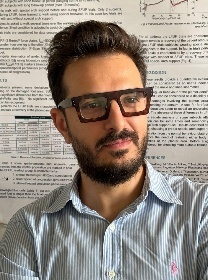
Dr. Christian Tamantini
Email: christian.tamantini@cnr.it
Affiliation: Istituto di scienze e tecnologie della cognizione, Consiglio nazionale delle ricerche, Rome, Italy
Homepage:
https://orcid.org/0000-0001-6238-2241
Research Interests: adaptive cognitive architectures, human-robot interaction, robot-aided rehabilitation, multimodal monitoring, user state estimation, automated planning, personalized interventions, long-term effective interventions

Summary
Collaborative robots (cobots) and advanced automation systems have proven to be valuable tools for improving working performance within the industrial scenario, viably cooperating with humans in shared environments. However, the growing centrality of Human-Robot Collaboration (HRC) within modern industry poses significant challenges to preserving the safety, ergonomics, and well-being of the human agent.
Direct interaction with automated systems inherently impacts human motor performance. Physical coupling often requires humans to employ demanding, non-ergonomic kinematic schemas that affect the musculoskeletal system. Furthermore, repeated interaction with cobots significantly affects psychological and cognitive domains. Trust, sense of agency, and sustained attention can fluctuate, leading to detrimental effects such as cognitive overload or mental burden.
To mitigate these risks and optimize collaboration, it is essential to accurately monitor both the physical and cognitive states of the user. We are currently witnessing a crucial methodological transition toward advanced multimodal pattern recognition solutions to address these complex challenges. By integrating biomechanical data (vision-based systems, inertial measurement units, electromyography) with central and autonomic physiological signals (electroencephalography, heart rate variability, galvanic skin response), these multimodal pattern recognition architectures enable a comprehensive, robust representation of the user's workload, fatigue, and motor intentions.
Therefore, this Special Issue aims to collect original research and comprehensive reviews highlighting multimodal sensing, sensor fusion, and innovative pattern recognition solutions specifically designed to assess biomechanical strategies and cognitive workload in industrial and collaborative HMI scenarios.
Topics of interest include, but are not limited to:
· Multimodal sensing;
· Sensor fusion and representation learning;
· Personalized and adaptive Human–Machine Interaction;
· Human-Robot Interaction;
· Explainable pattern recognition.
Keywords
multimodal sensing, biosignal pattern recognition, human-machine interaction, sensor fusion, assistive healthcare technologies, industry 4.0, industry 5.0, ergonomics.

 Login
Login Register
 Submit a Paper
 Propose a Special lssue