Guest Editor(s)
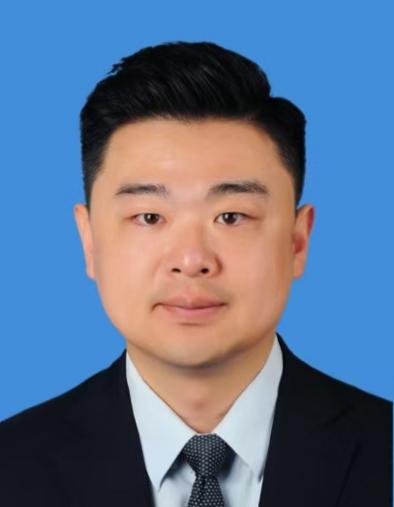
Dr. Tian Su
Email: sutian@um.edu.my
Affiliation: 1. Department of Civil Engineering, Faculty of Engineering, Universiti Malaya, Kuala Lumpur, Malaysia
2. Department of Civil Engineering, School of Civil Engineering and Geomatics, Shandong University of Technology, Zibo, China
Homepage:
Research Interests: fluid transport in porous geomaterials, hydro-mechanical coupling in recycled concrete, multiphase flow in carbonation-modified systems, pore fluid dynamics in saline environments, rheology of solid waste-based cementitious materials, fluid–structure interaction in composite structures, ai-driven modeling of fluid–material degradation

Dr. Boi-Yee Liao
Email: y5708211@ms18.hinet.net
Affiliation: Department of Engineering and Technology Management, International College, Krirk University, Bangkok, Thailand
Homepage:
Research Interests: hydro-mechanical coupling in earthquake source processes, poroelastic effects on rupture dynamics, fluid-induced stress field evolution, pore pressure signatures in seismic wavefields, multiphase flow in fault systems, fluid-assisted damage mechanisms in infrastructure, poromechanics in seismic hazard assessment

Dr. Sen Xie
Email: xie.sen@email.krirk.ac.th
Affiliation: International College, Krirk University, Bangkok, Thailand
Homepage:
Research Interests: fluid-involved landslide hazard assessment, hydro-mechanical coupling in slope stability, pore water pressure dynamics in earthquake-triggered landslides, fluid–structure interaction in infrastructure damage, multiphase flow in biofuel processing, rheology in green material manufacturing, ai-driven modeling of fluid–material systems
Summary
The increasing demand for sustainable infrastructure and carbon emission reduction has brought renewed attention to the interaction between fluids and geomaterials, as well as fluid-mediated processing routes for civil engineering materials. Within the scope of Fluid Dynamics & Materials Processing, this Special Issue aims to highlight recent advances in the fluid-dynamic understanding of geomaterials and in multiphase processes relevant to sustainable construction technologies.
A central focus is placed on the behavior of geomaterials under coupled hydro-mechanical loading, where fluid flow within porous media governs stress distribution, deformation, and failure. Particular attention is given to pore pressure evolution and its role in seismic response, ground motion amplification, and geohazard mitigation across natural and engineered systems.
In parallel, the Special Issue explores advances in low-carbon, fluid-assisted processing of construction materials, including slurry transport, rheological tuning, and energy-efficient mixing strategies. Emphasis is placed on approaches that combine experimental investigation, theoretical modeling, and numerical simulation to resolve multiscale interactions in complex fluid–solid systems.
Recent developments in multiphase flow modeling, data-driven fluid mechanics, and optimization-based design are expected to significantly enhance predictive capability and process efficiency. The integration of digitalization and artificial intelligence is also encouraged, particularly where it contributes to improved modeling, control, and resilience of civil engineering systems.
We welcome original research articles and reviews addressing, but not limited to, the following topics:
• Hydro-mechanical coupling and fluid–solid interactions in geomaterials
• Pore pressure dynamics and constitutive behavior under loading
• Fluid-influenced soil–structure interaction and stability
• Multiphase transport in construction and cement-based materials
• Rheology and flow behavior in slurry and granular systems
• Fluid-driven damage evolution and infrastructure durability
• Data-driven and machine learning approaches in fluid–material systems
• AI-enabled seismic analysis incorporating pore fluid effects
• Low-carbon and energy-efficient processing technologies
• Optimization of fluid-based material design and manufacturing
Keywords
fluid–solid interaction, hydro-mechanical coupling, geomaterial dynamics, soil–structure interaction (SSI), multiphase flow, low-carbon material processing, rheology and slurry transport, seismic damage mechanisms, artificial intelligence in fluid–material systems
Published Papers

 Login
Login Register
 Submit a Paper
 Propose a Special lssue