Submission Deadline: 31 October 2026 View: 1731 Submit to Special Issue
Assoc. Prof. Mahjoub Dridi
Email: mahjoub.dridi@utbm.fr
Affiliation: Computer Science Department, University of Technology of Belfort-Montbéliard, Belfort, France
Research Interests: advanced computational modeling for future mobility, with a focus on autonomous systems, traffic optimization, and human-centric virtual environments, AI-driven transportation solutions, safety of Vulnerable Road Users (VRUs), digital twins for real-time traffic simulation, and immersive technologies (VR/XR) for risk-free training and testing

Prof. Dr. Stéphane Galland
Email: stephane.galland@utbm.fr
Affiliation: CIAD UR 7533 Laboratory, Université de Technologie de Belfort Montbéliard, Belfort, France
Research Interests: multi-agent systems, distributed artificial intelligence, agent-based simulation
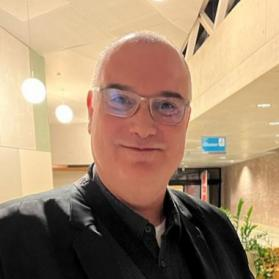
Assoc. Prof. Yazan Mualla
Email: yazan.mualla@utbm.fr
Affiliation: Computer Science Department, University of Technology of Belfort-Montbéliard, Belfort, France
Research Interests: explainable and trustworthy artificial intelligence, multi-agent systems, human-computer interaction, intelligent transport systems

The rapid evolution of smart cities and transportation technologies necessitates a shift toward more sophisticated, multi-scale modeling approaches. This Special Issue aims to provide a platform for cutting-edge research addressing the challenges of modern road transport through computational modeling, artificial intelligence, and immersive technologies.
We seek original contributions that bridge the gap between theoretical algorithms and real-world applications. The scope encompasses the ecosystem of smart mobility: from micro-level optimization of autonomous vehicle trajectories to macro-level management of urban intersections. A particular emphasis is placed on the safety of Vulnerable Road Users (VRUs) and the use of Digital Twins and Virtual Worlds to simulate complex traffic interactions in risk-free environments and the development of Human-Centric AI to ensure transparency, ethics, and trust in automated systems.
Consistent with the mission of CMES, we encourage papers that introduce novel AI-based methods, high-performance computing, and data-driven surrogate modeling to solve frontier problems in transportation science.
Key Topics of Interest
To ensure a broad and inclusive scientific reach, we invite submissions on the following areas:
Traffic Optimization & Infrastructure Management:
· Autonomous and intelligent intersection management and traffic signal optimization.
· Combinatorial optimization and meta-heuristics for urban traffic rationalization.
· Multi-agent systems and cloud services for smart city navigation.
Autonomous Vehicles & Artificial Intelligence:
· AI-driven innovations in autonomous driving and reinforcement learning.
· Computer vision for road perception and smart transportation monitoring.
· Connected vehicles (V2X) and cooperative driving strategies.
Safety & Vulnerable Road Users (VRU):
· Vision-based driver monitoring and behavior analysis.
· Safety applications and impact studies for pedestrians and cyclists.
· Human factors and decision-making in automated driving environments.
Human-Centric & Trustworthy AI in Mobility:
· Explainable AI (XAI): Interpretability of deep learning models in safety-critical transportation decisions.
· Ethical AI & Fairness: Addressing algorithmic bias in traffic management and resource allocation.
· Human-AI Collaboration: Shared control frameworks and trust-building interfaces between drivers and automated systems.
· Privacy-Preserving AI: Techniques (e.g., Federated Learning) for processing sensitive trajectory and sensor data in smart cities.
Digital Twins & Virtual Environments:
· Digital Twins (DT) as virtual replicas for real-time traffic monitoring.
· Virtual Reality (VR) and Extended Reality (XR) for driver training and simulation.
· The role of the Metaverse and Virtual Worlds in representing traffic behavior.


 Login
Login Register
 Submit a Paper
 Propose a Special lssue