Submission Deadline: 31 December 2026 View: 1517 Submit to Special Issue
Assoc. Prof. Tibor Krenicky
Email: tibor.krenicky@tuke.sk
Affiliation: Department of Manufacturing Process Control, Faculty of Manufacturing Technologies, Technical University of Kosice, Presov, 080 01, Slovakia
Research Interests: modeling and simulation, measurement systems, multiparametric monitoring, technical diagnostics, virtualization, digital twins
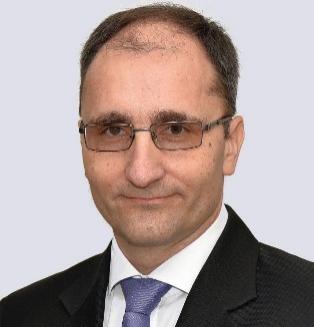
Prof. Dr. Michal Hatala
Email: michal.hatala@tuke.sk
Affiliation: Department of Manufacturing Process Control, Faculty of Manufacturing Technologies, Technical University of Kosice, Presov, 080 01, Slovakia
Research Interests: welding technologies, non-destructive testing, and quality management in manufacturing, advanced inspection methods, innovative joining techniques for additive manufacturing, difficult-to-weld materials, the connection of research with industrial practice is emphasized to improve quality, safety, and sustainability

Dr. Svetlana Radchenko
Email: svetlana.radchenko@tuke.sk
Affiliation: Department of Manufacturing Management, Faculty of Manufacturing Technologies, Technical University of Kosice, Presov, 080 01, Slovakia
Research Interests: innovative manufacturing processes, production rationalization, the economic evaluation of industrial innovations, digital tools such as digital twins, simulation, and predictive analytics, with an emphasis on sustainable and competitive manufacturing systems

The special issue (SI) Numerical Modeling in Technical Diagnostics and Predictive Maintenance is aimed at recent advances in computational approaches applied to engineering systems with a focus on reliability, safety, and efficiency. Numerical modeling has become an essential tool in technical diagnostics, enabling engineers and researchers to simulate degradation processes, identify potential failures, and assess structural integrity under various operational conditions. In predictive maintenance, modeling techniques ranging from finite element analysis and signal processing to artificial intelligence and digital twins support proactive strategies for minimizing failures, extending equipment life cycles, and optimizing maintenance schedules.
This SI welcomes contributions that bridge theory and practice, covering applications in mechanical, civil, electrical, and materials engineering. Emphasis is placed on integrating data-driven approaches with physics-based models, which provides robust diagnostic frameworks and enhances decision-making processes. The SI aims to foster interdisciplinary exchange between researchers, practitioners, and industry stakeholders interested in computational modeling for condition monitoring and maintenance planning, combining advanced simulation techniques with predictive analytics, shaping the future of engineering diagnostics and sustainable asset management.


 Login
Login Register
 Submit a Paper
 Propose a Special lssue