Special Issues
Table of Content

Topology Optimization: Theory, Methods, and Engineering Applications

Submission Deadline: 28 February 2026 View: 1933 Submit to Special Issue

Guest Editors

Asso. prof. Kai Long

Email: longkai1978@163.com

Affiliation: Institute of Renewable Energy, North China Electric Power University, Beijing, 100096, China 

Homepage:

Research Interests: topology optimization method and application

图片3.png


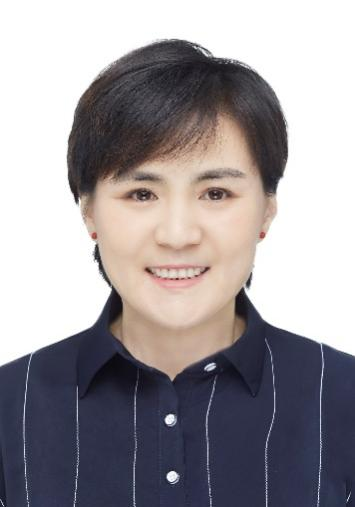
Dr. Jiao Jia

Email: jiajiao@buaa.edu.cn

Affiliation: Flying College, Beihang University, Beijing, 100191 China

Homepage:

Research Interests: topology optimization method and application
图片4.png


Dr. Xuan Wang

Email: xuanwang@hfut.edu.cn

Affiliation: Department of Engineering Mechanics, Hefei University of Technology, Hefei, 230009, China

Homepage:

Research Interests: Topology optimization, reliability-based topology optimization

图片5.png


Asso. prof. Qinghai Zhao

Email: zhaoqh@qdu.edu.cn

Affiliation: College of Mechanical and Electrical Engineering, Qingdao University, Qingdao, 266071, China

Homepage:

Research Interests: topology optimization method and application

图片6.png


Summary

The growing sophistication of diverse topology methodologies has driven engineering applications across numerous domains, accelerating the evolution and expansion of topology optimization techniques. These advancements have revolutionized how engineers address complex design problems, offering unprecedented opportunities to enhance structural performance, reduce material consumption, and achieve greater design flexibility.


This special issue aims to showcase the latest breakthroughs and trends in topology optimization, spanning theoretical innovations, novel numerical strategies, and a wide spectrum of real-world applications. By bringing together cutting-edge research from academia and industry, we aspire to illustrate the transformative potential of these methodologies in engineering practice and highlight emerging challenges and future directions within this vibrant field.


Potential topics include but are not limited to:

(1) Novel topology optimization method, theory, algorithm 

(2) Metamateterial material design, bionics design, multi-scale design by topology optimization method

(3) Topology optimization method related to nonlinearity, buckling, stress, fatigue and multiple physical problem

(4) Topology optimization combined with large-scale computation or reliability

(5) The combination of topology optimization and AI technique

(6) The engineering application of topology optimization in various industries


Keywords

Topology optimization, structural optimization

Published Papers


  • Open Access

    ARTICLE

    Level Set Topology Optimization with Autonomous Hole Formation Using Material Removal Scheme of SIMP

    Fei Wu, Ziyang Zeng, Kunliang Xie, Yuqiang Liu, Jiang Ding
    CMES-Computer Modeling in Engineering & Sciences, Vol.145, No.2, pp. 1689-1710, 2025, DOI:10.32604/cmes.2025.071256
    (This article belongs to the Special Issue: Topology Optimization: Theory, Methods, and Engineering Applications)
    Abstract The level set method (LSM) is renowned for producing smooth boundaries and clear geometric representations, facilitating integration with CAD environments. However, its inability to autonomously generate new holes during optimization makes the results highly dependent on the initial design. Although topological derivatives are often introduced to enable hole nucleation, their conversion into effective shape derivatives remains challenging, limiting topological evolution. To address this, a level set topology optimization method with autonomous hole formation (LSM-AHF) is proposed, integrating the material removal mechanism of the SIMP (Solid Isotropic Material with Penalization) method into the LSM framework. First,… More >

  • Open Access

    ARTICLE

    Topology Optimization Design of a Hub Central Component Considering Fatigue Performance

    Rui Xu, Chaogan Gao, Jiale Shi, Guorui Yu, Quhao Li
    CMES-Computer Modeling in Engineering & Sciences, Vol.145, No.1, pp. 1-16, 2025, DOI:10.32604/cmes.2025.071942
    (This article belongs to the Special Issue: Topology Optimization: Theory, Methods, and Engineering Applications)
    Abstract To address the design challenges of helicopter hub central components under high-performance requirements, this paper conducts safe-life topology optimization design research considering fatigue performance for rotor hub central components under multi-load conditions, combined with helicopter fatigue strength engineering design theory. For dealing with the issues of derivative calculation difficulties when directly considering fatigue constraints in existing topology optimization methods, this study establishes a mathematical formulation suitable for structural topology optimization of hub central components by combining modified structural safety fatigue limits based on iso-life curves. Then the sensitivity analysis of design variables is derived, and More >

  • Open Access

    ARTICLE

    An Efficient GPU Solver for Maximizing Fundamental Eigenfrequency in Large-Scale Three-Dimensional Topology Optimization

    Tianyuan Qi, Junpeng Zhao, Chunjie Wang
    CMES-Computer Modeling in Engineering & Sciences, Vol.145, No.1, pp. 127-151, 2025, DOI:10.32604/cmes.2025.070769
    (This article belongs to the Special Issue: Topology Optimization: Theory, Methods, and Engineering Applications)
    Abstract A major bottleneck in large-scale eigenfrequency topology optimization is the repeated solution of the generalized eigenvalue problem. This work presents an efficient graphics processing unit (GPU) solver for three-dimensional (3D) topology optimization that maximizes the fundamental eigenfrequency. The Successive Iteration of Analysis and Design (SIAD) framework is employed to avoid solving a full eigenproblem at every iteration. The sequential approximation of the eigenpairs is solved by the GPU-accelerated multigrid-preconditioned conjugate gradient (MGPCG) method to efficiently improve the eigenvectors along with the topological evolution. The cluster-mean approach is adopted to address the non-differentiability issue caused by… More >

    Graphic Abstract

    An Efficient GPU Solver for Maximizing Fundamental Eigenfrequency in Large-Scale Three-Dimensional Topology Optimization

  • Open Access

    ARTICLE

    Mechanical Performance of Additive Manufactured TPMS Lattice Structures Based on Topology Optimization

    Yizhou Wang, Qinghai Zhao, Guoqing Li, Xudong Li
    CMES-Computer Modeling in Engineering & Sciences, Vol.144, No.1, pp. 763-789, 2025, DOI:10.32604/cmes.2025.067363
    (This article belongs to the Special Issue: Topology Optimization: Theory, Methods, and Engineering Applications)
    Abstract Lattice structures have attracted extensive attention in the field of engineering materials due to their characteristics of lightweight and high strength. This paper combines topology optimization with additive manufacturing to investigate how pore shape in Triply Periodic Minimal Surface (TPMS) structures affects mechanical properties and energy absorption performance. The periodic lattice structures (Triangle lattice, rectangle lattice and Rectangle lattice) and aperiodic mixed structures are designed, including a variety of lattice structures such as circle-circle and triangle-triangle (CCTT), triangle-triangle and rectangle-rectangle (TTRR), circle-circle and rectangle-rectangle (CCRR), triangle-circle-circle-triangle (TCCT), rectangle-triangle-triangle-rectangle (RTTR) and rectangle-circle-circle-rectangle (RCCR). The anisotropy of… More >

  • Open Access

    ARTICLE

    Smooth Boundary Topology Optimization—A New Framework for Movable Morphable Smooth Boundary Method

    Jiazheng Du, Ju Chen, Hongling Ye, Bing Lin, Zhichao Guo
    CMES-Computer Modeling in Engineering & Sciences, Vol.144, No.1, pp. 791-809, 2025, DOI:10.32604/cmes.2025.066676
    (This article belongs to the Special Issue: Topology Optimization: Theory, Methods, and Engineering Applications)
    Abstract The traditional topology optimization method of continuum structure generally uses quadrilateral elements as the basic mesh. This approach often leads to jagged boundary issues, which are traditionally addressed through post-processing, potentially altering the mechanical properties of the optimized structure. A topology optimization method of Movable Morphable Smooth Boundary (MMSB) is proposed based on the idea of mesh adaptation to solve the problem of jagged boundaries and the influence of post-processing. Based on the ICM method, the rational fraction function is introduced as the filtering function, and a topology optimization model with the minimum weight as More >

    Graphic Abstract

    Smooth Boundary Topology Optimization—A New Framework for Movable Morphable Smooth Boundary Method

  • Open Access

    ARTICLE

    Microstructural Topology Optimization for Periodic Beam-Like Structures Using Homogenization Method

    Jiao Jia, Xin He, Zhenchen Liu, Shiqing Wu
    CMES-Computer Modeling in Engineering & Sciences, Vol.143, No.3, pp. 3215-3231, 2025, DOI:10.32604/cmes.2025.066489
    (This article belongs to the Special Issue: Topology Optimization: Theory, Methods, and Engineering Applications)
    Abstract As primary load-bearing components extensively utilized in engineering applications, beam structures necessitate the design of their microstructural configurations to achieve lightweight objectives while satisfying diverse mechanical performance requirements. Combining topology optimization with fully coupled homogenization beam theory, we provide a highly efficient design tool to access desirable periodic microstructures for beams. The present optimization framework comprehensively takes into account for key deformation modes, including tension, bending, torsion, and shear deformation, all within a unified formulation. Several numerical results prove that our method can be used to handle kinds of microstructure design for beam-like structures, e.g., More >

  • Open Access

    ARTICLE

    Systematic Benchmarking of Topology Optimization Methods Using Both Binary and Relaxed Forms of the Zhou-Rozvany Problem

    Jiye Zhou, Yun-Fei Fu, Kazem Ghabraie
    CMES-Computer Modeling in Engineering & Sciences, Vol.143, No.3, pp. 3233-3251, 2025, DOI:10.32604/cmes.2025.065935
    (This article belongs to the Special Issue: Topology Optimization: Theory, Methods, and Engineering Applications)
    Abstract Most material distribution-based topology optimization methods work on a relaxed form of the optimization problem and then push the solution toward the binary limits. However, when benchmarking these methods, researchers use known solutions to only a single form of benchmark problem. This paper proposes a comparison platform for systematic benchmarking of topology optimization methods using both binary and relaxed forms. A greyness measure is implemented to evaluate how far a solution is from the desired binary form. The well-known Zhou-Rozvany (ZR) problem is selected as the benchmarking problem here, making use of available global solutions… More >

  • Open Access

    ARTICLE

    Concurrent Design on Three-Legged Jacket Structure and Transition Piece of Offshore Wind Turbine by Exploiting Topology Optimization

    Yiming Zhou, Jinhua Zhang, Kai Long, Ayesha Saeed, Yutang Chen, Rongrong Geng, Tao Tao, Xiaohui Guo
    CMES-Computer Modeling in Engineering & Sciences, Vol.143, No.2, pp. 1743-1761, 2025, DOI:10.32604/cmes.2025.063034
    (This article belongs to the Special Issue: Topology Optimization: Theory, Methods, and Engineering Applications)
    Abstract The jacket structure and transition piece comprise the supporting structure of a bottom-fixed offshore wind turbine (OWT) connected to the steel tower, which determines the overall structural dynamic performance of the entire OWT. Ideally, optimal performance can be realized by effectively coordinating two components, notwithstanding their separate design processes. In pursuit of this objective, this paper proposes a concurrent design methodology for the jacket structure and transition piece by exploiting topology optimization (TO). The TO for a three-legged jacket foundation is formulated by minimizing static compliance. In contrast to conventional TO, two separated volume fractions… More >

Share Link

