Guest Editor(s)
Prof. Dr. Marjan Goodarzi
Email: mgoodarz@clarkson.edu
Affiliation: Mechanical & Aerospace Engineering, 275 CAMP Building, Clarkson University, CU Box 5725, NY, USA
Homepage:
Research Interests: CFD, heat transfer, fluid flow, renewable energy

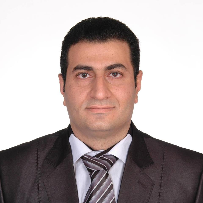
Prof. Dr. Mohammad Reza Safaei
Email: msafaei@clarkson.edu
Affiliation: Mechanical & Aerospace Engineering, 275 CAMP Building, Clarkson University, CU Box 5725, NY, USA
Homepage:
Research Interests: machine learning, energy systems
Summary
Artificial intelligence and machine learning are rapidly transforming engineering analysis by enabling faster, more accurate, and data-driven modeling of complex physical systems. In fluid flow, heat transfer, and energy systems, traditional experimental and numerical approaches can be costly, time-consuming, and computationally intensive. AI-enhanced methods provide new opportunities to accelerate simulations, improve prediction accuracy, optimize designs, and support real-time decision-making.
This Special Issue aims to collect high-quality research on the development and application of machine learning, deep learning, physics-informed neural networks, surrogate modeling, optimization algorithms, and data-driven approaches in thermal-fluid and energy engineering. The scope includes AI-assisted computational fluid dynamics, heat-transfer prediction, flow control, turbulence modeling, thermal management, renewable energy systems, battery and electronics cooling, multiphase flows, materials processing, and system-level optimization. Contributions may include theoretical studies, numerical simulations, experimental validation, hybrid physics-data models, and practical engineering applications. This Special Issue will provide a platform for researchers and engineers to present recent advances, identify current challenges, and promote the integration of artificial intelligence with conventional engineering methods for next-generation fluid flow, heat transfer, and energy systems.
Keywords
artificial intelligence, machine learning, fluid flow, heat transfer, energy systems, computational fluid dynamics, thermal management, physics-informed neural networks, surrogate modeling, optimization

 Login
Login Register
 Submit a Paper
 Propose a Special lssue