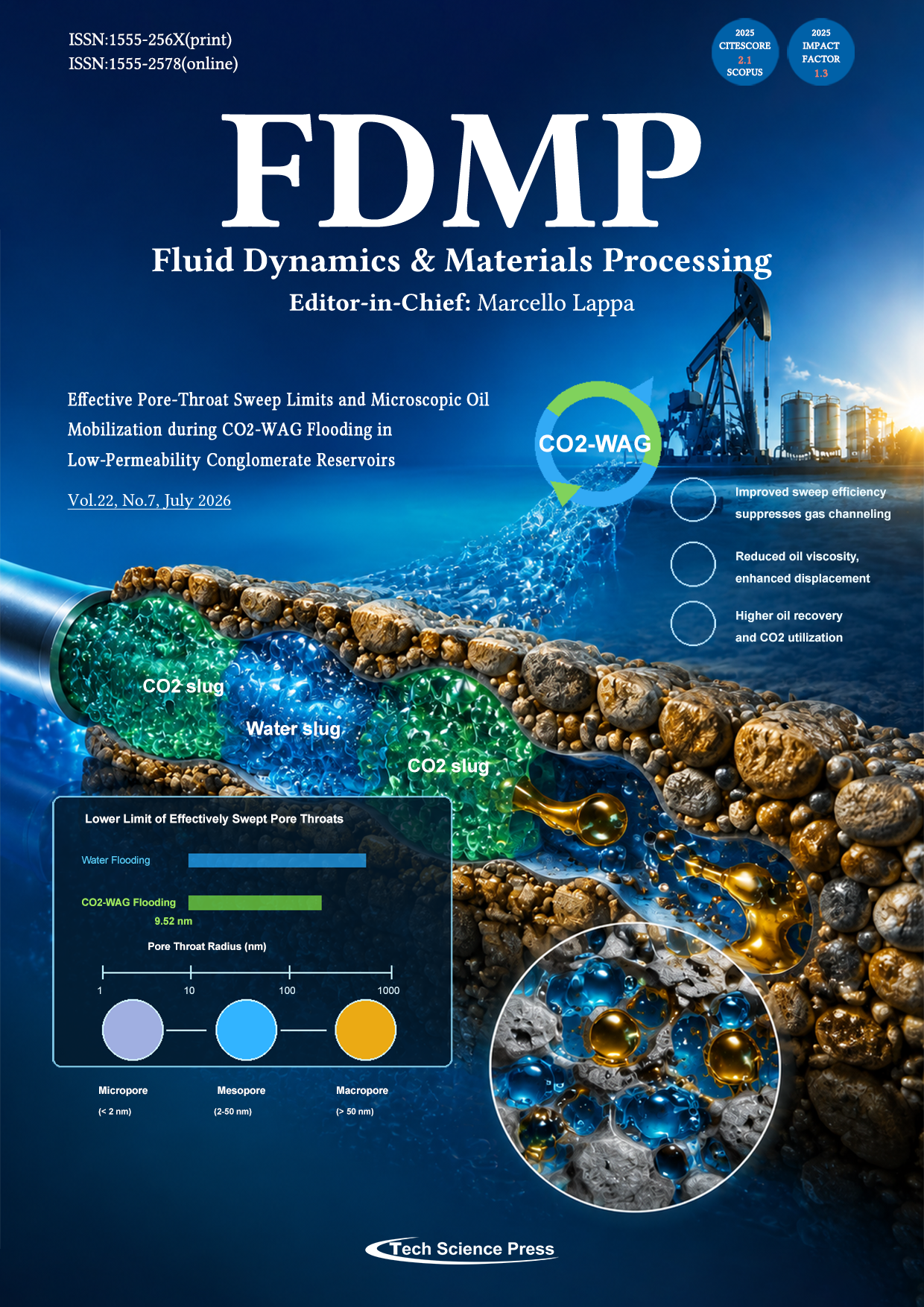
Low-permeability conglomerate reservoirs retain substantial volumes of residual oil within intricate pore-throat networks, where conventional water flooding and continuous CO2 injection are often hindered by inefficient sweep and early gas channeling. This cover showcases the displacement mechanisms underpinning CO2-water alternating gas (CO2-WAG) flooding, an emerging strategy for enhancing oil recovery while promoting efficient CO2 utilization.
Through long-core flooding experiments combined with in-situ nuclear magnetic resonance (NMR) monitoring, the study reveals how the alternating action of water and CO2 produces a synergistic displacement process. Water moderates CO2 mobility, suppresses preferential flow, and broadens reservoir sweep, while CO2 lowers oil viscosity, enhances mass transfer, and releases oil trapped within the finest pore structures.
By integrating these complementary mechanisms, CO2-WAG flooding overcomes the limitations of conventional injection methods, enabling more efficient recovery from complex, low-permeability formations. The work provides new insight into the interplay between fluid transport and residual oil mobilization, offering valuable guidance for the design of carbon-efficient enhanced oil recovery strategies and the sustainable development of mature unconventional reservoirs.
View this paper

 Login
Login Register
 Submit a Paper
 Propose a Special lssue