Submission Deadline: 30 September 2027 View: 291 Submit to Special Issue
Assoc. Prof. Dr. Jin-Gyun Kim
Email: jingyun.kim@khu.ac.kr
Affiliation: Department of Mechanical Engineering, Kyung Hee University, Yongin, Republic of Korea
Research Interests: structural dynamics, multibody dynamics, vibration, inverse problem, reduced-order modeling
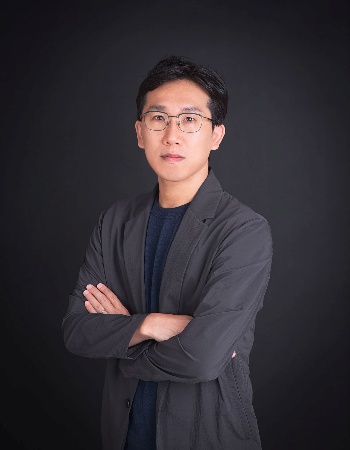
Assist. Prof. Hee-Sun Choi
Email: heesunchoi@sejong.ac.kr
Affiliation: Department of Artificial Intelligence and Robotics, Sejong University, Seoul, Republic of Korea
Research Interests: mechanical dynamics, uncertainty quantification, data-driven modeling, physics-encoded modeling

Assist. Prof. Seongji Han
Email: seongji.han@cnu.ac.kr
Affiliation: Department of Mechatronics Engineering, Chungnam National University, Daejeon, 305-764, Republic of Korea
Research Interests: multibody dynamics, machine learning, digital twin

Multibody dynamics (MBD) and flexible multibody dynamics (FMBD) are essential for modeling complex mechanical systems, including robotics, vehicle mechanisms, aerospace structures, and industrial machinery. However, full-order continuous formulations, joint constraints, and highly non-linear contact dynamics severely hinder classical numerical integrators from achieving real-time performance. Deep learning-based surrogate modeling has emerged as a key paradigm to bypass expensive numerical solvers.
Crucially, real-world dynamics demand models that not only fit smooth operating regimes but also overcome critical machine learning bottlenecks, including out-of-distribution extrapolation (e.g., unseen parameters or extended time horizons) and shock/impact data training (e.g., highly localized, transient stress waves and sudden force discontinuities). Furthermore, integrating Large Language Model (LLM)-based AI agents offers promising avenues for automating complex MBD and FMBD modeling workflows, generating intelligent parameters, and setting up interactive dynamic simulations.
This Special Issue focuses on advanced data-driven dynamics, physics-informed ML, and reduced-order frameworks tailored for complex MBD/FMBD systems. The Special Issue also addresses critical learning challenges across extreme data regimes: developing sample-efficient methodologies for data-scarce scenarios while optimizing sampling strategies and training scalability for big-data environments. We encourage contributions addressing generalizability, transient extreme events, continuous spatial-temporal learning, real-time control, agent-wise MBD/FMBD modeling strategies, and very practical applications in real-world engineering, including robotics and future mobilities.
Scope and Potential Topics:
· Data-driven surrogate modeling for general MBD/FMBD systems handling continuous temporal-spatial responses.
· Reliable generalization and extrapolation methodologies across parameter ranges, unseen operational domains, and long-term time horizons.
· Machine learning for non-smooth mechanical dynamics involving contact, impact, shock propagation, high-frequency transients, discontinuous forces, and localized energy dissipation.
· Sample-efficient training strategies (e.g., coarse sampling, error correction algorithms, adaptive sampling) for computationally intensive data.
· Physics-informed (or Physics-guided), structure-preserving, and operator-learning frameworks for constrained mechanical systems.
· LLM-based AI agent frameworks for automated MBD/FMBD modeling, intelligent system configuration, and interactive simulation workflows.


 Login
Login Register
 Submit a Paper
 Propose a Special lssue