Submission Deadline: 01 September 2027 View: 387 Submit to Special Issue
Assoc. Prof. Dr. Renwei Ji
Email: renwei.ji@just.edu.cn
Affiliation: School of Naval Architecture and Ocean Engineering, Jiangsu University of Science and Technology, Zhenjiang, China
Research Interests: ocean engineering, hydrodynamics, offshore renewable energy, floating breakwater technology, fluid–structure interaction, CFD solver development, model experiment

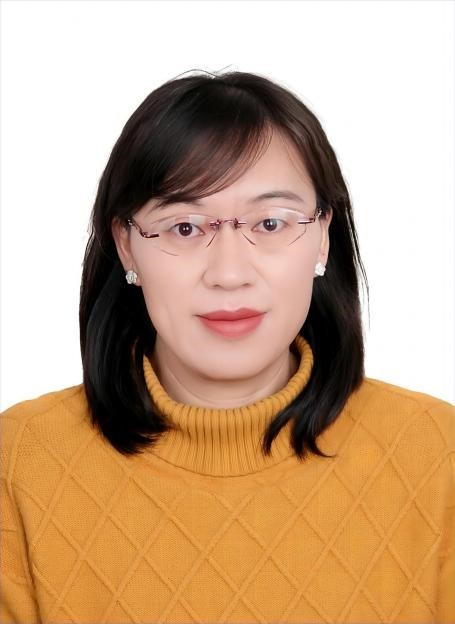
Prof. Dr. Fengmei Jing
Email: jingfengmei@bipt.edu.cn
Affiliation: School of Mechanical Engineering, Beijing Institute of Technology, Beijing, China
Research Interests: wave energy, tidal energy, offshore wind energy, deep sea energy development, marine equipment design and performance prediction
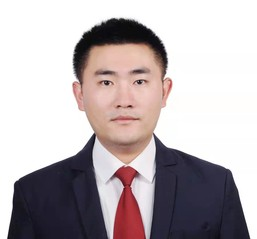
Prof. Dr. Yuquan Zhang
Email: zhangyq@hhu.edu.cn
Affiliation: College of Water Conservancy and Hydropower Engineering, Hohai University, Nanjing, China
Research Interests: ocean engineering, tidal current power generation, multi-energy complementarity, energy Island technology
Hydrodynamics plays a fundamental role in the design, operation, and safety assessment of marine engineering equipment exposed to complex ocean environments. Rapid advances in offshore energy, deep-sea exploration, marine transportation, aquaculture, and multipurpose ocean platforms have created new challenges involving strongly coupled interactions among waves, currents, wind, structures, mooring systems, and the seabed. This Research Topic aims to present recent progress in theoretical, numerical, experimental, and data-driven studies of hydrodynamic problems associated with marine engineering equipment. Particular attention is given to nonlinear wave–structure interaction, fluid–structure interaction, hydroelasticity, slamming, green water, vortex-induced vibration, wake dynamics, multibody coupling, station keeping, and hydrodynamic performance under combined environmental loads. Contributions addressing offshore renewable energy devices, floating and fixed platforms, ships, underwater vehicles, aquaculture systems, and other advanced marine structures are especially welcome. The collection also encourages studies on high-fidelity computational methods, model testing, field measurements, reduced-order modeling, machine learning, digital twins, uncertainty quantification, and design optimization. Original research articles, reviews, and methodological papers that advance both fundamental understanding and engineering applications are invited.


 Login
Login Register
 Submit a Paper
 Propose a Special lssue