Guest Editor(s)
Prof. Runfa Zhang
Email: zrf@sxu.edu.cn
Affiliation: School of Automation and Software Engineering, Shanxi University, Taiyuan, China
Homepage: www.researchgate.net/profile/Runfa-Zhang
Research Interests: artificial intelligence, neural networks, computer symbolic computation, soliton theory and integrable systems, nonlinear mathematical physics equations, intelligent algorithms, hemodynamics

Mr. Zhigao Huang
Email: zghuang@qztc.edu.cn
Affiliation: Department of Physics and Information Engineering, Quanzhou Normal University, Quanzhou, China
Homepage:
Research Interests: artificial intelligence and machine learning, deep learning and transformer architectures, frequency-domain learning and optimization, explainable and interpretable ai, physics-informed machine learning and ai for scientific computing
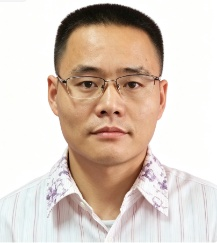
Assoc. Prof. Xiejiaquan
Email: xjq371195982@163.com
Affiliation: School of Mathematics and Statistics, Taiyuan Normal University, Jinzhong, China
Homepage:
Research Interests: nonlinear dynamics, fractionalorder vibration
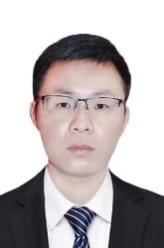
Prof. Jianglong Shen
Email: jlshen@yibinu.edu.cn
Affiliation: School of Mathematics and Physics, Yibin University, Yibin, China
Homepage:
Research Interests: nonlinear waves, soliton, neural networks, symbolic computation, applied mathematics, dynamics
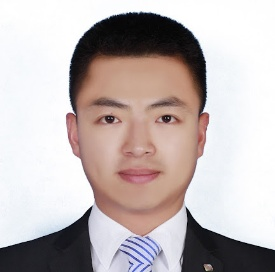
Prof. Dr. Wei Shi
Email: shiwei0008@link.tyut.edu.cn
Affiliation: Institute of Advanced Forming and Intelligent Equipment, Taiyuan University of Technology, Taiyuan, China
Homepage: https://www.researchgate.net/profile/Wei-Shi-136
Research Interests: robotics, nonlinear dynamics, neural networks, uav, artificial intelligence, mechanical engineering
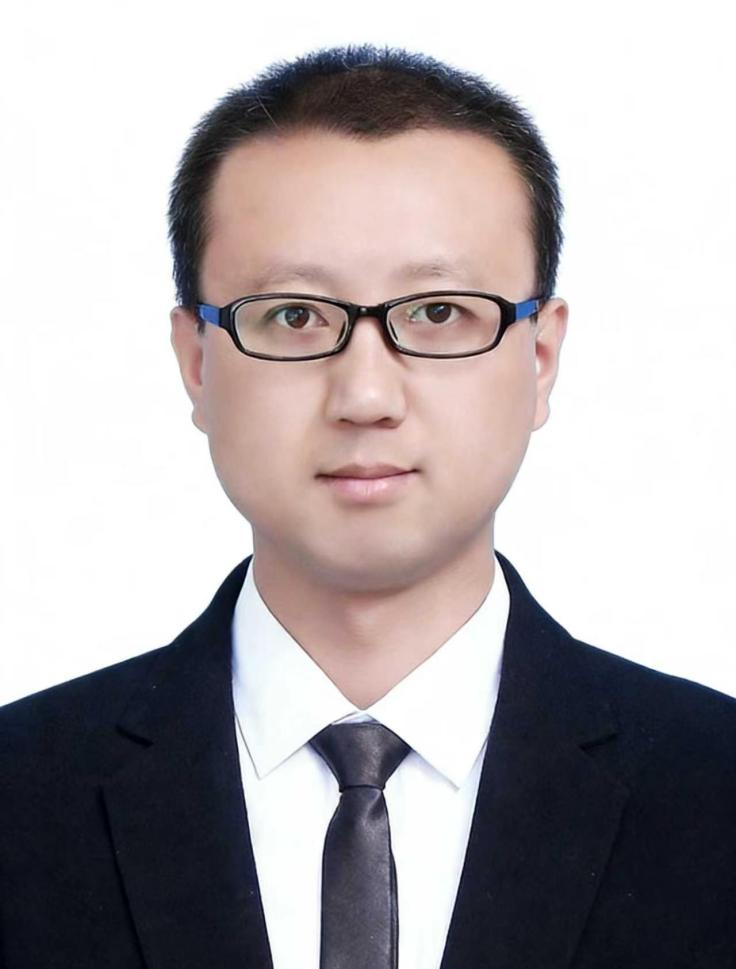
Summary
The rapid advancement of artificial intelligence (AI), machine learning, and neural-symbolic computing is opening new avenues for addressing increasingly complex problems in fluid dynamics and materials processing. Conventional analytical and numerical approaches can face substantial challenges when dealing with high-dimensional parameter spaces, strongly nonlinear and multiscale phenomena, complex geometries, multiphysics coupling, and inverse problems involving sparse or incomplete observations. The integration of data-driven neural-network architectures with symbolic mathematical computation offers a promising alternative, combining the predictive capabilities of machine learning with the interpretability and physical consistency of analytical formulations. Neural-symbolic approaches can facilitate physics-aware modelling, accelerate numerical prediction, construct reduced-order representations, identify hidden relationships within complex flow data, and enable the automated discovery of governing equations and constitutive relationships. These capabilities are particularly relevant to nonlinear waves, soliton dynamics, coherent structures, transport phenomena, multiphase flows, interfacial and free-surface flows, turbulence, and other complex fluid systems encountered in engineering and materials processing.
Beyond prediction and surrogate modelling, AI-driven approaches are increasingly providing new tools for addressing fundamental and applied problems in fluid mechanics. These include data-assisted identification of nonlinear mechanisms, inverse reconstruction of flow and material properties, optimization and control of fluid systems, uncertainty quantification, real-time monitoring, and the discovery of reduced or generalized physical models from experimental and numerical data. Neural-symbolic methods are especially attractive in this context because they can bridge purely data-driven learning and conventional physics-based modelling, thereby providing models that are not only computationally efficient but also physically interpretable and transferable across different flow regimes and operating conditions. Their application to nonlinear waves and localized coherent structures is particularly promising, as the underlying dynamics often involve intricate interactions between nonlinearity, dispersion, dissipation, instability, and external forcing. Similar opportunities arise in complex fluids and materials-processing systems, where multiphysics interactions, nonlinear constitutive behavior, and evolving interfaces can make conventional modelling computationally demanding.
This Special Issue aims to bring together high-quality original research and review articles addressing the development and application of AI, machine learning, neural-symbolic computing, and related intelligent computational methodologies with particular emphasis on nonlinear waves and soliton theory. Contributions are welcomed from fundamental mathematical developments through to numerical implementation, experimental validation, and engineering applications.
Topics of interest include, but are not limited to:
AI-assisted discovery of nonlinear governing equations, neural-symbolic modelling of fluid and multiphase systems, machine-learning approaches to nonlinear waves and solitons, reduced-order and surrogate modelling, data-driven turbulence modelling, multiphysics and multiscale simulations, inverse problems and parameter identification, flow optimization and control, physics-informed and structure-preserving machine learning, uncertainty quantification, and AI-assisted analysis of experimental and computational flow data.
Keywords
artificial intelligence, neuralsymbolic computing, fluid dynamics, nonlinear waves, soliton dynamics, physicsinformed machine learning, symbolic computation, nonlinear integrable systems

 Login
Login Register
 Submit a Paper
 Propose a Special lssue