Home / Journals / OR / Vol.34, No.8, 2026
Special Issues
Table of Content
cover

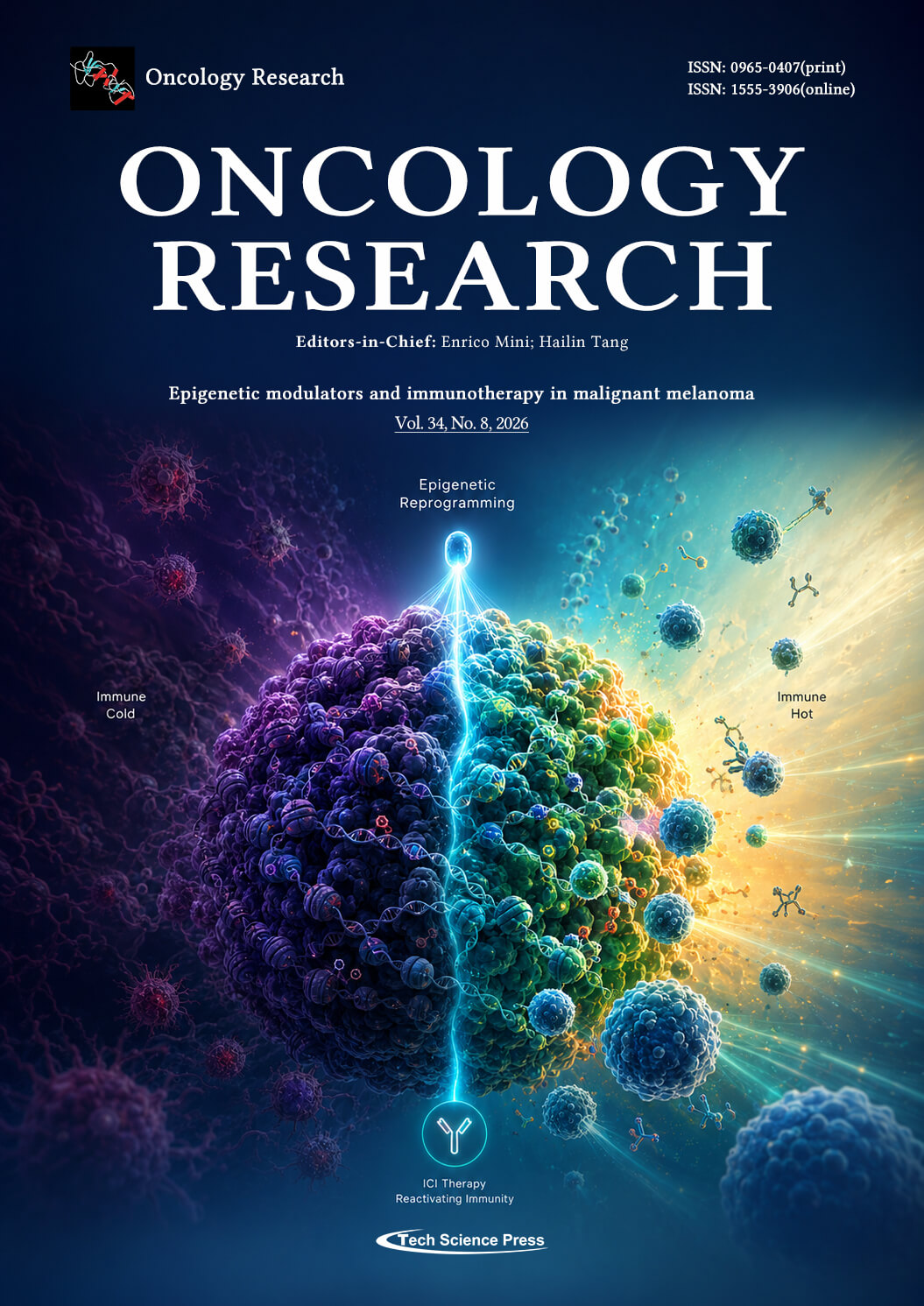
On the Cover

On the interface between immune cold and immune hot melanoma microenvironment. The cover image illustrates the involvement of epigenetic reprogramming as a major mechanism in resensitizing melanoma’s immunosuppressive microenvironment following immunotherapy. An aberrant epigenetic landscape contributes further to resistance against immune checkpoint inhibitors (ICIs) in melanoma management. As such, in this review article, we report on major epigenetic mechanisms (e.g., DNA methylation, histone modifications and non-coding RNAs expression patterns) that become deregulated along with underlying molecular mechanisms that govern melanoma’s immunosuppressive responses. In addition, this review article provides a comprehensive overview of how different classes of epigenetic drugs can reverse resistant phenotypes (either in single or in combined therapeutic schemes with ICIs) alongside the use of emerging technologies aiming to improve therapeutic responses. This cover image was generated using AI-assisted tools. The authors confirm that it contains no identifiable human likenesses, copyrighted elements, or misleading content. 

View this paper

  • Open AccessOpen Access

    REVIEW

    Epigenetic Modulators and Immunotherapy in Malignant Melanoma

    Ioannis Anestopoulos1,*, Sotiris Kyriakou1, Maria Deligiorgi2, Dimitrios T. Trafalis2, Sotiris Botaitis3, Rodrigo Franco4,5, Aglaia Pappa6, Mihalis I. Panayiotidis7,*
    Oncology Research, Vol.34, No.8, 2026, DOI:10.32604/or.2026.072349 - 16 July 2026
    Abstract Despite the use of targeted and/or immune-based therapeutic approaches, mortality rates among melanoma patients are high, mainly due to drug-induced resistance mechanisms. In parallel, alterations of epigenetic mechanisms (e.g., deregulated patterns of DNA methylation, aberrant histone modifications and abnormal expression levels of non-coding RNAs [ncRNAs]) have been associated not only with the pathophysiology of melanoma but also with the resistance against various immunotherapeutic drugs. In this review article, we discuss the involvement of different types of epigenetic mechanisms in melanoma progression. In addition, we report on melanoma’s immune environment and immunosuppressive mechanisms while we highlight More >

  • Open AccessOpen Access

    REVIEW

    Induction Therapy Followed by Surgery in Advanced Thymic Epithelial Tumors: A 20-Year Systematic Review and Meta-Analysis

    Giovanni Leuzzi1,*, Michele Ferrari1, Federica Sabia1, Alessandro Pardolesi1, Alessia Stanzi1, Claudia Proto2, Giuseppe Lo Russo2, Arsela Prelaj2, Monica Ganzinelli2, Matteo Calderoni1, Clarissa Uslenghi1, Ugo Pastorino3, Piergiorgio Solli1
    Oncology Research, Vol.34, No.8, 2026, DOI:10.32604/or.2026.077158 - 16 July 2026
    (This article belongs to the Special Issue: Integrative Strategies in Cancer Therapy)
    Abstract Backgrounds: Despite the availability of multimodal strategies, no universally accepted guidelines exist for the management of advanced Thymic Epithelial Tumors (TETs), particularly in locally advanced thymomas. The aim of this study was to evaluate the oncological and surgical outcomes of induction therapy (IT) followed by surgery in patients with Masaoka–Koga stage III–IVA TETs. To this end, we conducted a systematic review and meta-analysis assessing surgical-pathological and survival outcomes. Methods: Following Preferred Reporting Items for Systematic Reviews and Meta-Analyses (PRISMA) guidelines, a systematic search of PubMed, Embase, and the Cochrane Central Register of Controlled Trials was performed.… More >

    Graphic Abstract

    Induction Therapy Followed by Surgery in Advanced Thymic Epithelial Tumors: A 20-Year Systematic Review and Meta-Analysis

  • Open AccessOpen Access

    REVIEW

    Cancer Drug Development in Never-Smoker Lung Cancer: Targeted and Immune-Based Therapeutic Strategies

    Cristian Cojocaru, Marcel Costuleanu*, Ovidiu Rusalim Petriș, Ruxandra Cojocaru, Decebal Vasîncu, Elena Cojocaru
    Oncology Research, Vol.34, No.8, 2026, DOI:10.32604/or.2026.080024 - 16 July 2026
    Abstract Lung cancer in individuals who have never smoked (LCINS) represents a clinically and biologically distinct subset of non–small cell lung cancer, driven predominantly by oncogenic alterations rather than tobacco-related mutagenesis. This review aims to summarize current and emerging targeted and immune-based therapeutic strategies in LCINS individuals. These patients present a molecular profile that differs substantially from tobacco-associated disease and has direct consequences for treatment selection. Evidence published over the past five years has clarified how these molecular features shape treatment response and resistance in this setting. Particular attention is given to tumors with alterations in… More >

  • Open AccessOpen Access

    REVIEW

    First-Line Treatment Strategies in IMDC Favourable-Risk Metastatic Clear Cell Renal Cell Carcinoma

    Alejandro Valdés1,2, Jaime González-Montero1,3, Carlos Rojas1,3, Mauricio Burotto1,3,*
    Oncology Research, Vol.34, No.8, 2026, DOI:10.32604/or.2026.077711 - 16 July 2026
    (This article belongs to the Special Issue: Advances in Genitourinary Cancer)
    Abstract Immune checkpoint inhibitors (ICIs) combined with vascular endothelial growth factor tyrosine kinase inhibitors (VEGF-TKIs) have transformed the treatment landscape of advanced clear cell renal cell carcinoma (ccRCC). Current guidelines favour ICI plus VEGF-TKI (IO+TKI) combinations for favourable-risk disease (International Metastatic RCC Database Consortium [IMDC] score 0) based on improved objective response rates and progression-free survival. However, no IO+TKI combination has demonstrated a statistically significant overall survival (OS) benefit in this subgroup. A pooled analysis of four pivotal phase III trials (n = 839 favourable-risk patients) revealed no OS advantage for IO+TKI versus sunitinib monotherapy (hazard… More >

    Graphic Abstract

    First-Line Treatment Strategies in IMDC Favourable-Risk Metastatic Clear Cell Renal Cell Carcinoma

  • Open AccessOpen Access

    REVIEW

    Navigating the Metabolic-Genomic Paradigm: Mitochondrial Reprogramming as a Driver of Cancer Plasticity

    Yen-Dun Tony Tzeng1,2,#, Chen-Yueh Wen3,4,#, Su-Boon Yong5,6, Zhi-Hong Wen7,8, An-Jen Chiang9,*, Chia-Jung Li8,10,11,12,*
    Oncology Research, Vol.34, No.8, 2026, DOI:10.32604/or.2026.078924 - 16 July 2026
    (This article belongs to the Special Issue: Tumor Biomarkers for Diagnosis, Prognosis and Targeted Therapy)
    Abstract Breast cancer (BC) management has transitioned from histological classification to molecular subtyping, yet therapeutic resistance and intratumor heterogeneity remain critical clinical challenges. This review examines the emerging paradigm shift toward integrating mitochondrial metabolism into the precision medicine framework. We detail the complex mitonuclear crosstalk where nuclear genetic alterations, such as Breast Cancer 1 (BRCA1) deficiency and TP53 mutations, fundamentally reprogram mitochondrial bioenergetics. Specifically, the loss of BRCA1 function triggers a systemic NAD+ depletion trap through PARP1 hyperactivation, while oncogenic drivers like MYC coordinate with PGC1α to enhance mitochondrial biogenesis for metastatic survival. We evaluate the diagnostic potential of… More >

    Graphic Abstract

    Navigating the Metabolic-Genomic Paradigm: Mitochondrial Reprogramming as a Driver of Cancer Plasticity

  • Open AccessOpen Access

    REVIEW

    Amino Acid Metabolic Enzymes in Gastric Cancer: Roles and Mechanisms in Tumorigenesis and Progression

    Zixin Wan1,2,#, Jingdan Quan1,2,#, Yue Qiu1,2, Zhiwei Zhang1,2,*
    Oncology Research, Vol.34, No.8, 2026, DOI:10.32604/or.2026.082561 - 16 July 2026
    (This article belongs to the Special Issue: Gastroenteropancreatic Tumors: From Basic Research to Therapeutic Approach)
    Abstract Gastric cancer (GC) is one of the malignant tumors with high incidence and mortality worldwide. It has concealed early symptoms, poor prognosis for advanced patients, and limited efficacy of conventional treatments. Metabolic reprogramming is a core hallmark of cancer, among which amino acid metabolic reprogramming plays a critical regulatory role in the initiation and progression of GC. By linking intracellular energy supply, biosynthetic demands, and tumor microenvironment remodeling, it participates in immune escape, redox homeostasis maintenance, and therapeutic resistance. Dysregulation of key amino acids, including arginine, tryptophan, glutamine, branched-chain amino acids, serine/glycine, and aspartic acid,… More >

  • Open AccessOpen Access

    REVIEW

    Crosstalk between Extracellular Vesicles and the Tumor Microenvironment: Mechanistic Insights and Therapeutic Opportunities

    Yaqi Xu1, Jia Zhao2, Xiaowen Mao1,*
    Oncology Research, Vol.34, No.8, 2026, DOI:10.32604/or.2026.079562 - 16 July 2026
    (This article belongs to the Special Issue: Targeting the Tumor Microenvironment: Emerging Insights into Cancer Progression and Therapeutics)
    Abstract Extracellular vesicles (EVs) are actively secreted, membrane-enclosed nanoparticles that serve as pivotal mediators of intercellular communication. They function as key mediators of intercellular communication by transporting diverse biomolecules, including proteins, nucleic acids, and metabolites. Within the tumor microenvironment, EVs drive complex cellular crosstalk and critically regulate tumor progression by remodeling the extracellular matrix, conferring drug resistance, and reprogramming immune responses. Given their natural biocompatibility, tissue tropism, and ability to cross biological barriers, EVs have emerged as promising platforms for immunotherapy, tumor vaccines and targeted drug delivery system. Moreover, the rapid expansion of EV-based clinical trials… More >

    Graphic Abstract

    Crosstalk between Extracellular Vesicles and the Tumor Microenvironment: Mechanistic Insights and Therapeutic Opportunities

  • Open AccessOpen Access

    REVIEW

    Targeting PCNA in Cancer: A Paradigm Shift from Static Inhibition to Dynamic Network Modulation

    Shijia Lu1,#, Yanmin Wang1,#, Han Zhang1, Mengjia Yan1, Mengdan Sang2, Jinle Wang1, Huaying Du3, Jinwen Sima3, Yiran Zhen2, Xue Yang2, Yutong Zhang1, Hongwei Zhou1,*
    Oncology Research, Vol.34, No.8, 2026, DOI:10.32604/or.2026.079988 - 16 July 2026
    Abstract Proliferating Cell Nuclear Antigen (PCNA) is a core protein in DNA replication and repair. Its functional dysregulation drives tumorigenesis and therapeutic resistance, making it a critical anticancer target. However, the fundamental conflict between PCNA’s indispensable “guardian” function in normal cells and its hijacked “accomplice” role in cancer cells constitutes the central challenge for targeted intervention: how to eradicate tumors while avoiding severe toxicity to normal tissues. This review aims to systematically review the latest advances and translational dilemmas in the field of PCNA-targeted therapy. It outlines various intervention strategies, including small-molecule inhibitors, proteolysis-targeting chimeras, post-translational More >

    Graphic Abstract

    Targeting PCNA in Cancer: A Paradigm Shift from Static Inhibition to Dynamic Network Modulation

  • Open AccessOpen Access

    REVIEW

    The Intratumoral Microbiota in Breast Cancer: Roles in Progression, Immunity, and Therapy

    Zhihao Wei1,#, Jijie Cai1,#, Sifen Wang2,#, Yachen Li3, Libo Luo1, Jun Chen1, Fuyu Li1, Hongyu Nie1, Ke Gong4,*, Manbo Cai1,*
    Oncology Research, Vol.34, No.8, 2026, DOI:10.32604/or.2026.079281 - 16 July 2026
    (This article belongs to the Special Issue: Advances in Cancer Therapeutics)
    Abstract Breast cancer (BC) remains a leading cause of cancer-related mortality worldwide, and accumulating evidence suggests that tumor-associated microbiota may contribute to disease heterogeneity beyond host genetic and immune determinants. Advances in sequencing and multi-omics technologies have uncovered a reproducible intratumoral microbiome in BC, with distinct compositional patterns associated with molecular subtypes, clinicopathological features, and clinical outcomes. Alterations in specific microbial taxa have also been linked to tumor immune status, metastatic potential, and therapeutic sensitivity, underscoring their potential value in disease stratification and prognostic assessment. Although breast tissue represents a low-biomass environment, multiple studies employing stringent… More >

  • Open AccessOpen Access

    REVIEW

    Research Advances in Drug Resistance Mechanisms to Anti-HER2 Therapy in HER2-Positive Breast Cancer

    Chunwei Huang, Jingyi Kong, Hangxing Ren, Wanchen Zhang, Shi Jiang*, Xianneng Sheng*
    Oncology Research, Vol.34, No.8, 2026, DOI:10.32604/or.2026.085387 - 16 July 2026
    Abstract HER2-positive breast cancer accounts for 15–20% of all breast cancer cases. Although the development of monoclonal antibodies (e.g., trastuzumab, pertuzumab), tyrosine kinase inhibitors (e.g., lapatinib, pyrotinib), and antibody-drug conjugates (e.g., T-DM1, trastuzumab deruxtecan) has greatly improved patient prognosis, primary or acquired resistance to anti-HER2 therapy remains a major clinical challenge, leading to treatment failure and disease progression. Recent research has elucidated diverse resistance mechanisms, including HER2 signaling pathway aberrations (such as receptor mutations, alternative splicing, and bypass activation), tumor microenvironment remodeling (involving immunosuppressive cells, metabolic reprogramming, and immune checkpoint molecules), and ADC-specific resistance (impaired internalization,… More >

  • Open AccessOpen Access

    REVIEW

    Dual Regulatory Functions and Therapeutic Potential of CD48 in Tumor Immunity

    Zhenan Lin#, Zhongwu Chen#, Zihua Deng, Tingting Bao, Sandi Shen*
    Oncology Research, Vol.34, No.8, 2026, DOI:10.32604/or.2026.082272 - 16 July 2026
    (This article belongs to the Special Issue: Advances in Cancer Immunotherapy)
    Abstract Cluster of differentiation 48 (CD48) is a glycosylphosphatidylinositol-anchored member of the signaling lymphocyte activation molecule (SLAM) family that is predominantly expressed on hematopoietic cells and regulates immune-cell communication through 2B4 (CD244) and CD2. This narrative review critically summarizes the context-dependent role of CD48 in tumor immunity, with emphasis on the distinction between activating trans-interactions and potentially inhibitory cis-interactions. Evidence from hematologic malignancies and selected solid tumors indicates that CD48 may support antitumor immunity by facilitating natural killer (NK) cells activation, CD8+ T-cell co-stimulation, immune synapse formation, and effector cytokine production. Conversely, loss of CD48 expression, sustained… More >

  • Open AccessOpen Access

    ARTICLE

    Real-World Experience with Venetoclax Therapeutic Drug Monitoring in Acute Myeloid Leukemia: Role of Posaconazole, Correlation with Safety and Efficacy

    Beatrice Sani1,2, Alessandro Cignetti2, Marta Leporati3, Sara Sommariva4, Marco Armenio1, Valerio Tenace5, Arianna Savi2, Johanna Umurungi1,2, Giovanni Fornari1,2, Simone Busso3, Alessandra Canevaro3, Igor Bisognin3, Silvia Marini1, Michele Piana4, Daniela Cilloni1,2, Valentina Gaidano2,*
    Oncology Research, Vol.34, No.8, 2026, DOI:10.32604/or.2026.078245 - 16 July 2026
    Abstract Objectives: Venetoclax (VEN) is approved for acute myeloid leukemia (AML) in association with azacitidine, in a 28-day schedule at a fixed dosage, which requires reduction if azoles are co-administered. The present study aims to evaluate VEN therapeutic drug monitoring (TDM) in a real-word setting, where the VEN schedule is frequently reduced, investigating: (i) the posaconazole impact, and (ii) whether VEN exposure correlates with safety and efficacy. Methods: We analyzed data from 43 AML patients treated with different VEN-containing regimens, for whom a near-trough VEN plasma concentration (Cmin) was determined at different timepoints (days 5-8-11-15-22-29) across different cycles… More >

  • Open AccessOpen Access

    ARTICLE

    Transcriptomic Study of Diffuse Large B-Cell Lymphoma Associated with HIV Infection: Identification of Novel Molecular Subtypes

    Yasmine Labiad1, Céline Baier1, Michèle Genin2, Caroline Besson3,4, Sophie Prevot5, Hubert Lepidi6, Régis Costello1,7,*
    Oncology Research, Vol.34, No.8, 2026, DOI:10.32604/or.2026.076241 - 16 July 2026
    Abstract Objectives: Transcriptomic profiling has enabled the classification of Diffuse Large B-Cell Lymphoma (DLBCL) into distinct subtypes, such as Germinal Center B-cell-like (GCB) and Activated B-cell-like (ABC), primarily in HIV-negative patients. However, HIV-associated DLBCL may follow different molecular mechanisms due to immune dysregulation. This study aimed to characterize the transcriptomic landscape of HIV-related DLBCL to identify distinct subtypes and deregulated pathways with potential theranostic implications. Methods: Twelve formalin-fixed, paraffin-embedded DLBCL samples from HIV-positive patients were analyzed using Agilent’s microarray. Quantile normalization and unsupervised hierarchical clustering were performed to classify tumors based on gene expression profiles. Results: Two distinct More >

    Graphic Abstract

    Transcriptomic Study of Diffuse Large B-Cell Lymphoma Associated with HIV Infection: Identification of Novel Molecular Subtypes

  • Open AccessOpen Access

    ARTICLE

    Immunohistochemical Expression of Novel Therapeutic Targets in Squamous Cell Carcinoma of the Bladder

    Lisa J. Frey1,*, Nina Lache1, Nikita D. Fischer1, Niklas Rölz1, Lisa Frey1, Maximilian Haack1, Gregor Duwe1, Stefan Porubsky2, Axel Haferkamp1, Daniel-C. Wagner2,3, Maximilian P. Brandt1
    Oncology Research, Vol.34, No.8, 2026, DOI:10.32604/or.2026.078954 - 16 July 2026
    (This article belongs to the Special Issue: Advances in Genitourinary Cancer)
    Abstract Objectives: Squamous cell carcinoma (SCC) of the bladder is an aggressive histologic subtype with distinct clinical behavior and limited treatment options after platinum-based chemotherapy. This study aimed to evaluate potential therapeutic targets in bladder SCC. Methods: A retrospective cohort of 790 patients who underwent radical cystectomy for bladder cancer between 2011 and 2021 was screened to identify cases with histologically confirmed SCC. All SCC cases in the pathology department from 2003 to 2011 were also reviewed. Clinical and pathological data from 54 patients were analyzed. A tissue microarray (TMA) was constructed, and immunohistochemical (IHC) analyses… More >

  • Open AccessOpen Access

    ARTICLE

    TGFβ Blockade by Inhibition of Enolase-1-Mediated Plasmin Targets Tumor-Associated Macrophages in Pancreatic Ductal Adenocarcinoma

    Mao-Lin Chen1, I-Che Chung1, Kevin Chih-Yang Huang2,3,4,5, K. S. Clifford Chao6,7,8, Ta-Tung Yuan1,*
    Oncology Research, Vol.34, No.8, 2026, DOI:10.32604/or.2026.077930 - 16 July 2026
    (This article belongs to the Special Issue: Gastroenteropancreatic Tumors: From Basic Research to Therapeutic Approach)
    Abstract Background: Pancreatic ductal adenocarcinoma (PDAC) is characterized by an immunosuppressive and metabolically rewired tumor microenvironment (TME). Although α-enolase (ENO1) is frequently overexpressed in PDAC and associated with poor prognosis, its functional role in TME remodeling remains unclear. This study investigated the role of ENO1 in plasmin-dependent transforming growth factor β (TGFβ) activation and metabolic adaptation in PDAC and evaluated the therapeutic potential of HuL001, a first-in-class humanized anti-ENO1 monoclonal antibody. Methods: ENO1 expression and clinical relevance were evaluated in PDAC tissues by immunohistochemistry. Mechanistic studies were performed using PDAC-monocyte co-culture systems, reverse transcription-quantitative PCR (RT-qPCR), enzyme-linked… More >

  • Open AccessOpen Access

    ARTICLE

    Integrated Multi-Omics and Spatial Transcriptomics Reveal GUK1 as a Prognostic Biomarker Regulated by the TP53-HSF1 Axis in Breast Cancer

    Wei Lee1, Hung-Yu Lin1,2,*, Pei-Yi Chu1,3,*
    Oncology Research, Vol.34, No.8, 2026, DOI:10.32604/or.2026.078813 - 16 July 2026
    (This article belongs to the Special Issue: Tumor Biomarkers for Diagnosis, Prognosis and Targeted Therapy)
    Abstract Background: Guanylate kinase 1 (GUK1) is crucial for nucleotide metabolism, yet its impact on breast cancer (BC) progression remains poorly defined. The objective of the present study is to investigate GUK1 as a prognostic biomarker and therapeutic target. Methods: We employed a multi-omics approach integrating The Cancer Genome Atlas (TCGA) data, machine learning algorithm, High-Definition spatial transcriptomics (Visium HD), single-cell profiling, molecular docking and experimental validation including in vitro knockdown models and Surface Plasmon Resonance (SPR). Results: LASSO regression identified GUK1 as a key metabolic driver. High expression correlated significantly with poor survival and was most pronounced in… More >

  • Open AccessOpen Access

    ARTICLE

    Extracellular Signal-Regulated Kinase and Reactive Oxygen Species Regulate PD-L1 to Promote Migration and Proliferation of Triple-Negative Breast Cancer MDA-MB-231 Cells

    Ching-Chun Ho1, Yen-Cheng Chen1,2, Wei-Liang Lean1, Wen-Sheng Wu1,*
    Oncology Research, Vol.34, No.8, 2026, DOI:10.32604/or.2026.077693 - 16 July 2026
    (This article belongs to the Special Issue: Integrative Strategies in Cancer Therapy)
    Abstract Objectives: Triple-negative breast cancer (TNBC) is a highly aggressive form of breast cancer. Mitogen-activated protein kinases (MAPKs), including extracellular signal-regulated kinase (ERK) and c-Jun N-terminal kinase (JNK), as well as protein kinase B (AKT), are potential therapeutic targets for TNBC. Programmed death-ligand 1 (PD-L1) is implicated in TNBC progression and is associated with AKT and ERK signaling pathways. In addition, reactive oxygen species (ROS) act upstream of MAPK/AKT and PD-L1. In this study, we aimed to clarify the role of PD-L1 in TNBC progression and to delineate the underlying signaling mechanisms. Methods: Western blotting and reverse… More >

  • Open AccessOpen Access

    ARTICLE

    Integrative Analysis Identified an Eight-Gene Risk Signature Linked to CDK7 and Explored Its Association with HCC Progression via RelA Phosphorylation

    Bin Lan1, Jie Tan1, Qing Wang1, Siyuan Zeng2,*
    Oncology Research, Vol.34, No.8, 2026, DOI:10.32604/or.2026.081711 - 16 July 2026
    (This article belongs to the Special Issue: Advancements in Hepatocellular Carcinoma Treatment)
    Abstract Backgrounds: Cyclin-dependent kinase 7 (CDK7) plays key roles in transcription and cell cycle regulation, and its inhibition has been proposed as a potential therapeutic strategy for hepatocellular carcinoma (HCC). The primary research objective of this study is to identify and validate CDK7-associated prognostic genes in HCC using bioinformatics approaches, construct a reliable prognostic risk model, and explore the functional role of CDK7 in HCC progression through in vitro and in vivo experiments, with a specific focus on its association with RelA/p65 phosphorylation, so as to provide evidence supporting CDK7 as a potential prognostic biomarker and therapeutic target for… More >

  • Open AccessOpen Access

    ARTICLE

    Tumour-Derived sEVs Promote Triple-Negative Breast Cancer Progression Associated with HAVCR2 Upregulation in Macrophages

    Jia Liu1,2,#, Binqian Wang1,#, Yannan Jin1, Wenquan Chen1, Ruohan Shi1, Weijia Wang1, Xiaojing Zhang1, Yi Tan3, Zhongran Man3, Bo Hu1, Lisen Zhu1, Biao Zhang3,*, Chongchan Bao4,5,*, Gongsheng Jin1,*
    Oncology Research, Vol.34, No.8, 2026, DOI:10.32604/or.2026.079137 - 16 July 2026
    (This article belongs to the Special Issue: Next-Generation Oncology: Unearthing and Validating Novel Therapeutic Targets)
    Abstract Backgrounds: Triple-negative breast cancer (TNBC) is the most aggressive breast cancer subtype with a unique tumor microenvironment, and while Programmed cell death protein 1/Programmed cell death ligand 1 (PD-1/PD-L1) blockade represents a standard immunotherapy, most patients develop primary or acquired resistance, with few alternative immunotherapeutic targets currently available. Therefore, we aimed to identify potential immune checkpoint-related molecules involved in TNBC-macrophage crosstalk, clarify the underlying molecular mechanism mediated by small extracellular vesicles (sEVs), and provide a theoretical basis for the future development of novel immunotherapeutic targets against TNBC. Methods: Single-cell RNA-sequencing (scRNA-seq) datasets for various breast cancer… More >

  • Open AccessOpen Access

    ARTICLE

    ANLN: A New Hub in Glutamine Metabolism of Lung Adenocarcinoma by scRNA-Seq and Machine Learning

    Yiming Ma1,2,#, Zhihan Zhang1,2,#, Hongli Pan3, Hailin Jiang1,2, Lili Guo4,*, Fengjie Guo1,2,*
    Oncology Research, Vol.34, No.8, 2026, DOI:10.32604/or.2026.079515 - 16 July 2026
    (This article belongs to the Special Issue: Selected Papers from 2026 International Conference on New Models for Cancer Prevention and Treatment (NMCPT 2026))
    Abstract Objectives: Lung adenocarcinoma (LUAD) has a poor prognosis, and effective metabolic biomarkers are still few. Glutamine metabolism is one of the central features of tumor metabolic reprogramming, but the cellular heterogeneity and clinical significance of glutamine metabolism in the LUAD tumor microenvironment (TME) remain unknown. The goal of this paper was to define glutamine metabolism on a single-cell basis and determine major regulators that have predictive value. Methods: A single-cell RNA sequencing dataset (GSE149655) was combined with The Cancer Genome Atlas Lung Adenocarcinoma (TCGA-LUAD) and Gene Expression Omnibus (GEO) datasets in order to evaluate the… More >

  • Open AccessOpen Access

    ARTICLE

    The Construction and Preclinical Evaluation of Antitumor Activity of a Novel MIgG-OXA ADC in Lung Adenocarcinoma

    Haijun Sun1,#, Wenyue Yan2,#, Zhanyu Li3,#, Qintian Li4, Qilong Du4, Li Xu5, Wanwei Cao3, Junrong Yang6, Xilan Yang2, Jun Chen7,*, Yuan Mao8,*, Wen Huang4,*
    Oncology Research, Vol.34, No.8, 2026, DOI:10.32604/or.2026.080413 - 16 July 2026
    (This article belongs to the Special Issue: Novel Targets and Biomarkers in Solid Tumors)
    Abstract Background: The melanoma-associated antigen-A1 (MAGE-A1) demonstrates tumor-restricted expression patterns in diverse malignancies, positioning it as an attractive therapeutic target. This investigation aimed to engineer and validate a novel antibody-drug conjugate with oxaliplatin targeting MAGE-Al (MIg-OXA), a novel antibody-drug conjugate targeting MAGE-A1, while assessing its therapeutic potential against MAGE-A1-expressing lung adenocarcinoma through both cellular and animal models. Methods: We generated a MAGE-A1-specific immunoglobulin G (IgG) antibody (MIgG) and subsequently conjugated it with oxaliplatin (OXA) to produce MIgG-OXA. The conjugate’s binding specificity and cellular uptake were verified through cell-based enzyme-linked immunosorbent assay (ELISA), flow cytometric analysis, and immunofluorescence… More >

  • Open AccessOpen Access

    ARTICLE

    UCP2 Identifies Immunosuppressive Tumor-Associated Macrophages and Is Associated with Predicted Immunotherapy Resistance in Glioma

    Hui Zhou1,2, Jiarui Wang3, Zhili Qiao4, Xin Liao1,*
    Oncology Research, Vol.34, No.8, 2026, DOI:10.32604/or.2026.082613 - 16 July 2026
    (This article belongs to the Special Issue: Advances in Cancer Immunotherapy)
    Abstract Objectives: Uncoupling protein 2 (UCP2) has been extensively studied as a metabolic regulator in glioma; however, its relationship with the tumour immune microenvironment and the cellular source of its expression within the glioma tumour microenvironment (TME) remains poorly understood. This study aimed to characterise UCP2 expression at single-cell resolution and evaluate its immunological significance in glioma. Methods: This study employed an integrative multi-omics approach incorporating bulk transcriptomics, scRNA-seq (GSE70630, GSE84465, and GSE89567; n = 13,216 cells), immune deconvolution, immunohistochemistry (n = 96 glioma patients), and immunofluorescence co-staining (n = 6). Results: Pan-cancer analysis confirmed UCP2… More >

  • Open AccessOpen Access

    ARTICLE

    Breast Cancer Cell-Derived Exosomal miR-92b-3p Promotes Tumor Angiogenesis and Metastasis by Suppressing PTEN in Vascular Endothelial Cells

    Tingting Yang1, Meng Guan1, Xin Guan1, Lihua Kang1, Xiaomeng Wang1, Yanjie Guan1, Yang Yang2, Wei Deng3, Guoxiang Wang1,*
    Oncology Research, Vol.34, No.8, 2026, DOI:10.32604/or.2026.083563 - 16 July 2026
    (This article belongs to the Special Issue: Novel Biomarkers and Treatment Strategies in Solid Tumor Diagnosis, Progression, and Prognosis (Ⅱ))
    Abstract Background: Tumor-driven vascular remodeling is crucial for breast cancer metastasis; yet, the role of tumor-derived exosomal miRNAs in this process remains underexplored. This study aimed to investigate the clinical relevance and the underlying mechanism of breast cancer-derived exosomal miR-92b-3p in endothelial reprogramming. Methods: miR-92b-3p expression was evaluated in the TCGA cohort and clinical patient samples. The effects of exosomal miR-92b-3p from breast cancer cells on recipient human microvascular endothelial cells (HMVECs) were assessed using in vitro angiogenesis, migration, and permeability assays, alongside in vivo murine xenograft models. Mechanistic targets were validated via dual-luciferase and rescue experiments. Results: miR-92b-3p was… More >

  • Open AccessOpen Access

    ARTICLE

    miR-320d Is Associated with Reduced Nasopharyngeal Carcinoma Progression, Potentially through the NF-κB/IL-8 Axis-Mediated Inhibition of Neutrophil Extracellular Trap Formation

    Liu Liu1,2, Jie Liu1,2, Shuangchen Ning3, Jin Wang3, Yingchun He1,2,*
    Oncology Research, Vol.34, No.8, 2026, DOI:10.32604/or.2026.081869 - 16 July 2026
    (This article belongs to the Special Issue: Breaking the Bottleneck of Therapeutic Resistance in Solid Tumors: Emerging Technologies, Novel Targets, and Innovative Strategies)
    Abstract Objectives: Nasopharyngeal carcinoma (NPC) is an aggressive head and neck malignancy in which post-treatment recurrence and distant metastasis remain major contributors to poor clinical outcomes. Although microRNAs are important post-transcriptional regulators of tumor progression, the role of miR-320d in NPC remains incompletely understood. This study evaluated the biological role of miR-320d and explored whether it is involved in regulating neutrophil extracellular trap (NET) formation through the nuclear factor kappa-B (NF-κB)/interleukin-8 (IL-8) signaling axis. Methods: miR-320d was overexpressed in NPC cell lines S18 and 5-8F, and cell viability, migration, and invasion were evaluated. Integrated transcriptomic and proteomic… More >

  • Open AccessOpen Access

    ARTICLE

    Targeting Aurora A Kinase Enhance the CDK4/6 Inhibitor Sensitivity in HR+/HER2- Breast Cancer

    Juan Wu1,2, Yue Wang3, Honglin Yan1, Juanjuan Li2, Chuntao Quan4,*, Jingping Yuan1,*, Shengrong Sun2,*
    Oncology Research, Vol.34, No.8, 2026, DOI:10.32604/or.2026.081653 - 16 July 2026
    (This article belongs to the Special Issue: Advances in Cancer Therapeutics)
    Abstract Objectives: Despite the success of CDK4/6 inhibitors (CDK4/6i) in treating HR+/HER2- breast cancer (BC), some patients experience treatment failure due to CDK4/6i resistance. This study aimed to investigate whether targeting Aurora A kinase enhances CDK4/6 inhibitor sensitivity. Methods: An Abemaciclib-resistant cell line (MCF7AR) was developed by treating MCF7 cells with gradually increasing concentrations of Abemaciclib. We evaluated the relative protein levels of p-RB, p-Aurora A, Aurora A, and USP22 in cell cultures, animal tissues, and clinical samples. The effect of Aurora A inhibition on reversing CDK4/6i resistance was assessed using cell viability assays and tumor… More >

  • Open AccessOpen Access

    ARTICLE

    GPX4 Defines an Immune-Cold Phenotype and Poor Prognosis in Resected Lung Adenocarcinoma

    Ganxin Wang1, Zhongan Liu1, Tian Zhou2, Boting Yang1,3,4, Jiaqin Chen1,3,4, Jing Chen2, Kai Huang5, Yunqing Xu5, Quan Tang6, Xiangqian Yin5, Guangqin Xiao1,*, Sijia Zhang1,3,4,*
    Oncology Research, Vol.34, No.8, 2026, DOI:10.32604/or.2026.083840 - 16 July 2026
    (This article belongs to the Special Issue:  Biomarker Discovery for Personalized Medicine in Oncology)
    Abstract Objectives: Ferroptosis resistance may contribute to tumor progression and immune escape. This study evaluated the prognostic and immunological significance of glutathione peroxidase 4 (GPX4), a core ferroptosis-suppressive enzyme, in surgically resected lung adenocarcinoma. Methods: We retrospectively analyzed 104 patients with primary lung adenocarcinoma who underwent curative resection. GPX4 protein expression was assessed by immunohistochemistry (IHC) using the histological score (H-score), and patients were classified as GPX4-low (n = 54) or GPX4-high (n = 50). Intratumoral immune contexture was quantified using CD3, CD4, CD8, CD68, programmed cell death protein 1 (PD-1), and programmed death-ligand 1 (PD-L1) staining.… More >

    Graphic Abstract

    GPX4 Defines an Immune-Cold Phenotype and Poor Prognosis in Resected Lung Adenocarcinoma

  • Open AccessOpen Access

    ARTICLE

    Isoliquiritigenin Suppresses Oral Squamous Cell Carcinoma Progression by Targeting FABP5-Mediated Lipid Metabolism: Association with the circPOLB/miR-548ae-3p/C-MYC Axis

    Liang Li1,#, Hong Deng2,#, Zhiyong Li2, Yu Li2, Lingrui Liu2, Lan Xie2,*, Yue Chen3,*
    Oncology Research, Vol.34, No.8, 2026, DOI:10.32604/or.2026.081109 - 16 July 2026
    Abstract Objectives: Oral squamous cell carcinoma (OSCC) is a common and deadly cancer affecting the oral cavity. This study aims to explore the regulatory role and molecular mechanism of miR-548ae-3p in OSCC proliferation, invasion, and lipid metabolism, as well as the therapeutic potential of isoliquiritigenin (ISL) targeting OSCC lipid metabolism. Methods: Expression levels of miR-548ae-3p were measured in OSCC cell lines and normal oral keratinocytes using real-time quantitative polymerase chain reaction. Functional assays, such as cell counting Kit-8 proliferation and Transwell invasion assays, evaluated the effects of miR-548ae-3p overexpression in CAL-27 and SCC-25 cells. Bioinformatic prediction and… More >

  • Open AccessOpen Access

    CASE REPORT

    Excellent Survival Outcome in a Patient Receiving NALIRIFOX for Metastatic Pancreatic Adenocarcinoma: A Case Report

    Abdullah Esmail1,*, Waseem Abdelrahim2, Ebtesam Al-Najjar1, Raed Zaidan3, Tahrir Abdelrahim1
    Oncology Research, Vol.34, No.8, 2026, DOI:10.32604/or.2026.083192 - 16 July 2026
    (This article belongs to the Special Issue: Gastroenteropancreatic Tumors: From Basic Research to Therapeutic Approach)
    Abstract Background: Pancreatic ductal adenocarcinoma (PDAC) is an aggressive malignancy that is frequently diagnosed at an advanced stage and remains associated with poor survival outcomes. Durable responses to systemic therapy in metastatic disease are uncommon. We report a case of metastatic PDAC with prolonged survival and sustained response following first-line treatment with NALIRIFOX. This report describes a patient with metastatic PDAC who achieved prolonged disease control and sustained response following first-line treatment with NALIRIFOX. Case Presentation: A 64-year-old woman presented with abdominal pain, early satiety, weight loss, and markedly elevated CA 19-9 levels. Imaging demonstrated a pancreatic head… More >

  • Open AccessOpen Access

    CASE REPORT

    Cardiac Metastasis from Poorly Differentiated Thyroid Carcinoma: A Rare Case Report and Review of the Literature

    Xin Qian, Xian Deng, Rongjia Zhang, Xu Li, Dehui Qiao, Xiaodong Chen, Hui Yang*
    Oncology Research, Vol.34, No.8, 2026, DOI:10.32604/or.2026.079674 - 16 July 2026
    Abstract Background: Poorly differentiated thyroid carcinoma (PDTC) is a rare, aggressive malignancy. Cardiac metastasis from PDTC is exceedingly uncommon. We report early cardiac metastasis occurring shortly after radical thyroidectomy to highlight atypical distant spread and management challenges. Case Description: A 62-year-old woman presented four months after thyroidectomy with progressive exertional dyspnoea, fatigue, productive cough, facial oedema, lip cyanosis, and dizziness. Postoperative pathology showed poorly differentiated thyroid carcinoma of the right lobe and isthmus (pT2N1bM0) with capsular and recurrent laryngeal nerve invasion. Transthoracic echocardiography revealed a right atrial mass that enlarged to 5.3 × 4.0 cm and extended toward… More >

  • Open AccessOpen Access

    CASE REPORT

    Stable Disease Achieved with Sequential Immunochemotherapy and Anti-Angiogenic TKI in Recurrent Metastatic Hidradenocarcinoma: A Case Report and Literature Review

    Shidi Wen1,2,#, Lu Wang1,2,#, Ying Jiang3, Zhiyang Zhang4,*, Yuejuan Cheng4,*
    Oncology Research, Vol.34, No.8, 2026, DOI:10.32604/or.2026.080462 - 16 July 2026
    (This article belongs to the Special Issue: Advances in Cancer Therapeutics)
    Abstract Background: Hidradenocarcinoma is a rare and highly aggressive malignancy with limited therapeutic options. This report describes the clinical course and treatment response of a patient with recurrent metastatic hidradenocarcinoma treated with sequential immunochemotherapy combined with anti-angiogenic therapy, with the aim of providing further insight into potential treatment strategies for this rare malignancy. Case Description: A 60-year-old male initially presented in 2020 with scrotal erythema and was diagnosed with hidradenocarcinoma after surgery. Despite surgical treatment, he developed recurrent disease with diffuse metastases. First-line chemoimmunotherapy (sintilimab, cisplatin, 5-fluorouracil; six cycles) achieved a progression-free survival (PFS) of 6 months. Following… More >

  • Open AccessOpen Access

    RETRACTION

    Retraction: miR-206 Inhibits Cell Proliferation, Migration, and Invasion by Targeting BAG3 in Human Cervical Cancer

    Oncology Research Editorial Office
    Oncology Research, Vol.34, No.8, 2026, DOI:10.32604/or.2026.088697 - 16 July 2026
    Abstract This article has no abstract. More >

Per Page:

Share Link
