Home / Journals / OR / Vol.34, No.9, 2026
Special Issues
Table of Content
cover

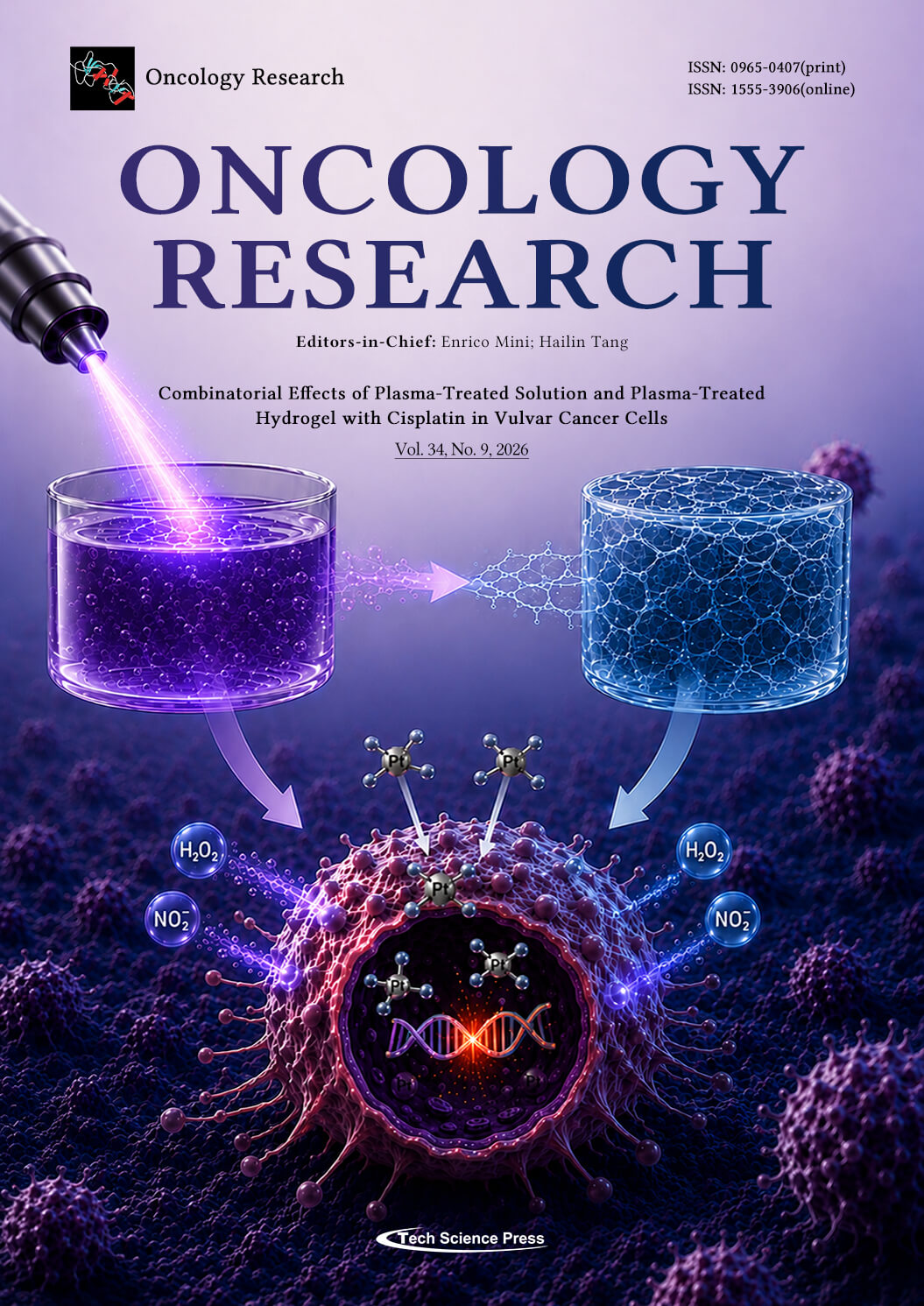
On the Cover

Low-thermal argon plasma treatment activates anti-tumor responses through diverse mechanisms, including the generation of reactive oxygen and nitrogen species (RONS), and represents a promising approach for redox-based tumor modulation. In this in vitro study, plasma was used to generate a plasma-treated solution (PTS), which can subsequently be incorporated into a hydrogel to form a plasma-treated hydrogel (PTH). Both plasma-based modalities were investigated in combination with cisplatin in vulvar squamous cell carcinoma cells. Plasma treatment enhanced the cytotoxic and apoptotic effects of cisplatin and disrupted cellular redox balance, indicating increased oxidative stress and apoptotic priming. These findings support plasma-based treatment as a potential strategy to sensitize vulvar cancer cells to cisplatin and enhance its therapeutic efficacy. This cover image was generated using AI-assisted tools. The authors confirm that it contains no identifiable human likenesses, copyrighted elements, or misleading content.

View this paper

  • Open AccessOpen Access

    ARTICLE

    Combinatorial Effects of Plasma-Treated Solution and Plasma-Treated Hydrogel with Cisplatin in Vulvar Cancer Cells

    Estelle C. I. D. Schad1,#, Janet P. Raja Xavier1,#, Hortense Decool1, Marcel Arnholdt1, Franziska Keßler1, Jan Schöttke1, Sara Y. Brucker1, Ernst Oberlechner1, Johanna Laupp1, Martin Weiss1,2,*
    Oncology Research, Vol.34, No.9, 2026, DOI:10.32604/or.2026.081755 - 13 August 2026
    (This article belongs to the Special Issue: Advances in Cancer Therapeutics)
    Abstract Background: Vulvar squamous cell carcinoma (VSCC) is a rare, but increasingly prevalent malignancy with limited therapeutic options in the advanced disease state. Cisplatin-based chemoradiation remains the standard of care but is constrained by cumulative toxicity. Precancerous lesions, including high-grade squamous intraepithelial lesions (HSIL) and differentiated vulvar intraepithelial neoplasia (dVIN), similarly require effective yet tolerable treatments. Low-thermal Argon plasma devitalization (ltAPD), a source of reactive oxygen and nitrogen species (RONS), has emerged as a promising approach for redox-based tumor modulation. This study aimed to evaluate the anti-tumor efficacy of two plasma modalities, plasma-treated solution (PTS) and plasma-treated… More >

  • Open AccessOpen Access

    REVIEW

    Targeting Cytoskeleton and Cell Motility: Past and Novel Strategies for Cancer Therapy

    Lucrezia Paradisi, Lorenza Trabalzini, Federica Finetti*
    Oncology Research, Vol.34, No.9, 2026, DOI:10.32604/or.2026.082155 - 13 August 2026
    (This article belongs to the Special Issue: Advances in Cancer Therapeutics)
    Abstract Cytoskeletal reorganization is fundamental to essential cellular processes, including shape maintenance, migration, adhesion cytokinesis, and phagocytosis, and its dysregulation is a hallmark of tumor progression. In cancer cells, altered cytoskeletal dynamics promote invasion and genomic instability resulting from mitotic defects. The actin and microtubule cytoskeletons are highly dynamic polymer networks that organize intracellular architecture, establish polarity, and generate the mechanical forces required for cell division and motility. Their dysregulation disrupts normal cell behavior and facilitates tumor invasion and metastasis. The cytoskeleton therefore represents a key source of potential therapeutic targets for inhibiting metastatic dissemination. This More >

  • Open AccessOpen Access

    REVIEW

    The Double-Edged Sword of Genomic DNA Methylation: Orchestrating Gastric Carcinogenesis and Shaping Precision Oncology

    Xuan Chen, Chao Luo, Wei Wen*
    Oncology Research, Vol.34, No.9, 2026, DOI:10.32604/or.2026.079753 - 13 August 2026
    Abstract This article systematically elaborates on the dual role of DNA methylation in the initiation and progression of gastric cancer and its potential clinical applications in precision oncology. As a core epigenetic mechanism, DNA methylation drives the multistage development of gastric cancer through the coordinated dysregulation of genome-wide hypomethylation and promoter-specific hypermethylation, playing a key role in chronic inflammation and epigenetic reprogramming, particularly in the context of Helicobacter pylori infection. The article focuses on analyzing the central pathogenic mechanisms of DNA methylation, including the silencing of tumor suppressor genes, induction of genomic instability, promotion of the CpG More >

  • Open AccessOpen Access

    REVIEW

    Ovarian Cancer Stem Cells: Mechanisms of Progression and Therapeutic Strategies

    Jie Wu1,2, Zhewei Zhang1,2, Kit Ying Chan1,2, Tat San Lau1,2,*, Chi Chiu Wang1,2,3,*
    Oncology Research, Vol.34, No.9, 2026, DOI:10.32604/or.2026.083359 - 13 August 2026
    (This article belongs to the Special Issue: Targeting the Tumor Microenvironment: Emerging Insights into Cancer Progression and Therapeutics)
    Abstract Ovarian cancer is the most lethal gynecological malignancy, with most patients diagnosed at an advanced stage and eventually relapsed after post-platinum-taxane chemotherapy. High intratumoral heterogeneity, extensive peritoneal dissemination, and acquired chemoresistance continue to restrict the clinical benefits of current therapeutic strategies. Increasing evidence indicates that ovarian cancer stem cells (OCSCs), a rare but highly plastic subpopulation characterized by self-renewal, multilineage differentiation, quiescence, tumor-initiating capacity, and intrinsic stress tolerance, play pivotal roles in tumor initiation, metastasis, recurrence, and therapeutic resistance. In this review, we systematically summarize current knowledge regarding the identification and functional characterization of OCSCs More >

  • Open AccessOpen Access

    REVIEW

    Advances in the Research and Development of Breast Cancer Organoids

    Ling Li1,2,#, Shuai Zhao3,#, Xiaoxiao Wang2, Jiahui Du2, Zhen Jin1, Song-Bai Liu1,2,*, Xiaohua Li2,3,*
    Oncology Research, Vol.34, No.9, 2026, DOI:10.32604/or.2026.083636 - 13 August 2026
    (This article belongs to the Special Issue: Breaking the Bottleneck of Therapeutic Resistance in Solid Tumors: Emerging Technologies, Novel Targets, and Innovative Strategies)
    Abstract Breast cancer ranks first in global cancer incidence. Due to its high heterogeneity, cancer cells often develop drug resistance during metastasis, leading to therapeutic challenges and poor prognosis. Consequently, breast cancer organoid models have emerged, which can effectively recapitulate the tumor microenvironment and serve as important tools for investigating the mechanisms underlying breast cancer initiation and progression. Breast cancer organoids exhibit interactions between cells and the extracellular matrix (ECM) while retaining the heterogeneity of the original tumor cells. Owing to these advantages, such models have been widely applied in studies of tumor pathogenesis, disease modeling,… More >

  • Open AccessOpen Access

    REVIEW

    Targeting the Neuro-Immune Axis in Next-Generation Oncology: Discovery and Validation of β2-Adrenergic Blockade to Reverse Ecosystem-Wide Resistance

    Heng Xu1,#, Jiaan Lu1,#, Zizhang Wang1,#, Jiayu Xu2, Shihui Peng3, Haiqing Chen4, Qiang Cao5,*, Qing Sun6,*, Shangke Huang7,*
    Oncology Research, Vol.34, No.9, 2026, DOI:10.32604/or.2026.083919 - 13 August 2026
    (This article belongs to the Special Issue: Next-Generation Oncology: Unearthing and Validating Novel Therapeutic Targets)
    Abstract Despite the potential of current cancer immunotherapies, tumor cells frequently evade immune surveillance by forming an immunosuppressive microenvironment, leading to treatment resistance. Current inquiry positions the sympathetic nervous system (SNS) at the forefront of tumor immunology as a critical driver of this immune evasion. This review delineates the cellular pharmacology of SNS-mediated immune regulation across the tumor ecosystem. Operating predominantly through the cyclic adenosine monophosphate-protein kinase A (cAMP-PKA) signaling axis, the SNS engages in bidirectional regulation with immune cells of the tumor microenvironment (TME). Norepinephrine and epinephrine interact with β2-adrenergic receptors (β2-ARs), triggering G-protein dissociation, adenylyl… More >

  • Open AccessOpen Access

    REVIEW

    Stage-Specific Regulation of Ubiquitination Modifications and Prospects for Targeted Therapy in Triple-Negative Breast Cancer

    Yongpan Wang1,#, Weiqiang Huang1,#, Qizhuan Lin2, Helei Cai2, Fengjin Dai3, Haiqing Gu1, Shunyan Yu1, Libo Jin2,*, Renyi Peng2,*
    Oncology Research, Vol.34, No.9, 2026, DOI:10.32604/or.2026.080113 - 13 August 2026
    (This article belongs to the Special Issue: Advances in Pathology, Early Diagnosis and Therapeutic Strategies for Breast Cancer)
    Abstract Triple-negative breast cancer (TNBC) is an aggressive subtype of breast cancer characterized by poor clinical outcomes. Owing to the absence of estrogen receptors, progesterone receptors, and Human Epidermal Growth Factor Receptor 2 (HER2) expression, TNBC shows limited responsiveness to conventional endocrine and targeted therapies. This subtype exhibits strong heterogeneity, a high propensity for metastasis, and a tendency to develop acquired drug resistance. Its survival and progression largely rely on non-classical signaling pathways, including Epidermal growth factor receptor (EGFR), Phosphoinositide 3-kinase/Protein Kinase B (PI3K/AKT), and Notch, which collectively impose substantial challenges to clinical management. In recent… More >

  • Open AccessOpen Access

    REVIEW

    Regulation of the Wnt/β-Catenin Signaling Pathway by Non-Coding RNAs in Esophageal Squamous Cell Carcinoma: Mechanisms, Translational Relevance, and Therapeutic Implications

    Chao Han, Ming Hou, Ruifeng Yang, Xiaoping Wei, Cheng Wang*
    Oncology Research, Vol.34, No.9, 2026, DOI:10.32604/or.2026.081222 - 13 August 2026
    Abstract Esophageal Squamous Cell Carcinoma (ESCC) is a highly aggressive malignancy characterized by a poor long-term prognosis. Aberrant activation of the canonical Wnt/β-catenin pathway serves as a central oncogenic driver in ESCC, with large-scale genomic analyses revealing that most patients harbor alterations in pathway-associated genes. This signaling axis orchestrates a wide array of malignant phenotypes, including tumor proliferation, invasion, epithelial-mesenchymal transition (EMT), cancer stemness, and therapeutic resistance. Therefore, this review aims to provide a comprehensive synthesis of the multifaceted crosstalk between various ncRNA classes and the Wnt/β-catenin axis, highlighting their roles in ESCC progression and their… More >

  • Open AccessOpen Access

    REVIEW

    Cellular Immunotherapy for Cervical Cancer: Next Therapeutics Frontiers

    Danning Zhao, Qin Liu*
    Oncology Research, Vol.34, No.9, 2026, DOI:10.32604/or.2026.084736 - 13 August 2026
    (This article belongs to the Special Issue: Advancing Cellular Therapeutics in Oncology: Innovations, Challenges, and Clinical Translation)
    Abstract Cervical cancer, particularly its advanced stages, requires novel therapeutic paradigms. Cellular immunotherapy exploits the constitutive expression of HPV E6/E7 oncoproteins as near-ideal tumor-specific antigens. This review systematically evaluates four principal platforms under investigation: tumor-infiltrating lymphocytes (TILs), TCR-engineered T cells, CAR-T cells, and CAR-NK cells. We critically analyze the preclinical rationale, clinical trial landscape, safety considerations, and manufacturing challenges for each modality. TIL therapy has achieved durable complete responses and an FDA Breakthrough Therapy designation. TCR-T cells enable precise targeting of intracellular viral epitopes but are HLA-restricted. CAR-T cells offer potent, MHC-independent recognition, yet face on-target/off-tumor More >

  • Open AccessOpen Access

    REVIEW

    Recent Advances in Non-Invasive Blood Markers for Intraductal Papillary Mucinous Neoplasm Grading

    Liang Chen1, Yitong Yuchi2, Qian Zhu3,*
    Oncology Research, Vol.34, No.9, 2026, DOI:10.32604/or.2026.084411 - 13 August 2026
    Abstract Intraductal Papillary Mucinous Neoplasm (IPMN) is a major precancerous lesion of pancreatic ductal adenocarcinoma. Accurate risk stratification of IPMN is key to preventing and controlling pancreatic cancer. At present, clinicians mainly grade IPMN following the Kyoto consensus guidelines, together with imaging examinations and traditional serum biomarkers like CA19-9 and CEA. This review unveils the latest research progress of non-invasive blood biomarkers for the grading of IPMN, including the diagnostic performance, molecular mechanisms, and current clinical translation of several types of markers. ApoAII has already been applied in clinical practice, and miRNA combinations, circulating cell-free DNA… More >

  • Open AccessOpen Access

    REVIEW

    Nuclear–Cytoplasmic Axis in Cancer: From Protein Mislocalization to Anticancer Drug Resistance

    Xueping Zhu1,2,3,#, Misi He1,2,3,#, Ling Wang1,2,3,#, Rui Su4, Lin Zhong1,2,3, Ting Guo1,2,3,4, Haixia Wang1,2,3,*, Dongling Zou1,2,3,*
    Oncology Research, Vol.34, No.9, 2026, DOI:10.32604/or.2026.083902 - 13 August 2026
    (This article belongs to the Special Issue: Molecular Targeting Therapy for Anticancer Treatment)
    Abstract Nucleocytoplasmic transport (NCT) regulates the spatial distribution of proteins and RNA between the nucleus and cytoplasm. NCT dysregulation can mislocalize tumor suppressors, DNA-repair factors, transcription factors, and drug targets in cancer. In this review, we conceptualize NCT-dependent protein mislocalization as a spatial regulatory framework for anticancer drug resistance, rather than as a catalogue of transport components. We systematically discuss how nuclear pore complex (NPC) remodeling, transport-receptor imbalance, post-translational modification (PTM)-regulated cargo routing, signaling-NCT crosstalk, nuclear localization signal/nuclear export signal (NLS/NES) alterations, and tumor microenvironmental pressures jointly drive aberrant nucleocytoplasmic distribution. These processes can further regulate… More >

  • Open AccessOpen Access

    REVIEW

    The Role of Mitochondrial ROS in Neoplastic Transformations, Progression and Therapeutic Targeting

    Bharath Kumar Velmurugan1, Shu Hui Lin2,3,4, Chih-Yang Huang5,6,7,8,9,10, Ming-Ju Hsieh9,11,12,*, Rathinasamy Baskaran10,*
    Oncology Research, Vol.34, No.9, 2026, DOI:10.32604/or.2026.083159 - 13 August 2026
    Abstract Mitochondria are central regulators of cellular metabolism and survival and play a pivotal role in cancer development and progression through the production of reactive oxygen species (ROS), control of calcium homeostasis, regulation of autophagy, and modulation of cell death pathways. Mitochondria-derived ROS (mtROS) act as signaling mediators that influence tumor initiation, proliferation, metabolic reprogramming, metastasis, and therapeutic resistance by altering redox homeostasis, damaging mitochondrial DNA, and reshaping the tumor microenvironment. In addition to meeting the bioenergetic and biosynthetic requirements of rapidly proliferating cancer cells, mitochondrial metabolism modulates immune responses and supports cancer cell adaptation to More >

  • Open AccessOpen Access

    REVIEW

    Dynamic Metabolic States in TNBC: Orchestrating Spatiotemporal Adaptation and Therapy

    Yida Wang1,#, Haiyue You2,#, Jingyi Gao3,#, Feng Zhang1, Xin Ning2, Xinfeng Yang2, Zhiwen Qian1, Ying Jiang2, Lu Liu2, Danping Wu2, Yanfang Gu1,2,*, Daozhen Chen1,2,*, Yan Zhang1,2,*
    Oncology Research, Vol.34, No.9, 2026, DOI:10.32604/or.2026.085967 - 13 August 2026
    Abstract Triple-negative breast cancer (TNBC) is characterized by marked metabolic plasticity, spatial heterogeneity, and therapy-induced adaptive remodeling. However, TNBC metabolism is often discussed as isolated pathways, making it difficult to link metabolic rewiring to immune exclusion, drug-tolerant persister cells, and treatment windows. Here, we propose a functional metabolic operating-state framework to organize recurrent adaptive programs in TNBC. Importantly, the S1–S5 framework is not a clinically validated subtype classification, but a set of coexisting and reversible operating states shaped by microenvironmental and therapeutic pressures. S1 represents a glycolysis–lactate/acidosis barrier; S2 denotes fatty acid oxidation (FAO)/oxidative phosphorylation (OXPHOS)-supported… More >

    Graphic Abstract

    Dynamic Metabolic States in TNBC: Orchestrating Spatiotemporal Adaptation and Therapy

  • Open AccessOpen Access

    REVIEW

    Mitochondrial Dysfunction in Renal Cell Carcinoma: A Comprehensive Review of Pathogenic Mechanisms and Emerging Therapeutic Opportunities

    Yanhong Wang1,#, Junbo Liu2,#, Qiaoping Xu3,#, Zhao Ma4,*
    Oncology Research, Vol.34, No.9, 2026, DOI:10.32604/or.2026.082432 - 13 August 2026
    (This article belongs to the Special Issue: Advances in Genitourinary Cancer)
    Abstract In renal cell carcinoma (RCC), alterations in cellular metabolism are a defining feature, among which impaired mitochondrial function stands out as a key factor influencing both tumor aggressiveness and patient responses to therapy. The aim of this review is to systematically synthesize current knowledge on the role of mitochondrial dysfunction in RCC pathogenesis and to explore emerging therapeutic strategies targeting mitochondrial vulnerabilities. This comprehensive analysis examines the integrated dysregulation of core mitochondrial processes—bioenergetic metabolism, organelle dynamics, programmed cell death pathways, redox homeostasis, and selective autophagy—in driving RCC pathogenesis. Our synthesis reveals how genetic drivers, molecular… More >

  • Open AccessOpen Access

    ARTICLE

    On-Treatment Grade 3–4 Neutropenia and Clinical Outcomes with Trifluridine/Tipiracil in Refractory Metastatic Colorectal Cancer: ReTrITA Real-World Evidence

    Carlo Signorelli1,*, Michele Basso2, Annunziato Anghelone2, Maria Alessandra Calegari2, Alessandro Passardi3, Chiara Gallio3, Alessandro Bittoni3, Jessica Lucchetti4, Lorenzo Angotti4, Emanuela Di Giacomo4, Ina Valeria Zurlo5, Cristina Morelli6, Emanuela Dell’Aquila7, Adele Artemi7, Donatello Gemma8, Domenico Cristiano Corsi9, Alessandra Emiliani9, Marta Ribelli9, Federica Mazzuca10, Giulia Arrivi10, Federica Zoratto11, Maria Grazia Morandi12, Fiorenza Santamaria13,14, Manuela Dettori15, Antonella Cosimati16, Rosa Saltarelli17, Alessandro Minelli18, Emanuela Lucci-Cordisco19, Mario Giovanni Chilelli1
    Oncology Research, Vol.34, No.9, 2026, DOI:10.32604/or.2026.080964 - 13 August 2026
    (This article belongs to the Special Issue: Precision Beyond Progression: Real-World Evidence and Dynamic Prognostic Markers in Refractory Metastatic Colorectal Cancer)
    Abstract Background: Trifluridine/tipiracil (T) is a standard treatment for refractory metastatic colorectal cancer (mCRC). In randomized trials, treatment-emergent neutropenia has been associated with improved outcomes, suggesting a potential link with drug activity. However, evidence from routine clinical practice remains limited. This sub-analysis of the multicenter ReTrITA study evaluated the association between severe neutropenia and clinical outcomes in a real-world setting. Methods: Patients with refractory mCRC treated with T within the ReTrITA cohort were included. Patients were stratified according to the occurrence of grade 3–4 neutropenia. Overall survival (OS) and progression-free survival (PFS) were estimated using the Kaplan–Meier… More >

  • Open AccessOpen Access

    ARTICLE

    Efficacy and Safety of Durvalumab plus Tremelimumab for Unresectable Hepatocellular Carcinoma: A Real-World Multicenter Observational Study

    Krittiya Korphaisarn1,#,*, Kosin Wirasorn2,#, Suebpong Tanasanvimon3, Kijjakom Thanasombunsukh4, Kunlatida Maneenil5, Jirawat Thanestada6, Nattaya Teeyapun3, Jarin Chindaprasirt2, Chirawadee Sathitruangsak7, Teerada Siripoon8, Phannin Tiraswasdichai9, Chanchai Charonpongsuntorn10, Passakorn Wanchaijiraboon11, Wannisa Laosuangkoon12, Patrapim Sunpaweravong7, Ekapop Sirachainan8, Charuwan Akewanlop1
    Oncology Research, Vol.34, No.9, 2026, DOI:10.32604/or.2026.083206 - 13 August 2026
    (This article belongs to the Special Issue: Advances in Liver Cancer: Novel Therapeutics and Biomarkers for HCC and CCA)
    Abstract Introduction: Durvalumab plus tremelimumab (Durva/Treme) improved survival in the HIMALAYA trial for unresectable hepatocellular carcinoma (HCC), but real-world evidence remains limited. This study aimed to evaluate clinical outcomes of Durva/Treme in routine practice. Methods: This retrospective multicenter study included patients with unresectable or advanced HCC who received Durva/Treme through the Expanded Access Program in Thailand between August 2023 and November 2025. Treatment outcomes and adverse events (AEs) were analyzed and descriptively compared with the HIMALAYA trial. Results: Fifty patients were included; median age was 62 years and 80% were male. Etiologies included hepatitis B (44%), hepatitis C… More >

  • Open AccessOpen Access

    ARTICLE

    Impact of IL31RA Genetic Variants and Expression on Metastatic Progression in Oral Cavity Squamous Cell Carcinoma

    Hsueh-Ju Lu1,2,*, Chiao-Wen Lin3,4, Chun-Yi Chuang2,5, Chun-Wen Su6,7, Shun-Fa Yang6,7,*
    Oncology Research, Vol.34, No.9, 2026, DOI:10.32604/or.2026.080527 - 13 August 2026
    Abstract Background: Interleukin-31 receptor alpha (IL31RA) has been implicated in cancer progression and tumor cell migration, but its genetic associations across cancers remain unclear. This study aimed to examine IL31RA polymorphisms in relation to lymph node involvement in oral cavity squamous cell carcinoma (OCSCC). Methods: In this case-control study, 2845 participants were enrolled, including 1352 patients with OCSCC and 1493 cancer-free controls. Associations between IL31RA SNPs and OCSCC susceptibility and clinicopathological characteristics were evaluated. Functional analyses, including cell migration assays, together with bioinformatic database analyses, were performed to investigate the biological significance of IL31RA and genotype–expression correlations. Logistic… More >

  • Open AccessOpen Access

    ARTICLE

    Multi-Omics Identification of UBE2C as a Prognostic Biomarker and Therapeutic Target Linked to Topotecan Sensitivity in Cervical Cancer

    Emmanuel Naveen Raj1,#, Chia-Jung Li1,2,3,4,5,#, Shih-Hsuan Cheng1, Su-Boon Yong6,7, Zhi-Hong Wen3,8, An-Jen Chiang1,9,*
    Oncology Research, Vol.34, No.9, 2026, DOI:10.32604/or.2026.079551 - 13 August 2026
    (This article belongs to the Special Issue: Precision Oncology: Targeted Therapies and Tumor Microenvironment)
    Abstract Objectives: Cervical squamous cell carcinoma and endocervical adenocarcinoma (CESC) necessitate the discovery of novel biomarkers for prognostic and therapeutic advancement. This study aims to evaluate the clinical significance of ubiquitin-conjugating enzyme E2C (UBE2C) and its association with the tumor microenvironment (TME) in CESC. Methods: We meticulously sourced CESC data from renowned repositories such as The Cancer Genome Atlas (TCGA), Genotype-Tissue Expression (GTEx), and Gene Expression Omnibus (GEO), leveraging cutting-edge techniques including single-cell RNA sequencing (scRNA-seq), spatial transcriptomics, and pharmacogenomics. Through multifaceted data analysis, we endeavored to unravel the intricate role and potential value of UBE2C in… More >

    Graphic Abstract

    Multi-Omics Identification of UBE2C as a Prognostic Biomarker and Therapeutic Target Linked to Topotecan Sensitivity in Cervical Cancer

  • Open AccessOpen Access

    ARTICLE

    miR-152-3p Overcomes Temozolomide Resistance in Glioblastoma by Targeting TGF-α and Enhancing Apoptosis

    Chun-Nun Chao1,2, Chiung-Yao Fang2,3, Chia-Hsin Hou1, Jen-Tsung Yang4,5, Yu-Ping Wu4,6, Jui-Chieh Chen6,*
    Oncology Research, Vol.34, No.9, 2026, DOI:10.32604/or.2026.083962 - 13 August 2026
    (This article belongs to the Special Issue: Molecular Targeting Therapy for Anticancer Treatment)
    Abstract Objectives: Temozolomide (TMZ) resistance remains a major challenge in glioblastoma (GBM) treatment. This study investigated the role of miR-152-3p and its downstream target, transforming growth factor-α (TGF-α), in regulating TMZ sensitivity in GBM. Methods: Public GEO and CGGA datasets were analyzed to evaluate the expression and prognostic significance of miR-152-3p. TMZ-resistant GBM cell lines (U87MGR and DBTRG-05MGR) were established by continuous TMZ exposure. Gain- and loss-of-function experiments were performed using miR-152-3p mimics and inhibitors. Cell viability, apoptosis, and TGF-α expression were assessed by MTT, qRT-PCR, and Western blot analyses. Results: miR-152-3p expression was significantly decreased in recurrent… More >

  • Open AccessOpen Access

    ARTICLE

    Adenoid Cystic Carcinoma of the Breast: Clinicopathological Features and Long-Term Outcomes from a 20-Year Retrospective Cohort

    Iseult M. Browne1,2, Susanna Slater1, Myrto Kastrisiou1, Mae Alghawas1, Edward Phillips1, Mark Beresford3, Stephen R. D. Johnston1, Zoe Kemp1, Emma Kipps1, Marina Parton1, Nicholas C. Turner1,2, Alicia F. C. Okines1,2,*
    Oncology Research, Vol.34, No.9, 2026, DOI:10.32604/or.2026.085356 - 13 August 2026
    Abstract Background: Adenoid cystic carcinoma (ACC) of the breast is a rare triple-negative malignancy with an indolent clinical course distinct from conventional triple-negative breast cancer (TNBC). Optimal management remains undefined due to limited prospective data. This study aimed to characterise the clinicopathological features, treatment patterns, and long-term outcomes of breast ACC at a high-volume specialist centre, contributing real-world evidence to inform management in the absence of prospective trial data. Methods: A single-institution retrospective cohort study was conducted of 24 patients with histopathologically confirmed breast ACC treated at The Royal Marsden NHS Foundation Trust between 2000 and… More >

  • Open AccessOpen Access

    ARTICLE

    Concordant Shared Transcriptomic Signatures and Candidate Regulatory Features in Chronic Lymphocytic Leukemia and Multiple Myeloma

    Abtin Tondar1,2,*, David Hervás Marín3, Laura Calvet Liñán4, Asim Kumar Bepari5
    Oncology Research, Vol.34, No.9, 2026, DOI:10.32604/or.2026.082424 - 13 August 2026
    (This article belongs to the Special Issue: Machine Learning for Precision Oncology: From Bench to Bedside)
    Abstract Background: Chronic lymphocytic leukemia (CLL) and multiple myeloma (MM) are B-cell malignancies with distinct cellular origins and microenvironmental dependencies. We aimed to identify concordant transcriptomic signatures and candidate transcriptional regulatory features between CLL CD19-positive B cells and MM-associated bone marrow-derived mesenchymal stromal cells (MSCs). Methods: Public Gene Expression Omnibus bulk RNA sequencing datasets were analyzed separately within each context using DESeq2. Differentially expressed genes (DEGs) were defined using adjusted p-value < 0.05 and absolute log2 fold change > 1. Cross-disease analyses assessed overlap, directionality, log2 fold-change concordance, expressed-gene background-adjusted enrichment, coexpression structure, and transcription factor annotation. Results: We… More >

  • Open AccessOpen Access

    ARTICLE

    Prognostic Significance and Functional Role of PPIB in a Retrospective Cohort of Patients with Advanced Gastric Cancer

    Kyungeun Kim1,2,#, Eunho Cho3,#, Eun Joo Chung4, Kwon-Ho Song5, Tae Woo Kim3,6, Seoung Wan Chae1,*, Joon-Yong Chung7,*
    Oncology Research, Vol.34, No.9, 2026, DOI:10.32604/or.2026.083437 - 13 August 2026
    (This article belongs to the Special Issue: Novel Biomarkers and Treatment Strategies in Solid Tumor Diagnosis, Progression, and Prognosis (Ⅱ))
    Abstract Objectives: Gastric cancer remains a major global health burden, and robust biomarkers are needed to improve risk stratification. Although peptidyl-prolyl isomerase B (PPIB) has been suggested as a potential oncogenic factor, its clinical utility in gastric cancer remains unclear. This study aims to evaluate the clinicopathological and prognostic significance of PPIB mRNA expression and delineate its functional role in driving tumor progression. Methods: PPIB mRNA expression was evaluated in a retrospective cohort of 497 gastric cancer patients using RNAscope in situ hybridization and digital image analysis. Functional roles and underlying mechanism were assessed through siRNA-mediated knockdown, plasmid-driven overexpression,… More >

  • Open AccessOpen Access

    ARTICLE

    Differential Tumor Response and Conversion Outcomes Associated with First-Line Biologic Strategies in Liver-Limited RAS Wild-Type Metastatic Colorectal Cancer

    Shih-Wei Chiang1,2, Ming-Cheng Chen2,3, Chang-Lin Lin2, Yi-Lin Huang2, Feng-Fan Chiang2,4,*, Shun-Fa Yang1,5,*
    Oncology Research, Vol.34, No.9, 2026, DOI:10.32604/or.2026.085229 - 13 August 2026
    (This article belongs to the Special Issue: RAS Driven Oncogenesis and the Future of Combination Therapy in Solid Tumors)
    Abstract Background: Anti-EGFR therapy is widely used as first-line treatment for RAS wild-type metastatic colorectal cancer (mCRC), particularly in patients with left-sided tumors. In liver-limited disease, maximizing tumor shrinkage may facilitate conversion to resectability; however, comparative real-world evidence among panitumumab, cetuximab, and bevacizumab remains limited. This study aimed to compare the clinical outcomes of these biologic agents in patients with RAS wild-type mCRC. Methods: We retrospectively analyzed 241 patients with RAS wild-type mCRC treated with first-line chemotherapy plus panitumumab (n = 76), cetuximab (n = 80), or bevacizumab (n = 85) between 2016 and 2024. Outcomes included depth of response… More >

  • Open AccessOpen Access

    ARTICLE

    PSMB9 Promotes the Malignant Progression of Colorectal Cancer by Regulating the PI3K/Akt Pathway

    Wen Gao1,2, Xingyu Zheng1,2, Yanan Hu1,2, Rui Zou3, Yongan Zhou4, Xiang Song2,*
    Oncology Research, Vol.34, No.9, 2026, DOI:10.32604/or.2026.082652 - 13 August 2026
    (This article belongs to the Special Issue: Identification of potential targets and biomarkers for cancers and the exploration of novel molecular mechanisms of tumorigenesis and metastasis)
    Abstract Background: As a core component of the immunoproteasome, the β1i subunit (proteasome 20S subunit beta 9, PSMB9) is involved in antigen processing and presentation and regulates anti-tumor immune responses. PSMB9 is aberrantly overexpressed in colorectal cancer. However, the precise mechanisms through which PSMB9 contributes to the initiation, progression, and immune regulation of colorectal cancer remain unclear. This study aims to investigate the expression characteristics and biological functions of PSMB9 in colorectal cancer, and to further elucidate the molecular pathways underlying its role in colorectal cancer initiation and progression. The findings are expected to provide a theoretical… More >

  • Open AccessOpen Access

    ARTICLE

    A Phase II Clinical Trial of Chemotherapy Rechallenge with or without Targeted Therapy in Refractory Metastatic Colorectal Cancer

    Chenchen Wang1,2, Mingzhu Huang1,2, Wenhua Li1,2, Xuedan Sheng1,2, Xiaoying Zhao1,2, Xiaodong Zhu1,2, Zhiyu Chen1,2, Zhe Zhang1,2, Haiming Li2,3, Weijian Guo1,2,*
    Oncology Research, Vol.34, No.9, 2026, DOI:10.32604/or.2026.084378 - 13 August 2026
    Abstract Background: Patients with refractory metastatic colorectal cancer (mCRC) face limited treatment options after failure of standard therapies. This single-arm, phase II study aimed to evaluate the efficacy and safety of rechallenge strategies using previously effective regimens in late-line mCRC. Methods: Patients who progressed after ≥2 lines of prior chemotherapy, with a prior progression-free survival (PFS) ≥4 months and a ≥4-month treatment-free interval on that regimen were enrolled. Patients received rechallenge chemotherapy (oxaliplatin-, irinotecan-, or raltitrexed-based) with or without targeted agents (bevacizumab or cetuximab). Primary endpoint was investigator-assessed PFS. Secondary endpoints included objective response rate (ORR), disease… More >

  • Open AccessOpen Access

    ARTICLE

    Invariant Natural Killer T Cell Therapy Attenuates Systemic Inflammation and Improves Transarterial Chemoembolization Outcomes in Hepatocellular Carcinoma

    Xiaoxia Wang1,2,#, Shuo Wang1,2,#, Chendi Liang1,2,#, Huili Wu1,2, Songtao Liu1,2, Jinhuan Wang1,2, Jun Lu1,2,*
    Oncology Research, Vol.34, No.9, 2026, DOI:10.32604/or.2026.082815 - 13 August 2026
    (This article belongs to the Special Issue: Advancements in Hepatocellular Carcinoma Treatment)
    Abstract Background: Invariant natural killer T (iNKT) cells show promise as immunotherapeutic agents for solid tumors, and our prior study demonstrated that combining iNKT-cell therapy with transarterial chemoembolization (TACE) achieved a 58.3% objective response rate (ORR) in hepatocellular carcinoma (HCC). This study further examines iNKT-mediated immune modulation of post-TACE survival dynamics and associated prognostic biomarkers. Methods: Clinical data and peripheral blood samples were obtained from 77 HCC patients in Beijing you’an Hospital between 2018–2023, including 38 receiving TACE alone and 39 receiving combined iNKT-cell/TACE therapy. Serial measurements included: Hematological parameters; Liver function tests [alanine aminotransferase (ALT), aspartate… More >

  • Open AccessOpen Access

    ARTICLE

    MicroRNA320e Augments the Synthetic Lethality of Olaparib by Regulating the PI3K-AKT-mTOR Pathway

    Wei Zheng1,#, Qianlong Meng1,2,#, Yunhan Deng1, Ruizhen Liu1, Siyu Bai1, Longyu Jia1, Jing Wang3,4,*, Huimin Bai1,*
    Oncology Research, Vol.34, No.9, 2026, DOI:10.32604/or.2026.081656 - 13 August 2026
    (This article belongs to the Special Issue: Innovative Diagnostic Strategies in Gynecological Cancer Research)
    Abstract Objectives: Given the increasing drug resistance in ovarian cancer (OC), the use of poly ADP-ribose polymerase inhibitors (PARPi) for treating homologous recombination repair defects (HRD) has encountered new challenges. MicroRNA320e (miR-320e) exerts a negative regulatory role in the progression of multiple cancers. This study aimed to investigate the association between miR-320e and drug resistance in ovarian cancer. Methods: The Cell Counting Kit-8 (CCK-8) assay, migration and invasion assays, and colony formation assay were employed to evaluate the proliferation, migration, and invasion abilities of cells. Western blot (WB) analysis was used to verify the expression levels… More >

  • Open AccessOpen Access

    CASE REPORT

    Prolonged Disease Stability with Durvalumab and Tremelimumab Rechallenge Following Prior Immune Checkpoint Inhibitors: A Case Report

    Waseem Abdelrahim1, Ebtesam Al-Najjar2, Seif El Beheary3, Abdullah Esmail2,*
    Oncology Research, Vol.34, No.9, 2026, DOI:10.32604/or.2026.083193 - 13 August 2026
    (This article belongs to the Special Issue: Advances in Cancer Immunotherapy)
    Abstract Background: Hepatocellular carcinoma (HCC) is the most common primary liver malignancy and remains a leading cause of cancer-related mortality worldwide due to frequent recurrence and early metastasis. While immune checkpoint inhibitor (ICPI)-based regimens have revolutionized the treatment landscape for advanced HCC, clinical evidence regarding the safety and efficacy of ICPI rechallenge following disease progression or severe immune-related adverse events (irAEs) remains sparse. This report describes a case of prolonged disease stability achieved through sequential immunotherapy using durvalumab and tremelimumab (Durva/Treme) after prior ICPI failure and high-grade toxicity. Case Description: A 65-year-old male with recurrent stage IV… More >

  • Open AccessOpen Access

    RETRACTION

    Retraction: Long Noncoding RNA MEG3 Suppresses Glioma Cell Proliferation, Migration, and Invasion by Acting as a Competing Endogenous RNA of miR-19a

    Oncology Research Editorial Office
    Oncology Research, Vol.34, No.9, 2026, DOI:10.32604/or.2026.090478 - 13 August 2026
    Abstract This article has no abstract. More >

  • Open AccessOpen Access

    RETRACTION

    Retraction: Knockdown of Long Noncoding RNA TUG1 Inhibits the Proliferation and Cellular Invasion of Osteosarcoma Cells by Sponging miR-153

    Oncology Research Editorial Office
    Oncology Research, Vol.34, No.9, 2026, DOI:10.32604/or.2026.090479 - 13 August 2026
    Abstract This article has no abstract. More >

  • Open AccessOpen Access

    RETRACTION

    Retraction: The Long Noncoding RNA HOTAIR Promotes Colorectal Cancer Progression by Sponging miR-197

    Oncology Research Editorial Office
    Oncology Research, Vol.34, No.9, 2026, DOI:10.32604/or.2026.090481 - 13 August 2026
    Abstract This article has no abstract. More >

Per Page:

Share Link
