Home / Journals / OR / Vol.34, No.10, 2026
Special Issues
Table of Content
cover

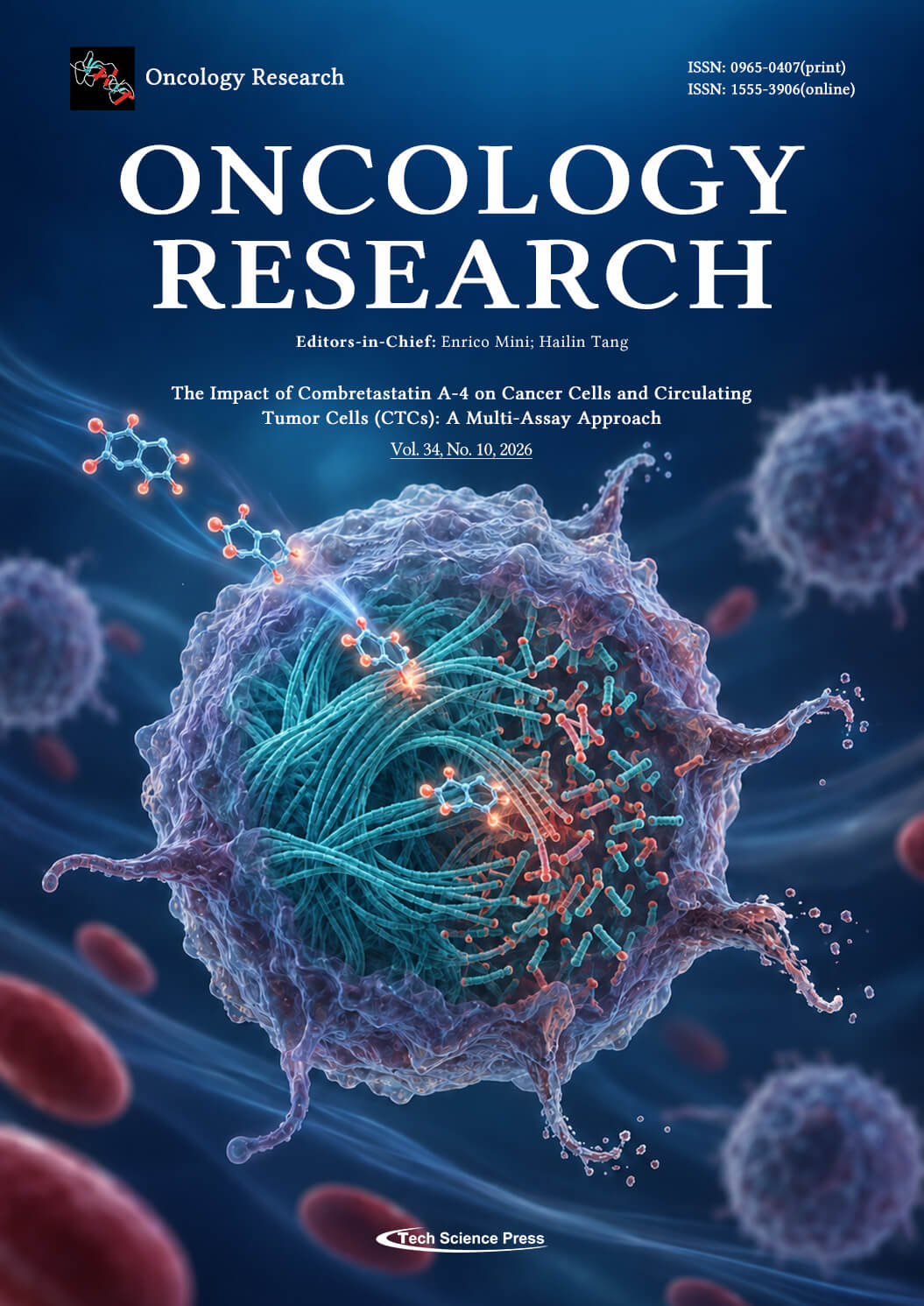
On the Cover

Targeting the cytoskeleton offers a promising strategy for disrupting cancer cell functions involved in metastatic spread. This study examines the effects of combretastatin A-4 (CA-4) across lung, breast, and colorectal cancer models, including the patient-derived circulating tumor cell line CTC-MCC-41. CA-4 treatment lowered cell viability, colony formation, and migratory capacity, alongside reduced vimentin and α/β-tubulin expression at 48 hours. TetherChip imaging showed a marked decrease in microtentacles, the membrane protrusions linked to circulating tumor cell attachment. Collectively, these results connect cytoskeletal disruption to impaired cancer cell function and support investigation of CA-4 as a strategy for targeting the cellular processes underlying metastatic dissemination. This cover image was generated using AI-assisted tools. The authors confirm that it contains no identifiable human likenesses, copyrighted elements, or misleading content.

View this paper

  • Open AccessOpen Access

    ARTICLE

    The Impact of Combretastatin A-4 on Cancer Cells and Circulating Tumor Cells (CTCs): A Multi-Assay Approach

    Dimitrios Papakonstantinou1, Vasileios Vardas1, Despoina M. Varouhaki2, Aikaterini Kotzamouratoglou1, Karolina Mangani1, Julia A. Ju3, Catherine Alix-Panabières4,5,6, Stuart S. Martin3, Constantinos M. Athanassopoulos2, Galatea Kallergi1,*
    Oncology Research, Vol.34, No.10, 2026, DOI:10.32604/or.2026.085665 - 14 September 2026
    Abstract Objectives: Combretastatin A-4 (CA-4) is a microtubule-disrupting agent with established anti-tumor properties. This study aimed to evaluate the effects of CA-4 on key metastatic traits of cancer cells, including migration, clonogenic potential, cytoskeletal protein expression, and microtentacle (McTN) formation, using multiple cancer cell models, including the colon patient-derived circulating tumor cell line CTC-MCC-41. Methods: H1299 (non-small cell lung cancer), MDA-MB-231 (triple-negative breast cancer), HT-29 (colorectal cancer), and CTC-MCC-41 (derived from the blood of a colon cancer patient) cells were treated with CA-4 (10 μM) for 24 and 48 h. Colony formation was assessed with a clonogenic… More >

    Graphic Abstract

    The Impact of Combretastatin A-4 on Cancer Cells and Circulating Tumor Cells (CTCs): A Multi-Assay Approach

  • Open AccessOpen Access

    REVIEW

    Immunotherapy in Bellini Duct Carcinoma: A Systematic Review

    Antonio David Lázaro-Sánchez1,2,*, Javier David Benítez-Fuentes3, Sofía Wikström-Fernández4, María Nevado-Rodríguez5, Pablo Conesa-Zamora2,6, Ginés Luengo-Gil2,6, Alejandra Ivars-Rubio5, Marta Zafra-Poves5, Edgardo D. Carosella7, Belén Fernández-Molina8, Andrés Nieto-Olivares9, María José Sánchez de las Matas Garre10, Ana Belén Arroyo2,6
    Oncology Research, Vol.34, No.10, 2026, DOI:10.32604/or.2026.081674 - 14 September 2026
    (This article belongs to the Special Issue: Advances in Cancer Immunotherapy)
    Abstract Background: Collecting duct carcinoma (CDC; Bellini duct carcinoma) is a rare, aggressive renal cancer with no established standard of care, and evidence for immune checkpoint inhibitor (ICI)-based therapy in CDC remains emerging and fragmented. We aimed to systematically synthesise efficacy and safety data on immunotherapy in adult patients with CDC. Methods: PubMed and Web of Science were searched from inception to 29 March 2025, with targeted post-search monitoring of key journals and ClinicalTrials.gov updated on 11 April 2026. Prospective interventional studies, observational cohorts/registries, and case series/reports were eligible. Screening, extraction and risk-of-bias appraisal (Joanna Briggs Institute… More >

  • Open AccessOpen Access

    REVIEW

    Metastatic Triple Negative Breast Cancer: Navigating a Rapidly Evolving Therapeutic Landscape

    Iseult M. Browne1,2, Monica Esteban Garcia1,2, Alicia F. C. Okines1,2,*
    Oncology Research, Vol.34, No.10, 2026, DOI:10.32604/or.2026.082829 - 14 September 2026
    Abstract Triple negative breast cancer (TNBC) is defined by the absence of oestrogen receptor, progesterone receptor, and HER2 expression, and carries a disproportionate burden of breast cancer-related mortality due to its aggressive biology and historically limited therapeutic options. The treatment landscape of metastatic TNBC has undergone a fundamental transformation over the past decade, driven by immune checkpoint inhibitors, antibody-drug conjugates (ADCs), and the identification of actionable genomic alterations. This review provides a comprehensive, clinically oriented appraisal of the current and emerging therapeutic landscape of metastatic TNBC, encompassing its molecular underpinnings and tumour microenvironment biology. We critically More >

  • Open AccessOpen Access

    REVIEW

    Cholesterol Metabolism in Cancer Patients: Mechanisms, Treatment-Related Effects, and Cardio-Oncology Management

    Mariagrazia Piscione1,*, Barbara Pala2,3,*, Francesco Cribari3, Paola Gualtieri4, Dario Gaudio5, Marco Alfonso Perrone6, Laura Di Renzo4
    Oncology Research, Vol.34, No.10, 2026, DOI:10.32604/or.2026.079215 - 14 September 2026
    (This article belongs to the Special Issue: Metabolic and Inflammatory Dysregulation as Therapeutic Targets in Cancer)
    Abstract Cholesterol metabolism is central to cancer biology, influencing tumour initiation, progression, and therapeutic response, while contributing to the increased cardiovascular risk observed in cancer patients. Epidemiological studies investigating the relationship between circulating cholesterol levels and cancer risk have yielded conflicting results, reflecting substantial biological heterogeneity, tumour-specific metabolic demands, and methodological biases such as reverse causality. At the cellular level, malignant cells exhibit elevated cholesterol uptake and synthesis to sustain membrane biogenesis, lipid raft-dependent oncogenic signalling, and rapid proliferation. Cholesterol and its oxidized derivatives further modulate inflammation, angiogenesis, immune evasion, and key signalling pathways. Anticancer therapies… More >

  • Open AccessOpen Access

    REVIEW

    Resistance Mechanisms in Immunotherapy-Radiotherapy/Chemotherapy Combinations in Locally Advanced Head & Neck Squamous Cell Carcinoma

    Abbas Hussain1,*, Daniel Thomas Jones2, Rishi Kumar Nanda3, Ramaditya Srinivasmurthy4, Jason Ta5, Yin Mon Myat6, Riccesha Hattin1, Jo-Lawrence Bigcas7, Sisi Tian7, Suparna Shah7, Robert Wang7, Kyaw Zin Thein8
    Oncology Research, Vol.34, No.10, 2026, DOI:10.32604/or.2026.077918 - 14 September 2026
    (This article belongs to the Special Issue: New Insights in Drug Resistance of Cancer Therapy: A New Wine in an Old Bottle)
    Abstract Locally advanced head and neck squamous cell carcinoma (LA-HNSCC) remains difficult to treat despite multimodal therapy. Immune checkpoint inhibitors (ICIs) have expanded treatment options, but phase III trials combining ICIs with chemoradiotherapy have demonstrated limited survival benefit due to complex resistance mechanisms. These include immunosuppressive tumor microenvironments, impaired DNA damage responses, hypoxia-driven adaptations, metabolic reprogramming, and oncogenic signaling via the HER receptor family. This review outlines key resistance pathways and emerging strategies to overcome them. Nanotechnology-based approaches may enhance drug delivery and modulate the tumor microenvironment, while dual inhibition of epidermal growth factor receptor (EGFR), More >

  • Open AccessOpen Access

    REVIEW

    Current Insights into the Role of Peripheral Blood Immune Cell Phenotypes in Resistance to Cancer Therapies

    Allinson Olaechea1,2, Cristina Camacho Rubio2, Sara Gómez-Melero3,4,*
    Oncology Research, Vol.34, No.10, 2026, DOI:10.32604/or.2026.079865 - 14 September 2026
    (This article belongs to the Special Issue: Deciphering Mechanisms of Cancer Therapy Resistance: In Vitro Models to Study Drug Resistance and Radiation-Drug Responses in Cancer and Normal Cells)
    Abstract Peripheral blood mononuclear cell (PBMC) immunophenotyping has emerged as a promising non-invasive approach to characterize systemic immune alterations in cancer and to identify biomarkers associated with treatment response and resistance. However, current evidence remains fragmented and predominantly descriptive, with substantial heterogeneity in study design, immunophenotyping methodologies, and patient populations, limiting the identification of robust and clinically translatable immune signatures. In this review, we aim to comprehensively analyze PBMC immune phenotypes across multiple cancer types, with particular emphasis on their association with disease progression, therapeutic outcomes, and the key methodological and translational challenges that currently limit… More >

  • Open AccessOpen Access

    REVIEW

    Non-Malignant T Cells as Determinants of Immunotherapeutic Response in Chronic Lymphocytic Leukemia: Towards Personalized Strategies

    Agata Kosmaczewska*, Lidia Ciszak
    Oncology Research, Vol.34, No.10, 2026, DOI:10.32604/or.2026.081365 - 14 September 2026
    (This article belongs to the Special Issue: Advances in Immunotherapy and Tumor Microenvironment Research: From Mechanisms to Clinical Practice)
    Abstract Chronic lymphocytic leukemia (CLL) is a biologically heterogeneous B cell malignancy in which non-malignant T lymphocytes constitute a critical component of the tumor microenvironment and significantly influence disease evolution and the therapeutic response. Growing evidence suggests that CLL-associated T cells not only participate in the antitumor response but also activate signals that promote the development of CLL subclones. Although novel targeted therapies, such as Bruton’s tyrosine kinase (BTK) inhibitors, BTK degraders, B-cell lymphoma 2 (BCL-2) inhibitors, T cell engagers, immune checkpoint inhibitors, and adoptive T cell therapy have different mechanisms of action, they affect the More >

    Graphic Abstract

    Non-Malignant T Cells as Determinants of Immunotherapeutic Response in Chronic Lymphocytic Leukemia: Towards Personalized Strategies

  • Open AccessOpen Access

    REVIEW

    Nanorobots and Exosomes: Driving the New Frontier for Bladder Tumors through Non-Coding RNAs

    Lorenzo Spirito1, Cristina Quintavalle2, Paola Coppola1, Matteo Esposito3, Francesco Esposito2,3, Gabriella De Vita3, Pierlorenzo Pallante2,3,*
    Oncology Research, Vol.34, No.10, 2026, DOI:10.32604/or.2026.078045 - 14 September 2026
    (This article belongs to the Special Issue: Innovations in Genitourinary Oncology: Integrating Tumor Immunology and Precision Medicine)
    Abstract Because of its limited treatment choices and high recurrence rates, bladder cancer (BCa) presents a significant clinical issue. As a result, current research is concentrated on creating novel approaches for early diagnosis and more specialized treatments. Nanorobots hold significant potential as precise medicine-delivery systems and as in situ diagnostic vectors within this dynamic environment. Personalized treatments are becoming increasingly feasible thanks to new insights into the molecular pathways driving tumor growth, revealed through studies on exosomes and non-coding RNAs (ncRNAs), however, their true potential lies in integrating these findings. This review analyzes the role of nanorobots,… More >

  • Open AccessOpen Access

    REVIEW

    Toxicities of Fruquintinib in Gastrointestinal Malignancies: A Systematic Review and Meta-Analysis

    Daniel Thomas Jones1,*, Tajveer Sangha1, Arman Manjikian1, Micheal Ghobrial1, Qasim Shawesh1, Emaan Tiwana1, Emi Hearn1, Arash Latif1, Elaine Tupas1, Aishwarya Hanspal1, Rishi Kumar Nanda2, Ramaditya Srinivasmurthy3, Jason Ta4, Meghana Pandit3, Charles Abraham Joseph Larson5, Kyaw Zin Thein6
    Oncology Research, Vol.34, No.10, 2026, DOI:10.32604/or.2026.078524 - 14 September 2026
    Abstract Backgrounds: Fruquintinib is a selective vascular endothelial growth factor receptor (VEGFR)-1/2/3 inhibitor approved for previously treated metastatic colorectal cancer. As its use expands across gastrointestinal (GI) malignancies and combination regimens, randomized evidence is needed to define the toxicity profile most relevant to clinical monitoring, particularly hypertension, dermatologic toxicity, renal toxicity, bleeding, and thrombotic events. The objective of this study was to synthesize randomized controlled trial evidence to quantify the incidence and relative risk of key toxicities associated with fruquintinib in gastrointestinal malignancies. Methods: MEDLINE, EMBASE, and Cochrane CENTRAL were searched from inception through 1 January 2026… More >

  • Open AccessOpen Access

    REVIEW

    Metabolic Reprogramming in Gastric Cancer Immunity Mechanisms and Therapeutic Implications

    Xiangyang Wang1,#, Ying Wu2,3,#, Yutong Fu3,4, Ejakpovi Emmanuel Oghenefejiro2,3, Zakari Shaibu3, Cunxi Li5, Qi Zhou6, Liang Yin2,*
    Oncology Research, Vol.34, No.10, 2026, DOI:10.32604/or.2026.087144 - 14 September 2026
    Abstract Gastric cancer (GC) remains a leading cause of global cancer mortality, with progression and therapy resistance heavily influenced by the dynamic tumor microenvironment (TME). Despite advances in surgical techniques, chemotherapy, targeted therapy, and immunotherapy, overall survival for advanced disease remains poor, underscoring the need for a deeper understanding of resistance mechanisms. A hallmark of the TME is metabolic reprogramming, which sustains tumor growth and actively shapes an immunosuppressive landscape. This review aims to detail the coordinated metabolic adaptations of GC cells, cancer-associated fibroblasts (CAFs), and immune cells within the TME, focusing on nutrient competition, immunosuppressive… More >

  • Open AccessOpen Access

    REVIEW

    Programmed Cell Death in Urological Cancers: Orchestrating the Immune Microenvironment and Immunotherapy

    Zhenyang Ye1, Jinyang Luo1, Ying Zhang1, Longhua Lu1, Min Lei1, Shi Deng2,*
    Oncology Research, Vol.34, No.10, 2026, DOI:10.32604/or.2026.087565 - 14 September 2026
    Abstract Programmed cell death regulates the tumor immune microenvironment. A comprehensive synthesis of how multiple programmed cell death pathways collectively orchestrate the remodeling of the urological immune landscape is currently lacking. This review summarizes and discusses how diverse programmed cell death modes, including ferroptosis, pyroptosis, autophagy, PANoptosis, necroptosis and cuproptosis, regulate immune evasion or activation in a context-dependent manner. Current preclinical evidence suggests that necroptosis, pyroptosis, and cuproptosis may enhance anti-tumor immunity by facilitating the release of damage-associated molecular patterns and increasing the infiltration of functional CD8+ T cells and dendritic cells, thereby potentially improving responses to… More >

  • Open AccessOpen Access

    REVIEW

    From Tumor Biology to Clinical Perspectives: Novel Biomarkers and Therapeutic Insights in Gastric Cancer

    Xiya Cheng1,#, Yunshu Ma2,#, Jinglu Yan3, Yizhe Zhang2, Riguge Su4, Xiaoming Tao5,*, Jing Zhao2,*, Peizhun Du6,*
    Oncology Research, Vol.34, No.10, 2026, DOI:10.32604/or.2026.083832 - 14 September 2026
    Abstract Gastric cancer (GC) is a leading cause of cancer-related mortality worldwide. Accurate early detection, timely diagnostic stratification, and robust prognostic risk assessment are essential for optimizing clinical outcomes and improving survival duration. However, conventional serological biomarkers demonstrate limited diagnostic performance owing to suboptimal sensitivity and specificity, while standard chemotherapy and targeted therapies provide only modest survival benefits in GC. Marked inter- and intratumoral heterogeneity further characterizes GC as a biologically complex and treatment-resistant malignancy. To date, significant progress has been made in comprehensively delineating the complex molecular pathogenesis of GC, providing a strong rationale for More >

    Graphic Abstract

    From Tumor Biology to Clinical Perspectives: Novel Biomarkers and Therapeutic Insights in Gastric Cancer

  • Open AccessOpen Access

    REVIEW

    Circular RNAs in Plasma and Beyond: Potential Biomarkers for Breast Cancer

    Chunming Wang*, Xu Wang, Yubo Liu, Jia Xu, Pingfa Li
    Oncology Research, Vol.34, No.10, 2026, DOI:10.32604/or.2026.085395 - 14 September 2026
    Abstract Breast cancer (BC) continues to be a major cause of cancer-related mortality among women, and early diagnosis remains critical for improving survival outcomes. Conventional tissue biopsy and imaging techniques are constrained by invasiveness and limited sensitivity in early-stage disease, whereas routine serum tumor markers lack sufficient specificity for reliable early detection. Circular RNAs (circRNAs) have increasingly been recognized as promising non-invasive biomarkers, owing to their remarkable stability and detectability in plasma. Here, we summarize the current landscape of plasma circRNAs as diagnostic, prognostic, and chemoresistance-related biomarkers in BC, emphasizing their clinical relevance in therapy selection,… More >

  • Open AccessOpen Access

    REVIEW

    Research Progress on Signaling Pathways in Breast Cancer Bone Metastasis

    Yunhong Li1,2,#, Tianqi Li3,#, Fenglian Liang4,#, Lu Kuang4, Yizhi Li5,6, Hongsheng Li1,*
    Oncology Research, Vol.34, No.10, 2026, DOI:10.32604/or.2026.079898 - 14 September 2026
    (This article belongs to the Special Issue: Cancer Metastasis)
    Abstract Breast cancer (BC) has become the most commonly diagnosed malignant tumor among women worldwide, with approximately 70% of patients with advanced BC developing bone metastases. These metastases trigger bone destruction and skeletal-related events (SREs) and significantly reduce patient survival. In recent years, research into the mechanisms underlying BC bone metastasis has advanced rapidly. Molecular biological and genomic studies have revealed that BC bone metastasis is co-regulated by multiple signaling pathways through crosstalk between BC cells and the bone microenvironment. This review analyzes the research progress of signaling pathways involved in BC bone metastasis and systematically… More >

  • Open AccessOpen Access

    ARTICLE

    OTUD7B Activates the Caspase-8-RIPK1-NEMO Complex-Regulated NF-κB Pathway to Promote Triple-Negative Breast Cancer Metastasis

    Fiona Tsui-Fen Cheng1,2,#, Kung-Ju Chen3,#, Jing-Quan Zheng3,4,5, Hui-Wen Chiu3,6,7, Hui-Yu Lin2,3,8,*, Yuan-Feng Lin3,9,*
    Oncology Research, Vol.34, No.10, 2026, DOI:10.32604/or.2026.081093 - 14 September 2026
    Abstract Background: Metastatic dissemination of triple-negative breast cancer (TNBC) to distant organs, such as the lungs and brain, poses a significant threat to patient survival. Nevertheless, the molecular basis driving TNBC metastasis remains largely elusive. In the present study, we elucidated the role and underlying mechanism of OTU deubiquitinase 7B (OTUD7B) in promoting TNBC metastasis. Methods: The Cancer Genome Atlas (TCGA)/K-M Plotter databases were used for determining the prognostic significance of OTUD7B in TNBC patients. Cell migration and lung colony-forming assays were performed to evaluate the metastatic potential of TNBC cells. A cycloheximide-chase assay was employed to… More >

    Graphic Abstract

    OTUD7B Activates the Caspase-8-RIPK1-NEMO Complex-Regulated NF-κB Pathway to Promote Triple-Negative Breast Cancer Metastasis

  • Open AccessOpen Access

    ARTICLE

    Comparison of Neoadjuvant Chemotherapy, Chemoimmunotherapy, and Upfront Radical Cystectomy in High-Risk Bladder Cancer: A Single-Center Retrospective Study

    Shaohua Chen1,#, Xiao Gan1,#, Ping Lv1,#, Qinggui Meng1, Xiaocao Lin1,2,*, Qingyun Zhang1,2,*
    Oncology Research, Vol.34, No.10, 2026, DOI:10.32604/or.2026.083704 - 14 September 2026
    (This article belongs to the Special Issue: Immunotherapy and Chemotherapy: Synergies and Challenges in the Evolving Landscape of Cancer Treatment)
    Abstract Background: While radical cystectomy is standard for muscle-invasive bladder cancer (MIBC), micrometastasis-related recurrence is common. Cisplatin-based neoadjuvant therapy (NAT) confers modest benefits, while immune checkpoint inhibitors (ICIs) provide new efficacy-enhancing strategies. This study aims to compare the efficacy and safety of ICIs with chemotherapy (NAC-ICI), neoadjuvant chemotherapy (NAC), and no neoadjuvant therapy (NNAT). It also explores potential biomarkers predictive of NAT response and evaluates the real-world efficacy of NAC-IC. Method: This single-center retrospective analysis included 80 radical cystectomy patients, with 51 NNAT group and 29 in the NAT group. Survival outcomes were evaluated by Kaplan-Meier survival… More >

  • Open AccessOpen Access

    ARTICLE

    cGAS Downregulation Contributes to EGFR-TKI Resistance in NSCLC through the p-Nrf2–SIRT3–ROS/Ferroptosis Axis

    Yawan Zi1,#, Huilin Yu1,#, Xiaohui Wang1, Yuezhou Zhang1, Shengxin Fan1, Jiukang Li2, Jian Wang3, Ke Liao1,*, Hong Chen1,*
    Oncology Research, Vol.34, No.10, 2026, DOI:10.32604/or.2026.082400 - 14 September 2026
    (This article belongs to the Special Issue: New Insights in Drug Resistance of Cancer Therapy: A New Wine in an Old Bottle)
    Abstract Background: Although epidermal growth factor receptor (EGFR)-directed tyrosine kinase inhibition produces substantial initial benefit in EGFR-mutant non-small cell lung cancer, durable disease control is frequently compromised by the emergence of drug-resistant tumor cells. We therefore examined whether loss of cyclic guanosine monophosphate-adenosine monophosphate synthase (cGAS) supports the resistant phenotype by altering redox control and the cellular threshold for ferroptotic injury. Methods: The Gene Expression Omnibus (GEO) datasets GSE172002 and GSE236654 were analyzed to identify resistance-associated pathways. cGAS was depleted in parental cells and restored in resistant derivatives, followed by phenotypic, redox, mitochondrial, and signaling assessments in… More >

  • Open AccessOpen Access

    ARTICLE

    Sevoflurane Inhibits Colon Cancer Progression by Inducing Cell Autophagy and Apoptosis through the ROS/Nrf2/P62 Pathway

    Xiangui Liu1,#, Jianhua Liu2,#, Qingbin Meng1,*, Yongsheng Shao1
    Oncology Research, Vol.34, No.10, 2026, DOI:10.32604/or.2026.082954 - 14 September 2026
    Abstract Objectives: There is debate over the effect of sevoflurane (SEV) on different cancers. This study aims to explore SEV’s role in colon cancer (CC) progression. Methods: The CC cell lines were treated with SEV at concentrations of 1.7%, 3.4%, and 5.1%. Cell proliferation, apoptosis, migration, and invasion were assessed using Cell Counting Kit-8 (CCK-8), 5-ethynyl-2′-deoxyuridine (EdU) incorporation, colony formation assay, flow cytometry, Western blot, scratch assay, and Transwell assay. A xenograft tumor model was established to evaluate the effect of SEV in vivo. Expression levels of nuclear factor erythroid 2-related factor 2 (Nrf2), p62 (sequestosome-1), microtubule-associated protein… More >

    Graphic Abstract

    Sevoflurane Inhibits Colon Cancer Progression by Inducing Cell Autophagy and Apoptosis through the ROS/Nrf2/P62 Pathway

  • Open AccessOpen Access

    REVIEW

    Bladder Cancer Biomarkers: Recent Advances in Early Detection, Treatment Prediction, and Prognosis

    Ziyou Bai1,2,#, Xiaoyan Song3,#, Jiayin Sun1,2,#, Wen Xiao1,2,*, Xiangui Meng1,2,*, Wei Dong1,2,*
    Oncology Research, Vol.34, No.10, 2026, DOI:10.32604/or.2026.086230 - 14 September 2026
    Abstract Bladder cancer (BC) is a prevalent malignancy characterized by a high recurrence rate and the necessity for long-term surveillance demands, creating a need for accurate yet practical tools for early detection and monitoring. While current standards including cystoscopy, urinary cytology, and imaging remain indispensable, their clinical utility is constrained by invasiveness, suboptimal sensitivity for selected lesions or low-grade lesions, inter-observer variability, and cumulative costs. Currently, biomarker research has expanded from single protein assays to multi-analyte strategies encompassing DNA, RNA, proteins, extracellular vesicle-associated cargo, and metabolomics signatures. This review synthesizes recent advances in diagnostic, surveillance, prognostic, More >

  • Open AccessOpen Access

    ARTICLE

    DNA Polymerase θ Drives Colorectal Cancer Progression through Wnt/β-Catenin Activation and Shows Potential Association with Immunosuppressive Microenvironment Remodeling

    Li Li1,#, Jianhua Wang1,#, Feilong Zhou2, Lingjun Geng1,*, Kongwang Hu1,*
    Oncology Research, Vol.34, No.10, 2026, DOI:10.32604/or.2026.080204 - 14 September 2026
    (This article belongs to the Special Issue: Metabolic Heterogeneity in Cancer: Mechanisms, Biomarkers, and Therapeutic Implications)
    Abstract Background: Colorectal cancer (CRC) is a leading cause of cancer-related mortality worldwide, with limited treatment options for advanced-stage patients. DNA polymerase theta (POLQ) is overexpressed in various cancers, but its role and underlying mechanisms in CRC remain not fully elucidated. This study aimed to investigate the expression, prognostic value, biological functions, and molecular mechanisms of POLQ in CRC. Methods: POLQ expression was analyzed using public databases and 55 paired clinical samples. Lentivirus-mediated knockdown and overexpression were employed to assess CRC cell proliferation, migration, and invasion. Single-cell transcriptomics and CellChat analysis were used to explore the tumor… More >

  • Open AccessOpen Access

    ARTICLE

    Autophagy Inhibition Enhances the Antitumor Efficacy of MET Targeting in MET-High Pancreatic Cancer

    Zhiyi Min1,2, Chunbin Wang3, Tongjin Yin4, Wanyan Jiao4, Dandan Zhou3, Xuyao Zhang2,*, Junli Cui5,*, Zhe Ding1,*
    Oncology Research, Vol.34, No.10, 2026, DOI:10.32604/or.2026.084396 - 14 September 2026
    Abstract Objectives: MET inhibitors have demonstrated clinical efficacy in several MET-driven malignancies; however, their therapeutic potential in pancreatic cancer remains insufficiently characterized. This study aimed to evaluate the antitumor activity of the selective MET inhibitor savolitinib in MET-high pancreatic cancer and to investigate the role of autophagy in the cellular response to MET inhibition. Methods: MET-high pancreatic cancer cell lines (AsPC-1 and BxPC-3) were treated with savolitinib. Cell viability, apoptosis, transcriptomic profiling, and signaling pathway analyses were performed to characterize its antitumor effects and underlying mechanisms. Autophagy induction was assessed using monodansylcadaverine (MDC) staining, transmission electron microscopy,… More >

  • Open AccessOpen Access

    ARTICLE

    SNX9 Orchestrates Lung Metastasis via EGFR-ERK Signaling and Actin Cytoskeleton Remodeling in Breast Cancer

    Qingqing Liu1,2,#, Lei Li3,4,#, Kumar Ganesan1,2, Yang Jiang5, Kewu Zeng6, Yue Sui1,2, Xinyuan Guan2,7, Rongfang He3,*, Jianping Chen1,2,*
    Oncology Research, Vol.34, No.10, 2026, DOI:10.32604/or.2026.082536 - 14 September 2026
    (This article belongs to the Special Issue: Cancer Metastasis)
    Abstract Objectives: Sorting nexin 9 (SNX9) participates in endocytic trafficking and has been connected to several malignancies, but its involvement in breast cancer (BC) remains incompletely resolved. This work was designed to examine whether SNX9 supports BC progression and investigate signaling and cytoskeletal processes associated with its activity. Methods: The clinical relevance of SNX9 was assessed using bioinformatics analysis of publicly available cancer databases. Lentiviral vectors were used to establish BC cell models with stable SNX9 overexpression or knockdown. Both cellular (proliferation and motility) and murine (tumor growth and metastatic colonization) experiments were implemented to functionally characterize… More >

  • Open AccessOpen Access

    ARTICLE

    Honokiol Suppresses Stemness and Sensitizes Triple-Negative Breast Cancer to Chemotherapy via YAP/TAZ-TEAD Inhibition

    Jiang-Nan Xia#, Shan-Dong Zhu#, Wei-Ling Qu, Yi-Lin Hu, Wen-Yi Ma, Wenyan Wang, Qian-Lan Huang, Bing-Yuan Lin, Jia-En Guo, Ying-Wei Li*
    Oncology Research, Vol.34, No.10, 2026, DOI:10.32604/or.2026.084576 - 14 September 2026
    Abstract Objectives: As an aggressive subtype of breast cancer, triple-negative breast cancer (TNBC) is constrained by the limited availability of effective treatments and the absence of well-validated therapeutic targets. This study aimed to explore whether honokiol, a potent YAP/TAZ inhibitor, suppresses stem cell–like properties and enhances chemotherapeutic efficacy in TNBC by blocking YAP/TAZ–TEAD transcriptional complex. Methods: Through both in vitro and in vivo models of TNBC, the current study examined how honokiol influences cell proliferation, cancer stem cell (CSC) traits, and paclitaxel sensitivity. To uncover the molecular mechanisms, we analyzed the transcript levels and protein abundance of core YAP/TAZ–TEAD… More >

  • Open AccessOpen Access

    ARTICLE

    FSCN1 Modulates Fatty Acid Metabolism and the Coordinated Activation of AKT/mTOR and p38 MAPK Pathways in Colorectal Cancer Cells

    Zhen Li1,2, Xinya Yu1, Boning Wu3, Jialin Zhang1, Xinyu Ju1, Yajun Wang1, Jieli Song1, Qiao Liu4, Peng Huang4,5,*, Qi Ding6,*, Yupeng Wu1,7,8,*
    Oncology Research, Vol.34, No.10, 2026, DOI:10.32604/or.2026.084987 - 14 September 2026
    Abstract Background: Fascin actin-bundling protein 1 (FSCN1) modulates the expression of key lipogenic enzymes fatty acid synthase (FASN) and stearoyl-CoA desaturase (SCD1) in colorectal cancer (CRC), but the underlying mechanisms remain elusive. Methods: Bioinformatics analyses were performed to evaluate FSCN1 expression and its prognostic value in CRC. Intracellular lipid levels following FSCN1 knockdown were assessed by Nile Red/DAPI co-staining and triglyceride quantification, and further validated by Oil Red O staining of xenograft tumors. Expression levels of key metabolic enzymes were measured by qRT-PCR and Western blotting. RNA sequencing identified FSCN1-associated pathways, which were functionally investigated using pharmacological inhibitors. Results: FSCN1… More >

    Graphic Abstract

    FSCN1 Modulates Fatty Acid Metabolism and the Coordinated Activation of AKT/mTOR and p38 MAPK Pathways in Colorectal Cancer Cells

  • Open AccessOpen Access

    ARTICLE

    Promoter Hypermethylation-Driven NPHS2 Silencing Promotes Immune Escape and Sunitinib Resistance in Clear Cell Renal Cell Carcinoma

    Shangjian Li1, Qipeng Han2, Xinying Sun3, Rongrong Yu1,*
    Oncology Research, Vol.34, No.10, 2026, DOI:10.32604/or.2026.080228 - 14 September 2026
    (This article belongs to the Special Issue: Next-Generation Oncology: Unearthing and Validating Novel Therapeutic Targets)
    Abstract Objective: Renal cell carcinoma is a common malignancy of the urinary system. In this study, we analyzed a public clear cell renal cell carcinoma (ccRCC) dataset and identified Nephrosis 2, idiopathic, steroid-resistant (NPHS2) as a candidate gene to investigate whether epigenetic dysregulation of NPHS2 is associated with tumor microenvironment remodeling. Methods: Differential expression analysis was first performed on GSE68417 using GEO2R. In addition, clinical samples and cell-based assays were used to evaluate changes in NPHS2 expression and promoter methylation following 5′-Aza-CdR treatment. Subsequently, 786-O and A498 cells were obtained, and sunitinib-resistant 786-O/R and A498/R sublines were… More >

  • Open AccessOpen Access

    ARTICLE

    Destabilization of hsa_circ_0015508 by YTHDF2 Enhances miR-496-Mediated FOXN3 Suppression to Drive Nasopharyngeal Carcinoma Progression

    Aiyu Ma1,2,#, Xu Wang1,2,#, Lu Lu1, Shuaijie Wang3, Qiuyu Zhao1, Xuemei Zhang3, Yiping Sun1, Xuan Meng1, Yan Zhang1, Yuzhong Yang1, Jinhua Zheng1,2, Xiang Zheng1,2,*
    Oncology Research, Vol.34, No.10, 2026, DOI:10.32604/or.2026.084662 - 14 September 2026
    Abstract Objectives: YTH N6-Methyladenosine RNA Binding Protein F2 (YTHDF2) had been implicated in nasopharyngeal carcinoma (NPC) progression. Increasing evidence indicated that numerous circular RNAs (circRNAs) were involved in regulating tumor progression. However, how the regulation of circRNAs by YTHDF2 contributes to NPC progression remains to be uncovered. In this study, we aimed to elucidate the role and mechanism of YTHDF2-mediated circRNA regulation in NPC migration and invasion. Methods: YTHDF2 expression in NPC was assessed using GEO datasets and immunohistochemistry. Functional experiments were performed in HNE1 and 5-8F cells, with migration/invasion evaluated by wound healing and transwell assays,… More >

  • Open AccessOpen Access

    ARTICLE

    Gastric Cancer-Derived Exosomes Activate Mast Cells via the SCF/c-KIT Pathway to Drive Angiogenesis and Metastasis

    Shaoxiong Bai1,#, Yilei Duan2,#, Tian Yao1, Yanan Shi1, Xin Zhang3, Xiaole Ma1, Kai Jia1,*
    Oncology Research, Vol.34, No.10, 2026, DOI:10.32604/or.2026.085030 - 14 September 2026
    Abstract Background: Exosomes mediate intercellular communication within the tumor microenvironment. However, their role in modulating mast cell activity in gastric cancer (GC) remains unclear. This study aimed to elucidate whether GC-derived exosomes activate mast cells via the SCF/c-KIT pathway to promote angiogenesis and metastasis, and to assess the therapeutic potential of targeting this axis. Methods: Exosomes were isolated from GC cell lines (AGS, MKN1), a normal gastric epithelial cell line (GES-1), and mouse gastric tumor tissues, followed by characterization via NTA, TEM, and western blot. Mast cell (LAD2) degranulation was quantified by β-hexosaminidase release and ELISA. Cell… More >

  • Open AccessOpen Access

    ARTICLE

    Liposomal Doxorubicin Induces PD-L1-High Tumor-Associated Macrophages and Sensitizes Triple-Negative Breast Cancer to PD-L1 Blockade

    Yu Zheng1,#, Peng Zheng2,#, Yidan Zheng3, Zihan Xi1,*, Tao Huang1,*
    Oncology Research, Vol.34, No.10, 2026, DOI:10.32604/or.2026.087138 - 14 September 2026
    (This article belongs to the Special Issue: Advances in Immunotherapy and Tumor Microenvironment Research: From Mechanisms to Clinical Practice)
    Abstract Objective: Liposomal doxorubicin (L-DOX) may alter macrophage-mediated immune regulation in triple-negative breast cancer (TNBC), but its role in programmed death-ligand 1 (PD-L1)-associated immune escape remains unclear. This study aimed to determine whether L-DOX induces a macrophage-centered PD-L1 response and affects the efficacy of PD-L1 blockade in TNBC. Methods: Public bulk and single-cell transcriptomic datasets, bone marrow-derived macrophage models, CD8+ T-cell co-culture assays, promoter-binding analyses, and syngeneic EO771 and 4T1 TNBC mouse models were used to examine PD-L1 regulation and immune function after L-DOX treatment. Results: The principal findings were that L-DOX preferentially induced a PD-L1-high macrophage state… More >

    Graphic Abstract

    Liposomal Doxorubicin Induces PD-L1-High Tumor-Associated Macrophages and Sensitizes Triple-Negative Breast Cancer to PD-L1 Blockade

  • Open AccessOpen Access

    RETRACTION

    Retraction: miR-126 Functions as a Tumor Suppressor by Targeting SRPK1 in Human Gastric Cancer

    Oncology Research Editorial Office
    Oncology Research, Vol.34, No.10, 2026, DOI:10.32604/or.2026.092118 - 14 September 2026
    Abstract This article has no abstract. More >

  • Open AccessOpen Access

    RETRACTION

    Retraction: Long Noncoding RNA UCA1 Targets miR-122 to Promote Proliferation, Migration, and Invasion of Glioma Cells

    Oncology Research Editorial Office
    Oncology Research, Vol.34, No.10, 2026, DOI:10.32604/or.2026.092120 - 14 September 2026
    Abstract This article has no abstract. More >

  • Open AccessOpen Access

    RETRACTION

    Retraction: T-box Transcription Factor Tbx3 Contributes to Human Hepatocellular Carcinoma Cell Migration and Invasion by Repressing E-Cadherin Expression

    Oncology Research Editorial Office
    Oncology Research, Vol.34, No.10, 2026, DOI:10.32604/or.2026.092122 - 14 September 2026
    Abstract This article has no abstract. More >

Per Page:

Share Link
