Guest Editor(s)
Prof. Dr. Jelena Popović-Đorđević
Email: jelenadj@agrif.bg.ac.rs
Affiliation: Department for Chemistry and Biochemistry, Faculty of Agriculture, University of Belgrade, Nemanjina 6, 11080 Belgrade, Serbia
Homepage:
Research Interests: phytochemistry, environmental science, horticultural plants, environmental chemistry, food quality and safety, instrumental analytical methods, water analysis

Assoc Prof. Dr. Sina Siavash Moghaddam
Email: ss.moghaddam@guilan.ac.ir
Affiliation: Department of Plant Production and Genetics, Faculty of Agricultural Sciences, University of Guilan, Rasht, Iran
Homepage: HYPERLINK "https://orcid.org/0000-0001-8643-8991"https://orcid.org/0000-0001-8643-8991
Research Interests: plant ecophysiology, medicinal plants, toxic metals, nano plastics, biochar, green synthesis of magnetic nano composites

Dr. Đorđe Vojnović
Email: djordje.vojnovic@polj.edu.rs
Affiliation: Department of Field and Vegetable Crops, Faculty of Agriculture, University of Novi Sad, Trg Dositeja Obradovića 8, 21000 Novi Sad, Serbia
Homepage:
Research Interests: plant science, agronomy, vegetable crops, yield, food quality, fertilization, irrigation, biostimulants, sowing methods, sensors in agriculture

Summary
This Special Issue aims to explore cutting-edge strategies for optimizing crop yield, nutrient use efficiency, and biochemical adaptations, with a focus on the synergy between agronomic techniques, plant metabolism, environmental physiology, and food chemistry. Particular emphasis will be placed on the physiological responses of crops to fertilization strategies, plant-microbe interactions, and nutrient availability. Additionally, research addressing biochemical mechanisms underlying plant growth, stress resilience, and secondary metabolite synthesis will be encouraged.
This Special Issue welcomes original research articles, reviews, and methodological studies that provide novel insights into plant physiological and biochemical responses to agronomic interventions and environmental factors, contributing to sustainable crop management and food security.
· phytochemical and nutritional composition and functional properties of horticultural crops;
· advanced fertilization strategies for optimizing yield and resource efficiency;
· nutrient use efficiency and crop performance under different agronomic conditions;
· biostimulants and biofertilizers in sustainable horticultural production;
· precision irrigation and AI-driven decision support in sustainable farming;
· environmental safety and sustainable fertilization strategies in horticulture;
· soil and water pollution control: Remediation techniques for contaminated agricultural lands;
· life Cycle Assessment (LCA) and energy efficiency in crop production.
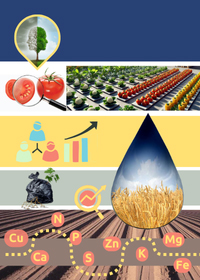
Graphic Abstract
Keywords
crop production, agronomic innovations, biostimulants, plant metabolism, food chemistry, phytochemical composition, post-harvest quality, sustainable fertilization, AI in agriculture
Published Papers

 Login
Login Register
 Submit a Paper
 Propose a Special lssue