Guest Editor(s)
Prof. Dr. Fernando Ferrari Putti
Email: fernando.putti@unesp.br
Affiliation: Biosystems Engineering, School of Sciences and Engineering , UNESP- São Paulo State University, Brazil
Homepage:
Research Interests: bioinputs to reduce the effects of water stress, abiotic stress mitigation, technology development for irrigation and fertirrigation management, new materials for agriculture
Prof. Dr. Gustavo Ferrreira da Silva
Email: gustavo.ferreira@ufscar.br
Affiliation: Department of Biotechnology and Plant and Animal Production, Center of Agricultural Sciences (CCA/UFSCar), Araras, Brazil
Homepage:
Research Interests: soil-plant interactions, water use efficiency (WUE), nutrient use efficiency (NUE), biofertilizers, sustainable soil management, crop resilience / stress tolerance

Summary
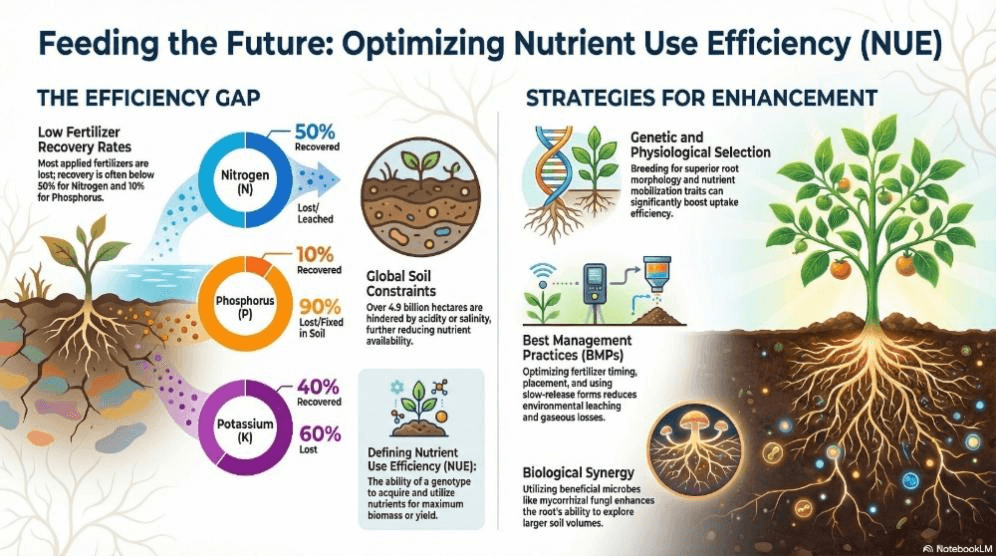
Plant water and nutrient relations are central to crop productivity, ecosystem functioning, and sustainable agricultural intensification. With increasing pressure from climate change, water scarcity, and soil nutrient depletion, modern agriculture must improve the efficiency with which plants use limited water and essential nutrients. Advances in physiological understanding, crop genetics, soil–plant interactions, nutrient cycling, and precision irrigation technologies are collectively transforming how we optimize resource use in agroecosystems.
The scientific literature has documented the complexity of plant response to water and nutrient availability, including stomatal regulation, root system architecture, nutrient uptake kinetics, and cross-talk between water and nutrient signaling pathways. For example, studies on evapotranspiration and crop water productivity provide critical insights for irrigation scheduling and drought adaptation strategies, while research on nutrient use efficiency contributes to reducing fertilizer inputs without sacrificing yield. These themes, among others, form the foundation of a research agenda that is essential for food security and environmental sustainability.
Seminal contributions such as those exploring water productivity frameworks and integrative models of resource use (e.g., research published in Critical Reviews in Plant Sciences and integrative methods in crop physiology and resource optimization) have highlighted both the theoretical and practical importance of this discipline, demonstrating opportunities for innovation across scales — from molecular biology to field-level management.
Graphic Abstract
Keywords
water use efficiency (WUE), nutrient use efficiency (NUE), soil–plant interactions, drought stress physiology, precision irrigation, sustainable crop production

 Login
Login Register
 Submit a Paper
 Propose a Special lssue