
 Open Access
ISSN:1148-5493 (print)
ISSN:1952-4005 (online)
Publication Frequency:Quarterly



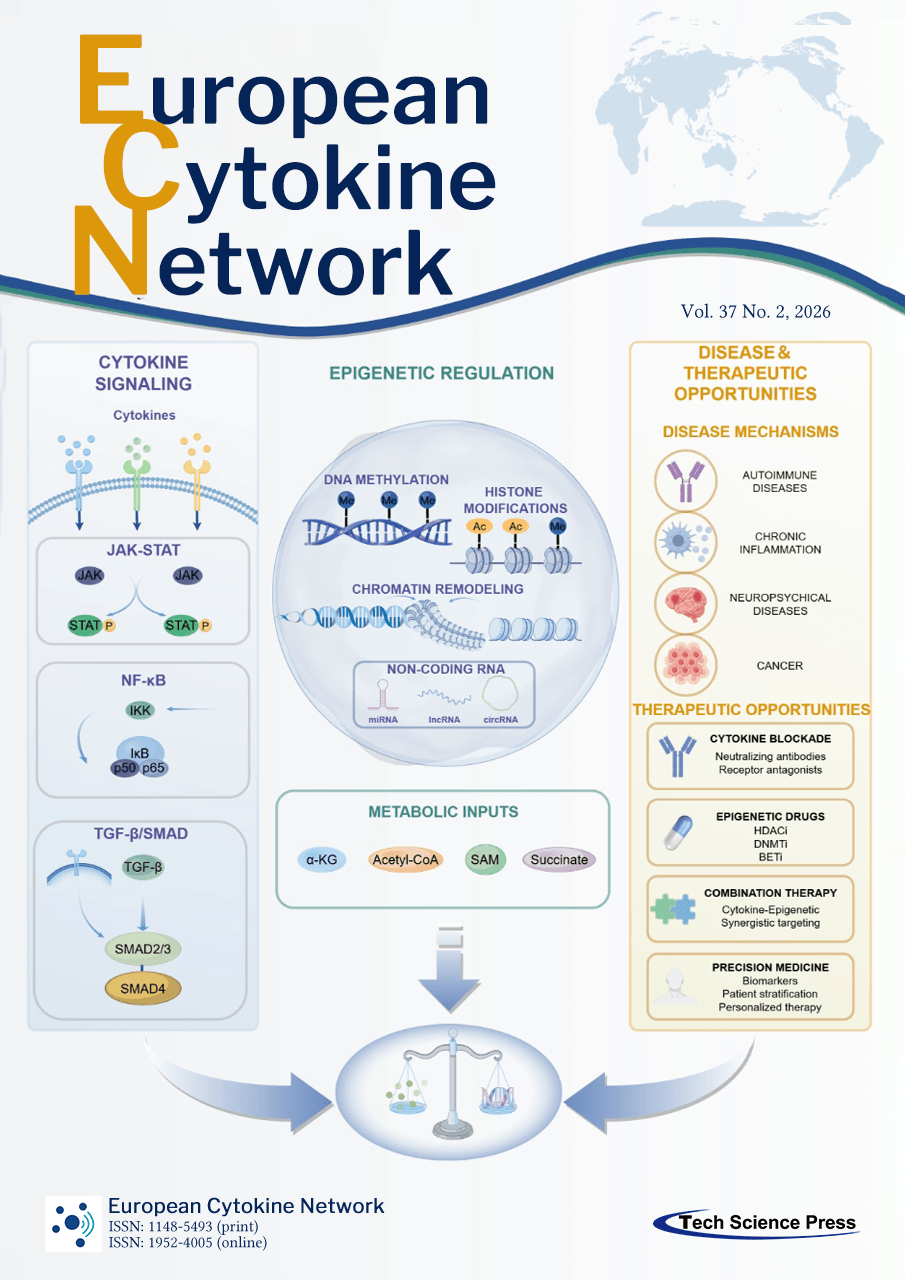
European Cytokine Network is an electronic journal that publishes original research articles, review articles, etc., on a quarterly basis to provide an essential bridge between researchers and clinicians with an interest in the field of cytokines.
It has become a must-read for specialists in the field thanks to its swift publication and international circulation.
Science Citation Index Expanded (SCIE): 2025 Impact Factor 1.5; Scopus: Citescore 2.3 (2025), SNIP (Source Normalized Impact per Paper): 0.516 (2025); PubMed/Medline; Embase; Google Scholar, etc.
Effective 2026, the European Cytokine Network (ECN) will be published by Tech Science Press (TSP). This transition is designed to enhance the journal's academic impact and global visibility while ensuring an improved publishing experience for researchers. The journal's aims, scope, and formatting guidelines will remain unchanged. The journal's Editor-in-Chief, Prof. Hans Yssel, and the editorial board will continue to lead the journal toward an even more successful future.
We sincerely appreciate the continued support of our contributors, reviewers, readers, and Editorial Board Members, and we look forward to advancing cytokine research together in this new chapter.
 Open Access
REVIEW
European Cytokine Network, Vol.37, No.2, pp. 41-53, 2026, DOI:10.32604/ecn.2026.083049 - 30 June 2026
Abstract Flaviviruses, including Dengue, West Nile, Zika, and Japanese encephalitis viruses, are arthropod-borne RNA viruses that pose an increasing global health threat. This review summarizes the role of nonstructural protein 1 (NS1), a multifunctional glycoprotein found in intracellular and secreted forms, as a key regulator of innate immunity. NS1 modulates several pattern recognition receptor pathways, including TLRs, RLRs, SR-B1-related mechanisms, and inflammasome platforms, thereby altering cytokine and interferon responses. Its effects are virus- and context-dependent. WNV NS1 inhibits TLR3/TRIF signaling, reducing IRF3 activation, type I interferon production, and interferon-stimulated gene expression. In contrast, DENV NS1 is More >
Open Access
REVIEW
European Cytokine Network, Vol.37, No.2, pp. 55-77, 2026, DOI:10.32604/ecn.2026.082188 - 30 June 2026
(This article belongs to the Special Issue: Inflammation and Cytokine Biology in Chronic Diseases: Mechanisms and Therapeutic Targets)
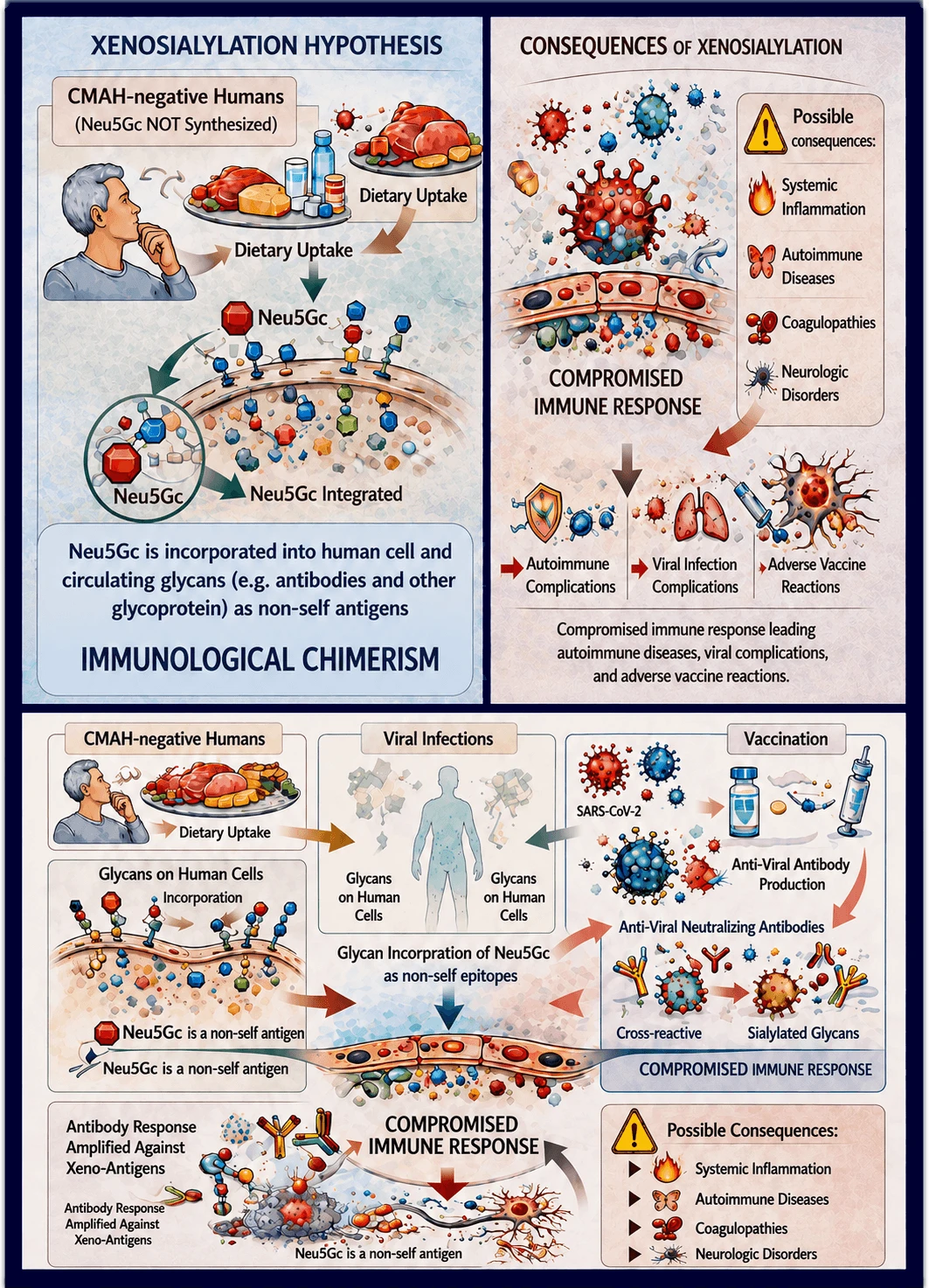
Abstract Severe immune-mediated complications following viral infections and vaccinations, including COVID-19 and anti–SARS-CoV-2 immunization, display remarkable clinical overlap despite occurring in distinct biological contexts. In a previous hypothesis-driven work, we proposed that metabolic incorporation of the non-human sialic acid N-glycolylneuraminic acid (Neu5Gc) into human glycoconjugates—defined as xenosialylation—may contribute to post-infectious and post-vaccination immune dysregulation. We further suggest that this phenomenon may represent a form of “immunological chimerism”, in which host glycoconjugates incorporate non-self molecular structures that predispose the immune system to varying degrees of immune imbalance. In its most severe manifestation, this process may culminate in… More >
Graphic Abstract
Open Access
REVIEW
European Cytokine Network, Vol.37, No.2, pp. 79-95, 2026, DOI:10.32604/ecn.2026.078477 - 30 June 2026
Abstract Vulvovaginal candidiasis (VVC) is one of the most prevalent mucosal infections worldwide, experienced by women throughout their reproductive years. Candida albicans is involved in 85–95% of all VVC cases and given the stronger correlation between the severity of epithelial cytokine responses, rather than fungal burden, with VVC symptoms, this disease is fundamentally immunopathological. VVC is believed to be initiated by a cascade of events that leads to vaginal epithelial cell (VEC) damage. These cells act as immune sentinels and can detect fungal morphotypes as well as virulence factors through diverse pattern recognition receptors, such as TLRs,… More >
Open Access
REVIEW
European Cytokine Network, Vol.37, No.2, pp. 97-119, 2026, DOI:10.32604/ecn.2026.082885 - 30 June 2026
Abstract Cytokines, as key signaling molecules, are involved in the regulation of physiological and pathological processes such as inflammation, immunity, and cell growth. Epigenetic mechanisms, including DNA methylation, histone modifications, chromatin remodeling, and non-coding RNAs, enable precise control of gene expression without changing the DNA sequence. Recent studies have revealed that cytokines interact with epigenetic regulation to form a dynamic and complex “cytokine-epigenetic axis”. Through metabolic reprogramming and regulation of epigenetic enzyme activity, this axis affects gene expression patterns at both transcriptional and post-transcriptional levels, thereby contributing to the initiation and progression of various diseases, including… More >
Open Access
ARTICLE
European Cytokine Network, Vol.37, No.2, pp. 121-135, 2026, DOI:10.32604/ecn.2026.079012 - 30 June 2026
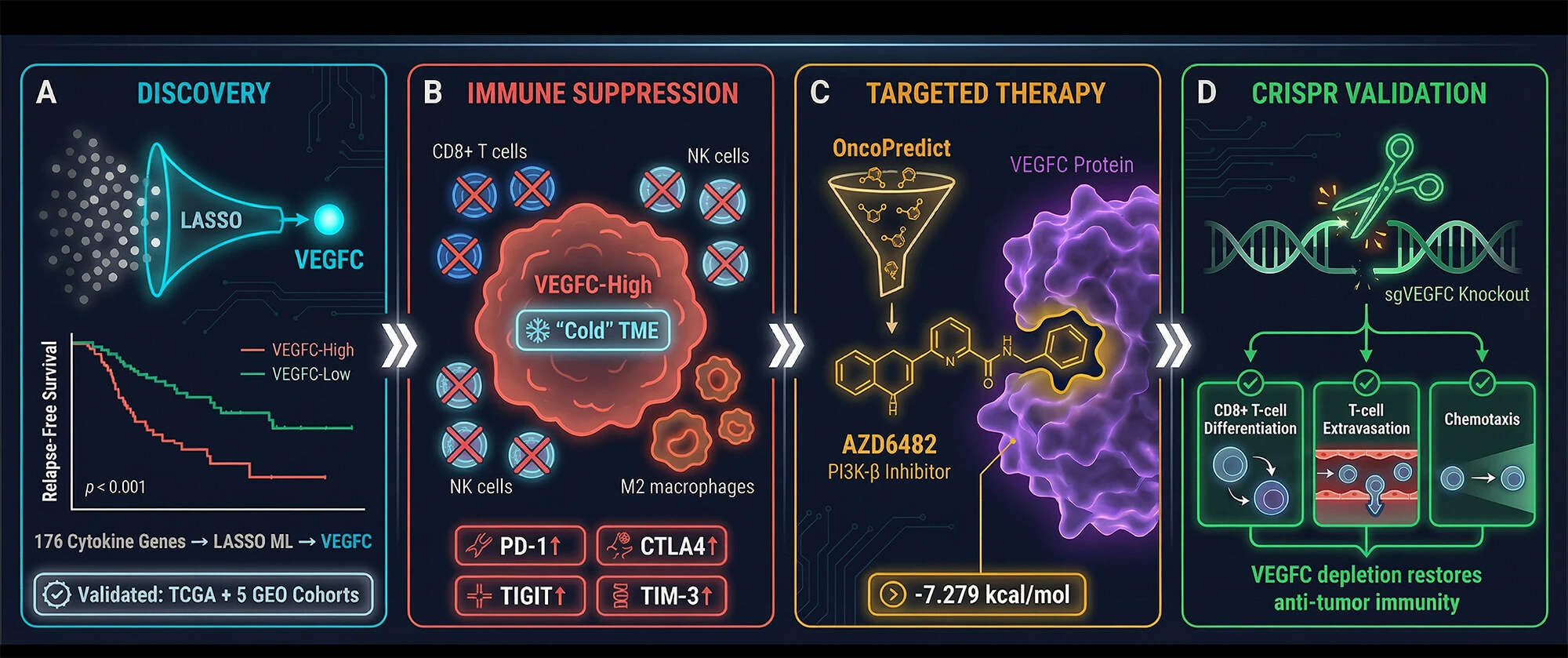
Abstract Backgrounds: Lymph node metastasis is a critical determinant of breast cancer prognosis, yet the specific microenvironmental cytokines driving this process remain elusive. This study aims to identify key prognostic cytokines linking nodal metastasis to tumor microenvironment (TME) remodeling and to evaluate their clinical utility. Methods: A predefined panel of 176 microenvironmental genes was evaluated using differential expression analysis and the Least Absolute Shrinkage and Selection Operator (LASSO) algorithm on the TCGA-BRCA cohort to identify optimal predictors of nodal metastasis. Prognostic value was assessed via Kaplan-Meier, subgroup, and multivariate Cox regression analyses, and validated across five… More >
Graphic Abstract
Open Access
ARTICLE
European Cytokine Network, Vol.37, No.2, pp. 137-149, 2026, DOI:10.32604/ecn.2026.084018 - 30 June 2026
Abstract Backgrounds: Disruption of immune barrier function is considered a hallmark feature of inflammatory bowel disease. In the present study, the potential effects of the methyltransferase inhibitor procaine hydrochloride on intestinal barrier integrity, as well as T cell differentiation in the context of inflammatory bowel disease were explored. Methods: Using an experimental model of dextran sulfate sodium-induced ulcerative colitis, mice received daily treatment with either sulfasalazine (100 mg/kg) or procaine hydrochloride (45 mg/kg), or saline (10

 Login
Login Register
 Submit a Paper
 Propose a Special lssue
