Guest Editor(s)
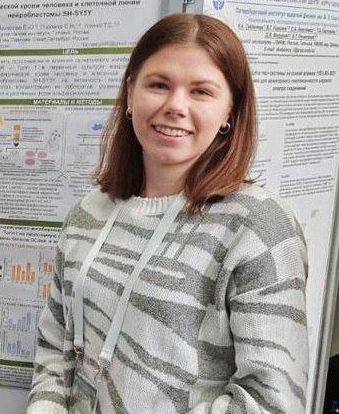
Dr. T. S. Usenko
Email: usenko_ts@pnpi.nrcki.ru
Affiliation: Konstantinov Petersburg Nuclear Physics Institute, National Research Center Kurchatov Institute, 188300, Gatchina, Russia
Pavlov First St. Petersburg State Medical University, 197022, St. Petersburg, Russia
Research Interests: synucleinopathies, omics (transcriptomics, proteomics, lipidomics), GBA1- and LRRK2- associated Parkinson's disease; biomarker discovery, lysosomal and mitochondrial dysfunction, patient-derived cellular models, targeted therapy screening

Dr. A.I. Bezrukova
Email: bezrukova_a.i.@pnpi.nrcki.ru
Affiliation: Konstantinov Petersburg Nuclear Physics Institute, National Research Center Kurchatov Institute, 188300, Gatchina, Russia
Pavlov First St. Petersburg State Medical University, 197022, St. Petersburg, Russia
Research Interests: synucleinopathies, transcriptomics, GBA1-associated Parkinson's disease, autophagy, patient-derived cellular models, targeted therapy screening
Summary
This Special Issue will highlight recent advances in understanding the cellular and molecular mechanisms underlying Parkinson's disease (PD), with a focus on the discovery of novel therapeutic targets and biomarkers. We particularly welcome submissions that elucidate disease mechanisms at the cellular or subcellular level, thereby contributing to the understanding of how genetic or pharmacological factors influence disease progression through specific intracellular pathways or cellular dysfunctions.
Studies should ideally combine molecular biology techniques and cellular models to dissect pathogenic processes. Translational works are encouraged only if they include experimental validation of mechanisms in cellular systems.
Topics of interest include, but are not limited to:
- Studies exploring genetic contributors to PD (e.g., GBA1, LRRK2, SNCA, and other risk genes) and their functional roles in intracellular signaling and cell biology
- Research employing cellular models (e.g., neuronal cell lines, iPSC-derived neurons, primary cultures) and animal models to dissect disease mechanisms
- Investigation of pharmacological interventions, including small molecules, biologics, and gene-targeted therapies, with an emphasis on their mechanisms of action at the cellular level
- High-throughput drug screening approaches that lead to mechanistic insights using cellular assays
- Biomarker discovery from patient-derived samples (e.g., blood, cerebrospinal fluid, iPSCs or their differentiated derivatives), with cellular validation of candidate biomarkers
- Multi-omics approaches, including lipidomics, proteomics, and metabolomics, for disease stratification and progression monitoring, supported by experimental confirmation in cellular systems
Submissions that focus solely on clinical observations, descriptive histological analyses, or whole-animal pharmacology without accompanying cellular-level mechanism investigation may face challenges in fitting within the journal scope. We encourage studies to include cell-based assays, molecular interaction analyses, pathway dissection, or functional validation at the cellular level to better meet the thematic goals.
Keywords
Parkinson's disease, cellular mechanisms, targeted therapy, biomarkers, molecular pathways, genetic contributors, drug screening, induced pluripotent stem cells
Published Papers

 Login
Login Register
 Submit a Paper
 Propose a Special lssue