
 Open Access
ISSN:0031-9457 (print)
ISSN:1851-5657 (online)
Publication Frequency:Monthly





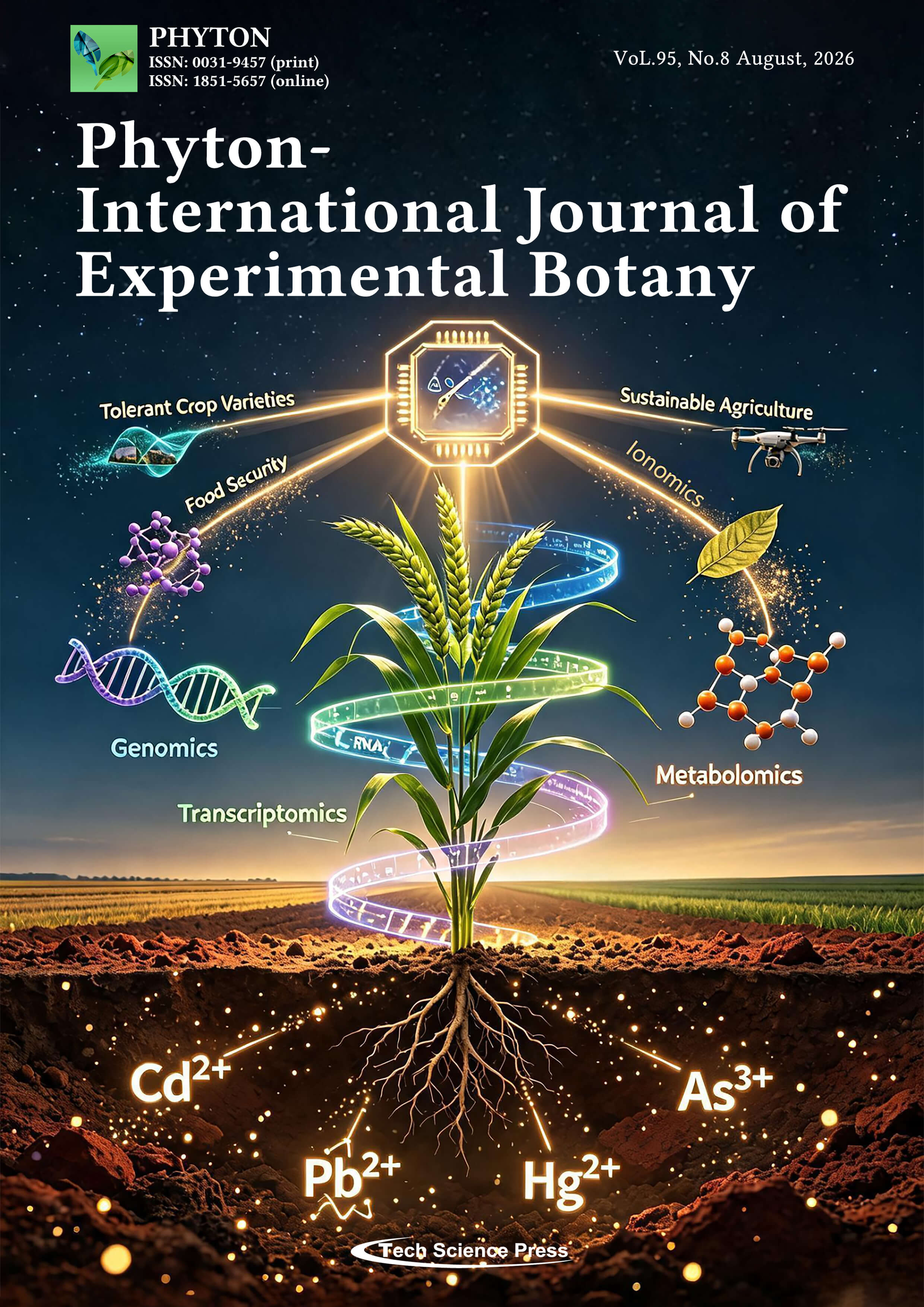
Phyton-International Journal of Experimental Botany is an international journal that publishes research on all aspects of plant science. This journal welcomes original and exciting submissions that provide new and key insights into the origins, growth and development of plants from the molecular to the whole organism and its interactions with the biotic and abiotic environments.
Science Citation Index Expanded (Clarivate Analytics); Journal Citation Report/Science Edition (JCR); Impact Factor (2025): 2.0; 5-Year Impact Factor: 1.8; Biological Abstracts; BIOSIS Previews; Scopus; EMBiology; Latindex; Field Crop Abstracts; CAB Abstracts; CABI Full Text; Periódica; TEEAL, The Essential Electronic Agricultural Library; Núcleo Básico de Revistas Científicas Argentinas (Agosto 2013–Julio 2015); SciELO (Scientific Electronic Library Online); Portal de Revistas en Biodiversidad; Portico, etc...
 Open Access
REVIEW
Phyton-International Journal of Experimental Botany, Vol.95, No.8, 2026, DOI:10.32604/phyton.2026.086203 - 28 August 2026
(This article belongs to the Special Issue: Multi-Omics Insights into Plant Acclimation to Environmental Stress)
Abstract Recent efforts in crop improvement have increasingly focused on elucidating molecular-level regulatory mechanisms to develop high-yielding crops with enhanced tolerance to heavy metals (HMs) stress. Omics approaches, including genomics, transcriptomics, proteomics, metabolomics, ionomics, and phenomics, provide comprehensive analyses of plant responses to HMs stress. Genomics identifies stress-responsive genes, transcriptomics reveals dynamic changes in gene expression, proteomics evaluates protein abundance and post-translational modifications, and metabolomics characterize stress-related metabolites. Ionomics elucidates essential mineral dynamics involved in detoxification, while phenomics integrate high-throughput imaging with breeding techniques to evaluate stress resilience. Integration of multi-omics approaches provides a systems-level understanding… More >
Open Access
REVIEW
Phyton-International Journal of Experimental Botany, Vol.95, No.8, 2026, DOI:10.32604/phyton.2026.087213 - 28 August 2026
(This article belongs to the Special Issue: The Biological Activity of Essential Oils, Volume II)
Abstract Essential oils (EOs) are most commonly characterized by GC–MS profiles and the relative abundance of dominant constituents. This approach is essential for chemical description and quality control, but it does not fully explain why EO composition differs among species, populations, organs, developmental stages, and growth conditions. Here, EO variability is examined from a focused, plant-centered perspective, with emphasis on terpenoid-rich systems in which glandular trichomes or other secretory structures are documented sites of volatile-metabolite biosynthesis, accumulation, or profile variation. The analysis centers on glandular trichomes as metabolic units, MEP/MVA precursor supply, prenyl diphosphate nodes, terpene… More >
Open Access
REVIEW
Phyton-International Journal of Experimental Botany, Vol.95, No.8, 2026, DOI:10.32604/phyton.2026.081317 - 28 August 2026
(This article belongs to the Special Issue: Genome Editing and Crop Breeding: Ushering in a New Era of Plant Improvement)
Abstract Sorghum is a heat- and drought-tolerant cereal crop used for feed and food purposes in more than 100 countries. Sorghum becomes highly important in conditions of climate warming. The use of genome editing technologies is of paramount importance for this crop, which has a number of constraints in key agronomic traits that are difficult for improvement using conventional breeding. Application of genome editing for sorghum is limited due to problems of genetic transformation; however, recent advances in this field have increased the efficiency of the genome editing procedure in sorghum. This review summarizes recent achievements More >
Open Access
ARTICLE
Phyton-International Journal of Experimental Botany, Vol.95, No.8, 2026, DOI:10.32604/phyton.2026.087532 - 28 August 2026
Abstract Herbaceous peony (Paeonia lactiflora Pall.) is a traditional Chinese flower with high ornamental value. However, the antioxidant value of P. lactiflora petals has not been fully utilized, and the petals are often discarded as waste after flowering. Plant petals are typically rich in polyphenolic compounds with potent antioxidant properties, but research on the antioxidant properties of P. lactiflora petals remains insufficient. To investigate the antioxidant effects of P. lactiflora petal polyphenol extract (PPP), this study first determined and compared the PPP content of seven P. lactiflora cultivars, and then evaluated their antioxidant effects through in vitro and in vivo assays. Among the… More >
Open Access
ARTICLE
Phyton-International Journal of Experimental Botany, Vol.95, No.8, 2026, DOI:10.32604/phyton.2026.087714 - 28 August 2026
(This article belongs to the Special Issue: Guardians of Green: Protecting Plants Through the Conservation of Pollinators)
Abstract Paeonia peregrina Mill. is a medicinal plant of conservation concern in Bulgaria, where its petals and roots are harvested from wild populations for pharmaceutical use. Developing effective propagation methods is therefore essential for its conservation and potential cultivation. This preliminary study investigated selected aspects of the reproductive biology of P. peregrina, including pollination, seed formation, seedling development, and vegetative propagation. Field observations and experiments were conducted during 2024–2025 in a natural population near the town of Boboshevo, southwestern Bulgaria, while propagation trials were performed under ex situ conditions. To assess the role of pollinators, flowers were isolated from… More >
Open Access
ARTICLE
Phyton-International Journal of Experimental Botany, Vol.95, No.8, 2026, DOI:10.32604/phyton.2026.085201 - 28 August 2026
(This article belongs to the Special Issue: Bioactive Natural Products from Medicinal Plants: Phytochemical and Pharmacological Studies)
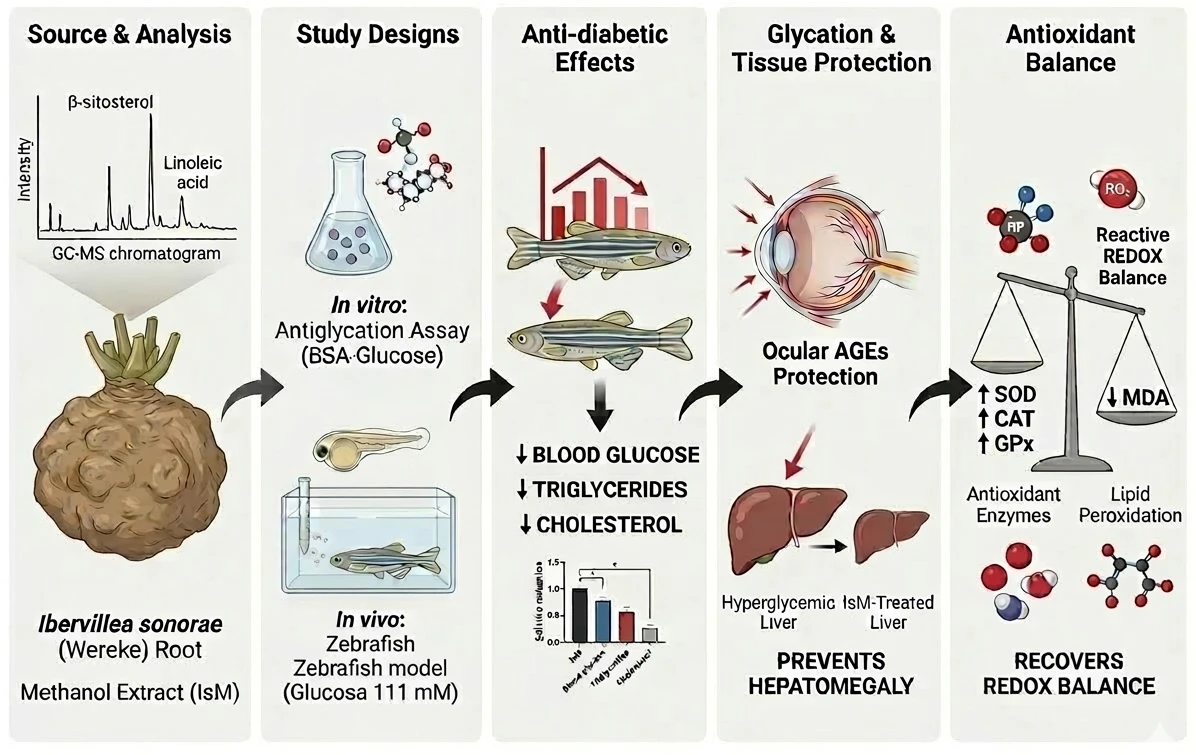
Abstract Diabetes mellitus is a metabolic disorder characterized by chronic hyperglycemia, oxidative stress, and the formation of advanced glycation end products (AGEs). This study examined the antiglycation, antioxidant, and antidiabetic properties of the methanolic extract of Ibervillea sonorae (IsM). Antiglycation activity was assessed in vitro using a bovine serum albumin–glucose model, and the antidiabetic effects were evaluated using a zebrafish model of experimentally induced hyperglycemia. Gas chromatography–mass spectrometry (GC–MS) analysis revealed several metabolites, including fatty acids and phytosterols. The extract significantly inhibited AGEs formation in vitro and reduced AGEs accumulation in the ocular tissue of diabetic zebrafish. In vivo treatment More >
Graphic Abstract
Open Access
ARTICLE
Phyton-International Journal of Experimental Botany, Vol.95, No.8, 2026, DOI:10.32604/phyton.2026.086514 - 28 August 2026
Abstract High solar radiation during the Thai summer raises greenhouse temperatures to 33–41°C, exceeding the optimal range for tomato cultivation (15–25°C) and reducing yield and fruit quality. This study aimed to evaluate the effectiveness of combining daytime shading with evening supplemental light-emitting diode (LED) lighting to improve the growth, yield, and fruit quality of cherry tomato grown under heat-stress conditions. To alleviate excessive heat accumulation, a semi-enclosed greenhouse equipped with an 80% shade net was applied from 11:00 to 14:00, while supplemental LED lighting was provided from 18:00 to 22:00. Plants were exposed to red, blue,… More >
Open Access
ARTICLE
Phyton-International Journal of Experimental Botany, Vol.95, No.8, 2026, DOI:10.32604/phyton.2026.087258 - 28 August 2026
(This article belongs to the Special Issue: Medicinal Plants: Phytochemical and Pharmacological Research)
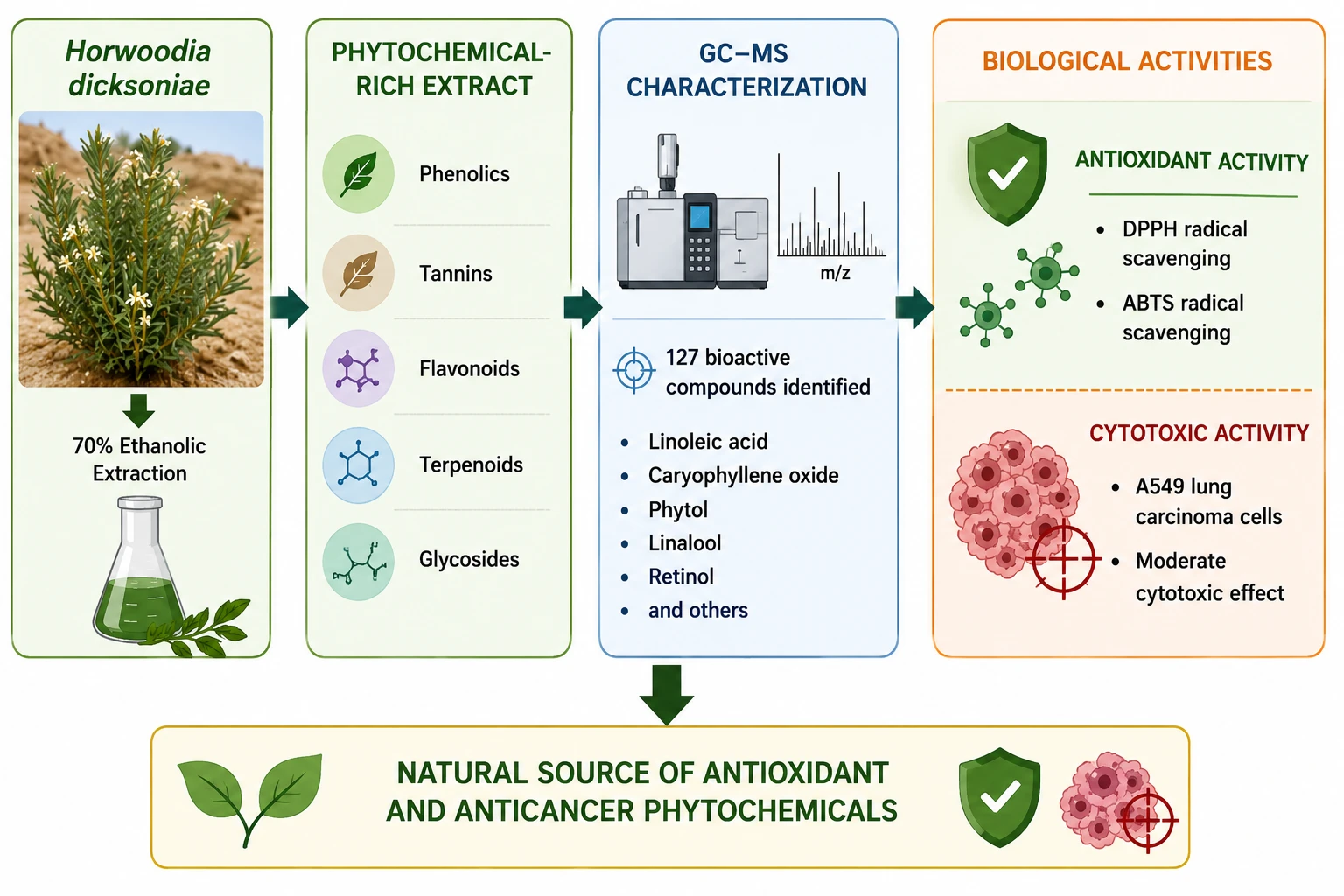
Abstract Medicinal plants are valuable sources of bioactive compounds with diverse pharmacological properties. However, the phytochemical composition and biological activities of Horwoodia dicksoniae remain insufficiently investigated. Therefore, this study evaluated the phytochemical composition, antioxidant activity, physicochemical characteristics, and in vitro cytotoxic potential of the ethanolic extract of H. dicksoniae collected from the Thumamah area, Riyadh, Saudi Arabia. The extract was subjected to phytochemical characterization, chemical profiling, physicochemical analysis, antioxidant activity assessment, and cytotoxicity evaluation. Qualitative screening confirmed the presence of phenolics, flavonoids, tannins, terpenoids, and glycosides, while quantitative analysis revealed high levels of phenolic and tannin constituents. The extract… More >
Graphic Abstract
Open Access
ARTICLE
Phyton-International Journal of Experimental Botany, Vol.95, No.8, 2026, DOI:10.32604/phyton.2026.086214 - 28 August 2026
(This article belongs to the Special Issue: Abiotic and Biotic Herb Stress: Mechanisms, Physiology and Biochemical Changes)
Abstract Shading stress significantly compromises the ornamental quality and ecological adaptability of Hesperis sibirica. To investigate the potential mitigating effects of plant growth regulators, this study systematically analyzed the regulatory mechanisms of foliar-applied prohexadione-calcium (Pro-Ca) at different concentrations (0, 100, 300, 600, and 900 mg·L−1) under both full sunlight and heavy shading (70% light reduction, retaining 30% of full sunlight intensity) conditions. Through comprehensive evaluation of plant morphological traits, chlorophyll content, photosynthetic parameters, and chlorophyll fluorescence characteristics, combined with structural observations using scanning electron microscopy, light microscopy, and transmission electron microscopy, 600 mg·L−1 Pro-Ca was identified as the More >
Open Access
ARTICLE
Phyton-International Journal of Experimental Botany, Vol.95, No.8, 2026, DOI:10.32604/phyton.2026.077897 - 28 August 2026
(This article belongs to the Special Issue: Airflow and Micro-Climate Engineering: Nutrient Dynamics and Plant Growth Optimization)
Abstract The aim of the study examines the effects of contrasting greenhouse microclimates on nutrient uptake, dry matter yield (DMY), and water use efficiency (WUE) in maize (Zea mays L.) during the early vegetative stage, under limited irrigation conditions. The study addresses the question of how microclimatic factors, particularly airflow and the humidity of the greenhouse, affect plant growth and nutrient dynamics under deficit irrigation conditions. The experiment was established at the Research and Application Greenhouses of the Department of Soil Science and Plant Nutrition, Çukurova University, Adana, Türkiye. Two greenhouse environments were compared: first with a… More >
Open Access
ARTICLE
Phyton-International Journal of Experimental Botany, Vol.95, No.8, 2026, DOI:10.32604/phyton.2026.084457 - 28 August 2026
(This article belongs to the Special Issue: Abiotic and Biotic Stress Tolerance in Crop)
Abstract Water deficit and soil salinity can severely impair seed germination and crop establishment, creating a need for sustainable, non-chemical approaches to improve seed performance under stress. Electromagnetic-field (EMF) priming is a promising physical treatment; however, its effectiveness may depend strongly on the exposure regime and duration. This study evaluated the effect of electromagnetic-field (EMF) priming on broccoli (Brassica oleracea) seed germination under water and salt stress. Seeds were exposed to one or two EMF exposure regimes for different durations and were assessed through germination tests, digital image analysis, photoacoustic spectroscopy and FTIR spectroscopy. EMF priming produced… More >
Open Access
ARTICLE
Phyton-International Journal of Experimental Botany, Vol.95, No.8, 2026, DOI:10.32604/phyton.2026.084016 - 28 August 2026
Abstract Purpose: This study aimed to investigate the effects of nitrogen-fixing bacteria (NFB) on the nitrogen forms in rhizosphere soil and the biomass and medicinal components in the bulbs of Fritillaria taipaiensis. Methods: Three NFB strains were isolated and inoculated into the rhizosphere of F. taipaiensis through a pot experiment. Eight treatment groups were established: control (CK), Rahnella aquatilis (N1), Pseudomonas chlororaphis (N2), Paenibacillus stellifer (N3), R. aquatilis + P. chlororaphis (N4), R. aquatilis + P. stellifer (N5), P. chlororaphis + P. stellifer (N6), and R. aquatilis + P. chlororaphis + P. stellifer (N7). After 8 months of inoculation, the contents of different nitrogen forms in rhizosphere soil and peimine, peiminine,… More >
Open Access
ARTICLE
Phyton-International Journal of Experimental Botany, Vol.95, No.8, 2026, DOI:10.32604/phyton.2026.087160 - 28 August 2026
Abstract Water deficit is one of the major constraints to the establishment and early growth of cacao (Theobroma cacao L.), particularly under increasingly frequent and intense drought conditions. The objective of this study was to evaluate the morphological and physiological responses of cacao seedlings subjected to progressive water deficit under nursery conditions. Plants were evaluated over a 45-day period without irrigation and compared with well-watered plants maintained at 60% of substrate field capacity. Growth variables, photosynthetic pigment concentrations, and proline accumulation in leaves, stems, and roots were evaluated. Stem length showed no significant differences between treatments, whereas… More >
Open Access
ARTICLE
Phyton-International Journal of Experimental Botany, Vol.95, No.8, 2026, DOI:10.32604/phyton.2026.085115 - 28 August 2026
(This article belongs to the Special Issue: Plant Growth Regulators (PGRs) and Plant Stress)
Abstract Rapeseed (Brassica rapa L.) is the primary oil crop in Xizang. However, its loosely branched structure hinders mechanical harvesting. Improvement in plant architecture is necessary to align with industrial development; however, research on branch angle in rapeseed is limited. The branch angle of compact plant type (S) was smaller than that of the dispersed plant type (F). RNA sequencing and targeted metabolome analyses of branch angles of both plant types were assessed at different branch sites. In the S plant type, IAA (3-Indoleacetic acid) contents were significantly higher than those in F at the five stem… More >
Open Access
ARTICLE
Phyton-International Journal of Experimental Botany, Vol.95, No.8, 2026, DOI:10.32604/phyton.2026.087517 - 28 August 2026
Abstract Excessive nitrogen fertilizer application increases production costs and environmental burdens in rice cultivation, highlighting the need to identify low-nitrogen-tolerant germplasm. In this study, 266 rice accessions were evaluated in hydroponic culture for 35 d under normal-nitrogen conditions (NN: 1.6 mM NO3− and 1.6 mM NH4+) and low-nitrogen conditions (LN: 0.4 mM NO3− and 0.4 mM NH4+). Fifteen seedling traits related to growth, chlorophyll status, nitrogen accumulation, and nitrogen utilization were measured, and the corresponding low-nitrogen tolerance indices were evaluated using correlation analysis, principal component analysis (PCA), membership-function analysis, and cluster analysis. All measured traits had coefficients of… More >
Open Access
ARTICLE
Phyton-International Journal of Experimental Botany, Vol.95, No.8, 2026, DOI:10.32604/phyton.2026.083016 - 28 August 2026
(This article belongs to the Special Issue: Medicinal Plants: Phytochemical and Pharmacological Research)
Abstract Mint is notably rich in phenolic acids, flavonoids, antioxidants and other bioactive components, and is widely used as food, medicine, spices, and flavoring agents. Thus, metabolite composition serves as a critical indicator for assessing mint quality. In this study, two mint genotypes of Mentha canadensis L., were sampled, namely purple mint and green mint. The two genotypes are distinguished by stem color: the purple mint exhibits purple stems, whereas the green mint has green stems. The purple mint exhibited significantly higher anthocyanin and total flavone contents than green mint. Integrated transcriptomic and metabolomic analyses were performed… More >
Open Access
ARTICLE
Phyton-International Journal of Experimental Botany, Vol.95, No.8, 2026, DOI:10.32604/phyton.2026.084022 - 28 August 2026
(This article belongs to the Special Issue: Carbon and Nutrient Cycling in Forest Ecosystems)
Abstract Understory vegetation-mediated forest litter decomposition and nutrient release processes are critical for biogeochemical cycles and ecosystem sustainability. Drought-dominated global change significantly affects relevant processes, but its impact on metal element release from mixed litters of overstory trees and understory vegetation remains unclear. Here, we conducted an 18-month in situ decomposition experiment in a Pinus massoniana–Camellia oleifera mixed forest under three precipitation regimes: control (CK), low-intensity reduction (R30), and high-intensity reduction (R60). Both R30 and R60 treatments significantly inhibited P. massoniana litter mass loss by 4.85% and 6.22%, respectively. Only R60 treatment significantly reduced the mass loss in C. oleifera and… More >
Open Access
ARTICLE
Phyton-International Journal of Experimental Botany, Vol.95, No.8, 2026, DOI:10.32604/phyton.2026.085745 - 28 August 2026
Abstract The proportion of nitrogen (N), phosphorus (P), and potassium (K) in the soil could regulate plant yield and secondary metabolism. However, extensive chemical fertilizer utilization has reduced soil fertility and increased soil compaction, and even caused environmental pollution. Applying microbial fertilizers (MF) could improve soil structure and the environment. This work aimed to reveal the effects of N reduction and combined MF on Ginkgo biloba growth, soil properties, and microbial communities, and illustrate their interaction roles in improving Ginkgo leaf yield and flavonoid content. A field experiment with different fertilizer treatments, including low N, normal P-K… More >
Open Access
ARTICLE
Phyton-International Journal of Experimental Botany, Vol.95, No.8, 2026, DOI:10.32604/phyton.2026.085307 - 28 August 2026
(This article belongs to the Special Issue: Abiotic and Biotic Stress Tolerance in Crop)
Abstract As an important medicinal plant in China, Panax ginseng is rich in secondary metabolites and is widely used in immune regulation, antitumor, anti-aging applications. The exocyst complex is a crucial protein complex that regulates vesicle trafficking in plants and plays key roles in cellular secretion, polar growth, and stress responses. Methyl jasmonate (MeJA) is a widely occurring derivative of jasmonic acid (JA) in plants and belongs to the category of endogenous signaling molecules in plants, which significantly regulates plant defense and secondary metabolism. MeJA is a key signaling molecule that significantly regulates plant defense and secondary… More >
Open Access
ARTICLE
Phyton-International Journal of Experimental Botany, Vol.95, No.8, 2026, DOI:10.32604/phyton.2026.086460 - 28 August 2026
(This article belongs to the Special Issue: Advances in Plant Breeding and Genetic Improvement: Leveraging Molecular Markers and Novel Genetic Strategies)
Abstract Heat stress is a major abiotic constraint limiting barley (Hordeum vulgare L.) productivity in regions experiencing rising temperatures. This study evaluated the genetic variability and morphophysiological as well as yield responses of 50 barley genotypes under control and heat-stressed conditions to identify superior lines for thermotolerance breeding. A completely randomized design (CRD) with replications was used, and data was collected for ten morpho-physiological and yield traits. Analysis of variance (ANOVA) indicated highly significant (p ≤ 0.001) effects of genotype, treatment, and their interaction on most of the measured traits. Wide phenotypic variation was observed for grain yield… More >
Open Access
ARTICLE
Phyton-International Journal of Experimental Botany, Vol.95, No.8, 2026, DOI:10.32604/phyton.2026.083701 - 28 August 2026
(This article belongs to the Special Issue: Endophytic Microbiota: Prospects and Challenges for Application Towards Sustainable Agriculture and Environmental Management)
Abstract Different cultivation systems of Panax notoginseng, including wild growth, understory cultivation, and field cultivation, may create distinct rhizosphere environments. Rhizosphere soil properties and microbial communities are closely linked to the sustainability of P. notoginseng cultivation, yet comparative evidence across these cultivation systems remains limited. In this study, rhizosphere soils from two-year-old P. notoginseng grown under semi-wild, understory, and conventional field cultivation modes in Yunnan Province, China, were analyzed for soil physicochemical properties and microbial community composition using amplicon sequencing. A total of 6842 bacterial ASVs and 1014 fungal ASVs were obtained after quality control and denoising. Soil properties… More >
Open Access
EDITORIAL
Phyton-International Journal of Experimental Botany, Vol.95, No.8, 2026, DOI:10.32604/phyton.2026.086459 - 28 August 2026
(This article belongs to the Special Issue: Abiotic Stress in Agricultural Crops)
Abstract This article has no abstract. More >

 Login
Login Register
 Submit a Paper
 Propose a Special lssue
