Home / Journals / BIOCELL / Online First / doi:10.32604/biocell.2026.084885
Special Issues
Table of Content

Open Access

REVIEW

Natural Products as Nrf2 Modulators for Treatment of Parkinson’s Disease

Milena Rašeta, Sanja Djokić, Sladjana Stanisavljević, Jelena Tadić, Marija Lesjak, Nataša Simin, Nemanja Živanović*
Department of Chemistry, Biochemistry and Environmental Protection, Faculty of Sciences, University of Novi Sad, Novi Sad, Serbia
* Corresponding Author: Nemanja Živanović. Email: email

BIOCELL https://doi.org/10.32604/biocell.2026.084885

Received 30 April 2026; Accepted 26 June 2026; Published online 20 July 2026
Abstract

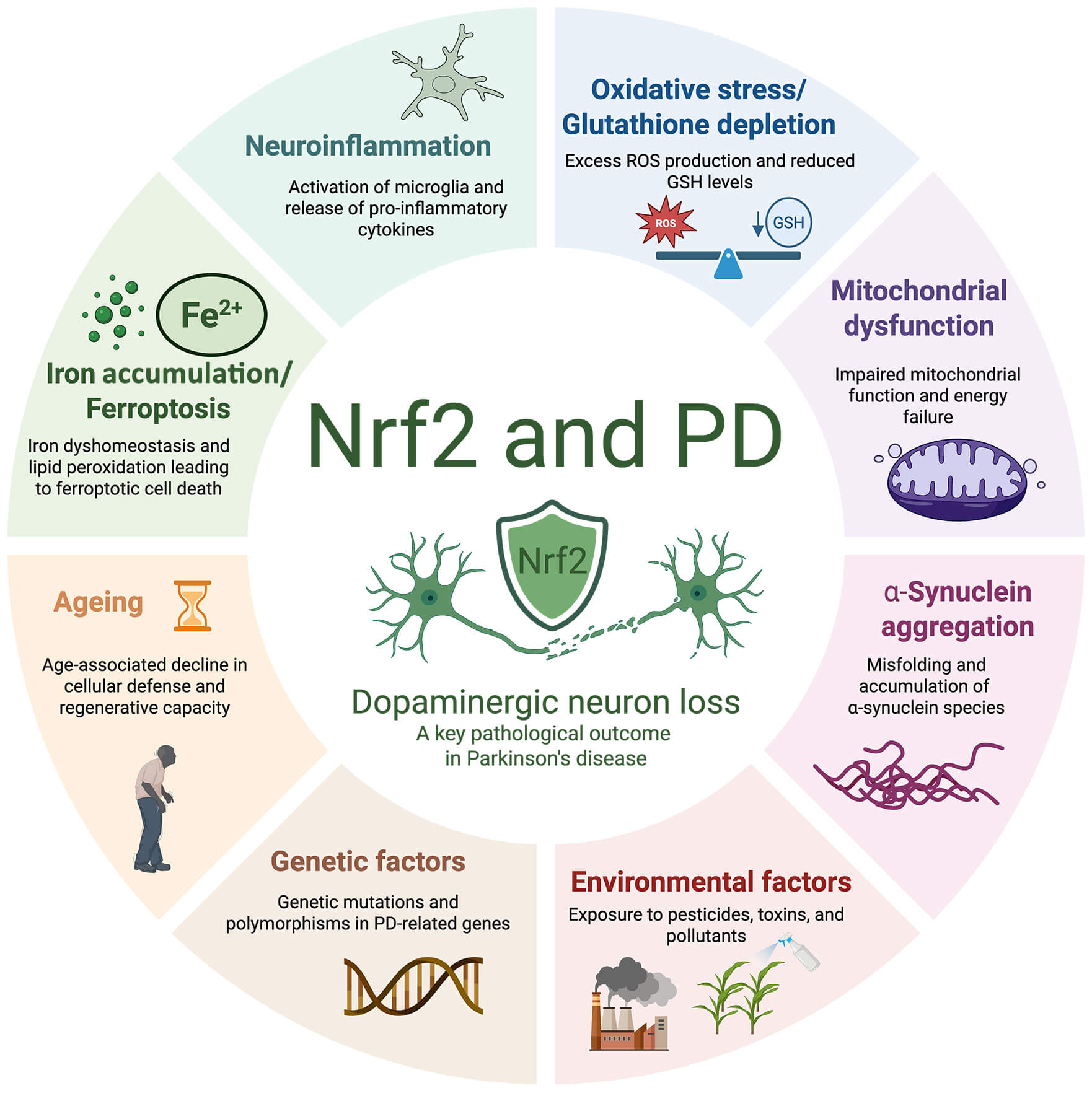
Parkinson’s disease (PD) is a progressive neurodegenerative disorder marked by dopaminergic neuronal loss, mitochondrial impairment, neuroinflammation, and excessive oxidative stress. The transcription factor nuclear factor erythroid 2–related factor 2 (Nrf2) plays a central role in maintaining cellular redox balance and regulating cytoprotective gene expression, positioning it as an attractive therapeutic target in PD. A growing body of evidence highlights that diverse natural products, including polyphenols, alkaloids, lactones, polyamines, terpenoids, and related secondary metabolites, can modulate Nrf2 signaling and confer neuroprotection. This review provides a comprehensive and updated overview of these compounds, focusing on their molecular mechanisms of Nrf2 activation, as well as their antioxidant, anti-inflammatory, and mitochondria-protective effects demonstrated in in vitro and in vivo PD models. Particular emphasis is placed on structure–activity relationships, mechanistic pathways such as Keap1–Nrf2 disruption, and emerging strategies to overcome limitations in bioavailability and pharmacokinetics. Finally, current challenges and future perspectives for translating Nrf2-targeting natural products into clinically relevant therapies are critically discussed.

Keywords

Nrf2 signaling; Parkinson’s disease; natural products; polyphenols; alkaloids; polyamines; terpenoids; oxidative stress; neuroprotection
  • 67

    View

  • 13

    Download

  • 0

    Like

Share Link